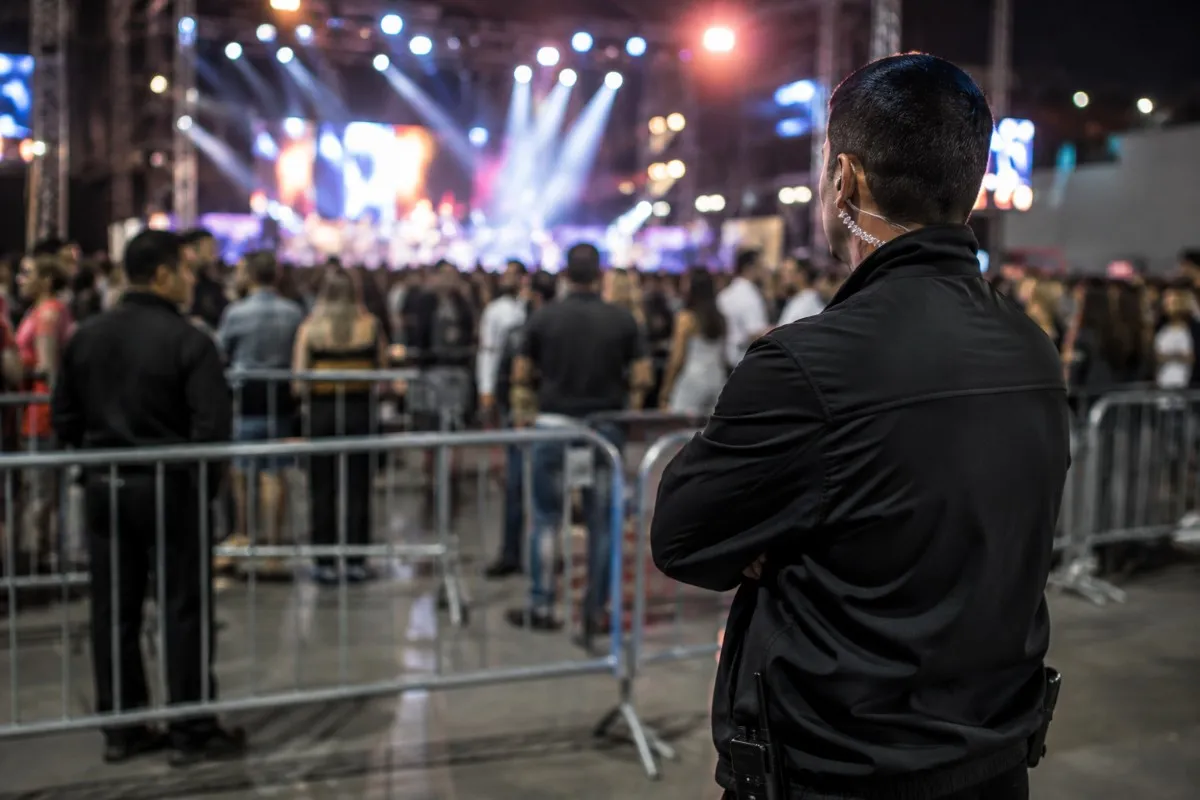

Effective access control and guest screening are at the core of any well-managed event. Trained personnel verify credentials, monitor entry points, and identify potential threats before they escalate. These measures prevent unauthorised individuals from entering, protect attendees and staff, and create a structured environment where safety protocols can be enforced consistently throughout the event.
Whether you are organising a corporate conference, a music festival, or a private gala, event security services are not optional extras — they are operational necessities. A single lapse at the entrance can compromise the safety of hundreds of people. This article breaks down exactly how access control and guest screening work in practice, and why these functions demand professional execution.
Why Access Control Is the First Line of Defence
Access control is not simply about checking tickets. It is a layered process that begins long before guests arrive and continues until the last person leaves the venue. At its foundation, access control determines who is allowed where, when, and under what conditions.
At large events, this typically involves tiered zoning — separating general admission areas from VIP sections, backstage corridors, operational zones, and emergency access routes. Each zone carries different risk levels and requires a corresponding level of monitoring.
Key components of access control at events include:
- Credential verification at all entry points (tickets, wristbands, lanyards, or digital passes)
- Physical barriers such as fencing, turnstiles, and crowd management structures
- Designated entry and exit routes to manage crowd flow
- CCTV integration with real-time monitoring capabilities
- Communication systems linking security personnel across the venue
When these elements are coordinated by a trained security team, the result is an environment where unauthorised access is genuinely difficult — not just discouraged.
Guest Screening: More Than a Bag Check
Guest screening is often reduced to a quick bag inspection at the gate. In reality, professional screening is a structured risk assessment process applied to every individual entering the venue.
What Does Professional Guest Screening Involve?
A thorough screening process combines physical checks with behavioural observation. Security personnel are trained to look beyond what is in a bag. They assess how a person presents themselves, whether their behaviour raises concern, and whether their credentials match the event's access requirements.
Standard screening procedures typically include:
- Walk-through metal detectors or handheld wand scanning
- Visual and physical inspection of bags and personal items
- ID verification for age-restricted or credentialed events
- Watchlist checks for high-profile events with elevated threat levels
- Behavioural assessment by trained officers at the point of entry
For events involving public figures, government officials, or large crowds, screening protocols become significantly more detailed and may involve close coordination with local police.
The Human Element in Screening
Technology supports screening, but it does not replace the judgement of an experienced officer. A metal detector will flag a prohibited item. It will not detect intent. Trained security personnel read body language, identify erratic behaviour, and make real-time decisions that no scanner can replicate.
This is why the quality of personnel matters as much as the equipment in use. Officers need to remain alert, professional, and consistent across long shifts — particularly at multi-day events where fatigue becomes a genuine risk factor.
Event Security Services and the Planning Phase
One of the most common mistakes event organisers make is treating security as an afterthought. Access control and screening strategies must be built into the event plan from the outset — not retrofitted once the venue layout is finalised.
A professional security provider will conduct a site survey ahead of the event, identify vulnerabilities in the proposed layout, and recommend changes before anything is set in stone. This might include repositioning entry gates, adding secondary screening areas to manage bottlenecks, or adjusting crowd flow routes to reduce pressure points.
Early planning also allows security teams to build a detailed operational brief covering:
- Staffing levels and deployment positions
- Escalation procedures for specific threat scenarios
- Coordination protocols with venue management and emergency services
- Communication and response timelines
Events that invest in this planning phase consistently experience fewer incidents and smoother operations on the day.
How a Security Guard for Events Supports Crowd Safety
A security guard for events plays a role that goes well beyond standing at a door. Positioned strategically throughout a venue, security personnel actively manage crowd dynamics, de-escalate conflict, assist distressed guests, and serve as a visible deterrent to disruptive behaviour.
Visibility matters. Research consistently shows that the presence of professional security personnel reduces the likelihood of incidents occurring in the first place. Guests behave differently when they know trained officers are present and attentive.
Beyond deterrence, on-the-ground personnel are the fastest response resource available when something does go wrong. Whether it is a medical emergency, an aggressive guest, or a crowd crush risk, a trained officer positioned correctly can intervene within seconds — long before external emergency services arrive.
Common Access Control Failures and How to Avoid Them
Understanding where access control breaks down helps event organisers build more resilient systems. The most frequent failures share a common thread: they happen when planning is rushed or security is underresourced.
| Common Failure | Root Cause | Preventive Measure |
|---|---|---|
| Bottlenecks at entry points | Insufficient screening lanes | Pre-event capacity modelling and lane planning |
| Ticket fraud or counterfeiting | No digital or physical verification system | Barcode scanners or RFID wristbands |
| Unauthorised zone access | Inconsistent credential checks mid-event | Zoned wristband systems with regular patrols |
| Slow incident response | Poor communication between security staff | Centralised command with radio protocol |
| Staff fatigue reducing vigilance | Understaffing on long-duration events | Shift rotation and adequate team sizing |
Each of these failures is avoidable with the right operational structure and a properly resourced security team in place from the planning stage onward.
Legal and Duty of Care Considerations for Event Organisers
In the UK, event organisers carry a legal duty of care toward every person attending their event. Under the Health and Safety at Work Act 1974 and associated guidance from the Health and Safety Executive (HSE), organisers must take reasonable steps to ensure the safety of attendees — and this includes managing risks associated with access and crowd control.
Failure to implement appropriate security measures can expose organisers to significant legal liability in the event of an incident. This is not a theoretical risk. UK courts have held event organisers accountable for injuries and incidents that resulted from inadequate crowd management and insufficient security presence.
Engaging a licensed, professional security provider is one of the most direct ways to demonstrate that reasonable precautions were taken — and to ensure those precautions were actually effective.
Choosing the Right Security Provider for Your Event
Not all security companies are equipped for event work. Event security requires specific experience, staffing capacity, and the ability to adapt quickly to changing circumstances on the ground. When evaluating providers, look for:
- SIA licensing for all deployed personnel
- Demonstrated experience with similar event types and scale
- A clear pre-event planning and site survey process
- Communication and incident reporting systems
- The ability to scale staffing up or down based on attendance
Enfort Security brings specialist expertise to events of all sizes, with trained personnel who understand the balance between rigorous access control and a positive guest experience. Their team works closely with organisers and venue managers to design screening and access strategies that are practical, proportionate, and effective from the first guest to the last.
Frequently Asked Questions
What is the purpose of access control at an event?
Access control ensures that only authorised individuals enter designated areas of a venue. It prevents unauthorised access, manages crowd flow, and reduces the risk of security incidents by creating structured entry points with verified credential checks and trained personnel monitoring movement throughout the event.
What does a security guard at an event actually do?
A security guard at an event manages entry screening, monitors crowd behaviour, de-escalates conflict, and responds to incidents in real time. They serve as both a visible deterrent and a first responder, positioned strategically to maintain safety and assist guests when needed.
Is event security a legal requirement in the UK?
There is no single law mandating event security, but UK organisers have a legal duty of care under the Health and Safety at Work Act 1974. The Health and Safety Executive provides guidance on crowd management. Failing to provide adequate security can result in legal liability if an incident occurs.
How early should security planning begin for an event?
Security planning should begin as soon as the venue and event format are confirmed. Early engagement allows security providers to conduct site surveys, identify vulnerabilities, and integrate access control into the event layout — rather than retrofitting measures after other planning decisions have already been made.






















Sign in to leave a comment.