

Modern packaging has become increasingly visual. Small typography, intricate illustrations, photographic images, smooth gradients, metallic effects, and detailed brand elements often need to appear together on the same package. Reproducing these elements accurately requires more than a capable printing press. The printing cylinder plays a central role in converting digital artwork into controlled ink transfer on the printing substrate.
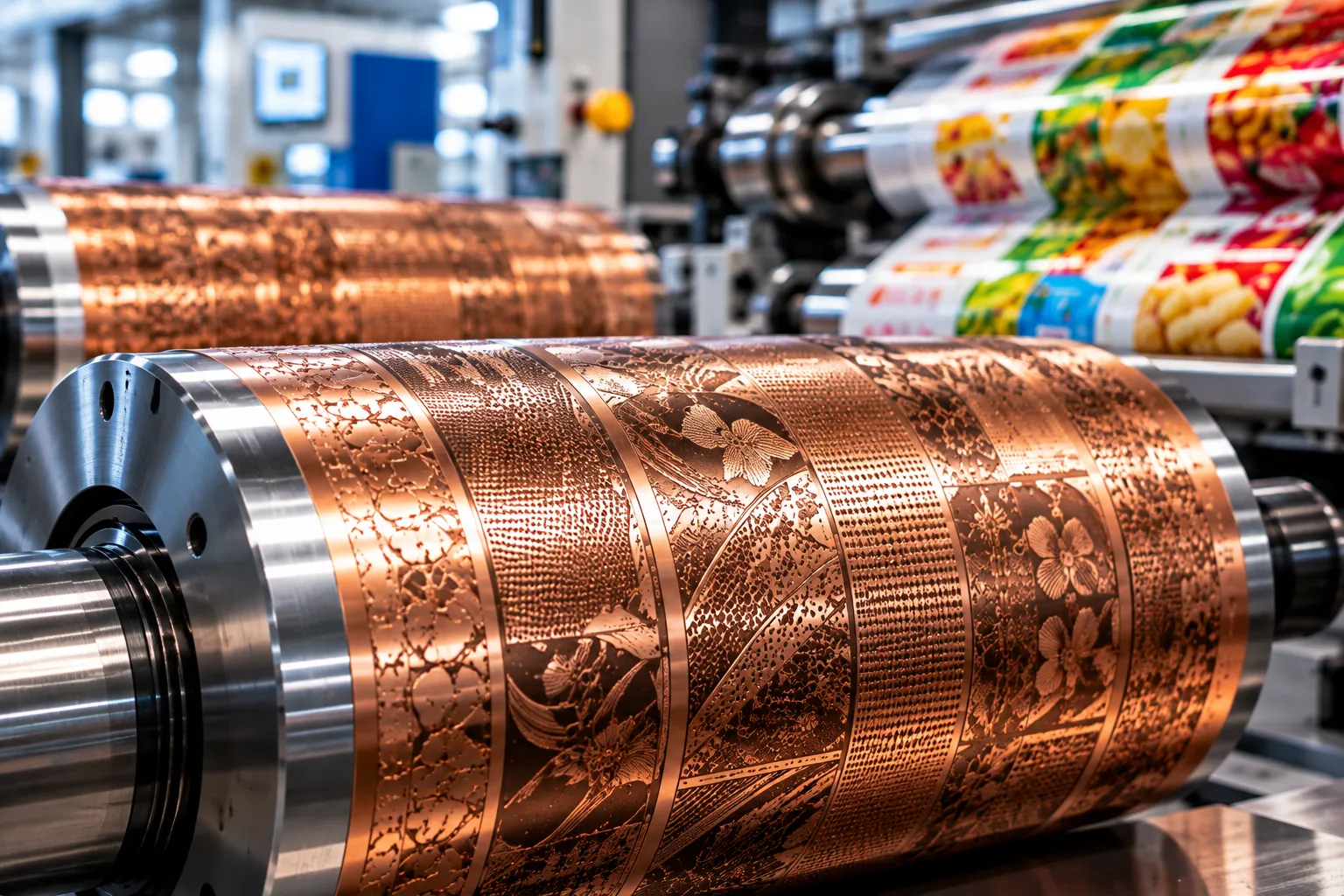
In gravure printing, the image is represented through microscopic recessed cells engraved into the cylinder surface. The characteristics of these cells determine how ink is stored and transferred during printing. This makes cylinder engineering particularly important for packaging applications where visual precision and repeatability are essential. The Best Gravure Printing Cylinders in India are therefore designed around the specific requirements of artwork, ink, substrate, and printing conditions.
How Gravure Cylinders Reproduce Fine Details
Fine details can include small letters, thin lines, intricate patterns, facial features, product illustrations, and other elements that may become unclear if they are not reproduced accurately. Gravure printing uses numerous engraved cells to represent different tonal and image areas.
The distribution and characteristics of these cells allow the cylinder to reproduce variations in ink density. When the engraving is accurately matched with the artwork, small visual elements can be represented with greater control.
For packaging manufacturers, this is particularly useful when a single design contains multiple information levels. A package may include a brand logo, nutritional information, regulatory text, decorative graphics, product imagery, and fine outlines. Each element requires adequate reproduction without allowing one component to interfere visually with another.
Cylinder engraving precision therefore becomes an important factor when packaging artwork contains fine graphical details.
The Importance of Gradients in Packaging Graphics
Gradients are another area where cylinder technology has a major role. A gradient gradually changes from one tone to another rather than maintaining a uniform colour.
Photographic packaging designs frequently contain natural gradients, such as shadows, highlights, skin tones, skies, product surfaces, or three-dimensional effects. Designers may also intentionally use gradients to create depth and visual transitions.
In gravure printing, these tonal changes are represented through variations in engraved cell characteristics. The relationship between cell depth, volume, spacing, and distribution influences the amount of ink transferred to different areas.
A well-controlled engraving structure can help create smoother tonal transitions. If the engraving does not adequately represent the required tonal range, gradients may appear uneven or lose subtle details.
This is one reason the Best Gravure Printing Cylinders in India require careful engineering rather than relying on a standard engraving configuration for every design.
Cell Geometry and Image Reproduction
The individual engraved cells may be microscopic, but their collective behaviour has a significant effect on the printed image. Cell geometry refers to characteristics such as cell shape, depth, size, spacing, and arrangement.
Different areas of an image can require different ink-transfer behaviour. Darker regions generally require greater ink volume, while lighter regions require controlled and lower ink deposition.
The engraving system converts the tonal information from the artwork into a corresponding cell pattern. This creates a connection between digital prepress data and the physical cylinder.
The accuracy of this conversion is particularly important for complex packaging artwork because multiple tonal levels may exist within a very small area.
Reproducing Complex Packaging Designs
Packaging designs have evolved considerably. Instead of simple logos and single-colour graphics, modern packages can combine photographs, gradients, illustrations, textures, fine text, barcodes, decorative patterns, and multiple colours.
A single cylinder may be responsible for one colour separation, while multiple cylinders work together to reproduce the complete design. Each cylinder must therefore correspond accurately with the overall artwork and registration requirements.
Even a small variation between colour separations can become visible when the final printed image contains sharp edges or fine details. Accurate cylinder manufacturing and engraving help maintain the relationship between different elements of the printed design.
Cylinder Surface and Ink Transfer
Engraving is only one part of cylinder performance. The surface on which the cells are created also matters.
Copper plating provides a suitable surface for engraving, while chrome plating is commonly used to provide a harder and more durable working surface. Surface preparation, plating uniformity, polishing, and finishing can all influence how the cylinder interacts with ink and the doctor blade.
During printing, the cylinder rotates through the ink system. The engraved cells collect ink, and the doctor blade removes excess ink from the surface. The remaining ink inside the cells is then transferred onto the substrate.
For detailed packaging graphics, controlled ink transfer is important because excessive or insufficient ink can change the appearance of fine elements and tonal areas.
Why Substrate Compatibility Matters
The same artwork may appear differently depending on the substrate being printed. Flexible packaging films, laminates, paper-based materials, and decorative surfaces can have different characteristics.
Surface properties can influence ink spreading, absorption, drying, and final appearance. Consequently, cylinder engraving parameters need to be considered alongside the intended substrate and ink system.
This application-specific approach is particularly important for packaging printers handling different product categories. A cylinder configuration suitable for one material may not automatically deliver identical results on another.
Fine Typography and Small Graphic Elements
Packaging often contains information that must remain readable at a relatively small size. Ingredient information, product descriptions, usage instructions, codes, and other details may occupy limited space.
Small typography places considerable demands on printing accuracy. Excessive ink spread can reduce the clarity of narrow characters, while insufficient ink transfer can make elements appear weak.
Accurate engraving helps translate these small elements into a suitable cell structure. Combined with appropriate ink and press settings, this can support sharper reproduction of small graphical components.
The ability to handle such details is another factor considered when developing the Best Gravure Printing Cylinders in India for demanding packaging applications.
Balancing Detail with Ink Coverage
A complex package does not contain only fine details. It may also include large solid areas, bold backgrounds, and high-density images.
This creates a technical challenge because the cylinder must support different image characteristics within the same print job. Fine lines require controlled ink deposition, while large solid areas require adequate and uniform coverage.
Cylinder engraving technology allows these variations to be represented through different cell structures across the image area. The objective is to create an engraving that can accommodate the tonal and graphical requirements of the complete artwork.
The Role of Technology in Cylinder Manufacturing
Modern cylinder manufacturing increasingly relies on digitally controlled processes. Artwork data can be processed and translated into precise engraving instructions, reducing dependence on manual interpretation.
Advanced engraving systems can control cell placement and characteristics with high precision. Manufacturing processes such as copper plating, electronic engraving, laser engraving, chrome plating, polishing, and balancing can then be integrated into a controlled production workflow.
These technologies help cylinder manufacturers address the increasingly complex requirements of modern packaging designs.
Consistency Across Long Production Runs
Packaging production frequently involves large print volumes. Once a design has been approved, the same visual appearance may need to be reproduced across extended production runs.
Cylinder durability and surface quality become important under these conditions. A cylinder that maintains its working characteristics over repeated printing can help reduce variations during production.
Proper storage, cleaning, inspection, and handling are also important for preserving the engraved surface between printing cycles.
Why Cylinder Precision Matters to Packaging
A finished package represents the combined result of artwork preparation, cylinder engraving, ink formulation, substrate selection, press conditions, and finishing processes. The cylinder acts as the physical bridge between the digital design and the printed image.
When the engraving accurately represents the artwork and the cylinder surface supports controlled ink transfer, complex visual elements can be reproduced with greater predictability.
For packaging applications where appearance is closely connected with product presentation, this technical role makes cylinder manufacturing an important part of the overall printing workflow.
Conclusion
Gravure printing cylinders are much more than rotating components that carry ink. Their engraved cell structures translate digital artwork into physical ink-transfer patterns capable of representing fine typography, delicate lines, smooth gradients, photographs, and complex packaging graphics.
From cell geometry and engraving depth to copper preparation, chrome finishing, surface quality, and substrate compatibility, multiple factors contribute to the final result. The Best Gravure Printing Cylinders in India are developed by considering these factors as an interconnected system rather than treating engraving as an isolated operation.
As packaging designs continue to become more detailed and visually sophisticated, precise cylinder engineering will remain an important foundation for reproducing the fine details and tonal characteristics that modern printed packaging demands.


























Sign in to leave a comment.