

A therapist sat cross-legged on the living room floor, a set of plastic dinosaurs scattered between her and a four-year-old who had refused, twice already, to make eye contact during the greeting routine. Ten minutes later he was handing her a dinosaur without being asked, laughing when she made it roar too loudly. Nothing on the session plan mentioned dinosaurs specifically. What the plan called for was an opportunity to practice requesting and turn-taking in a context the child actually wanted to be in, and the dinosaurs were simply what that looked like that afternoon.
Parents new to ABA therapy sometimes picture a table, a set of flashcards, and a child being drilled through repetition. That image persists partly because early behavioral approaches did lean heavily on structured, adult-directed teaching. Current practice, including much of what happens in Charlotte homes and clinics, looks considerably different, and play is often where the most meaningful teaching happens.
Why play is not a break from therapy
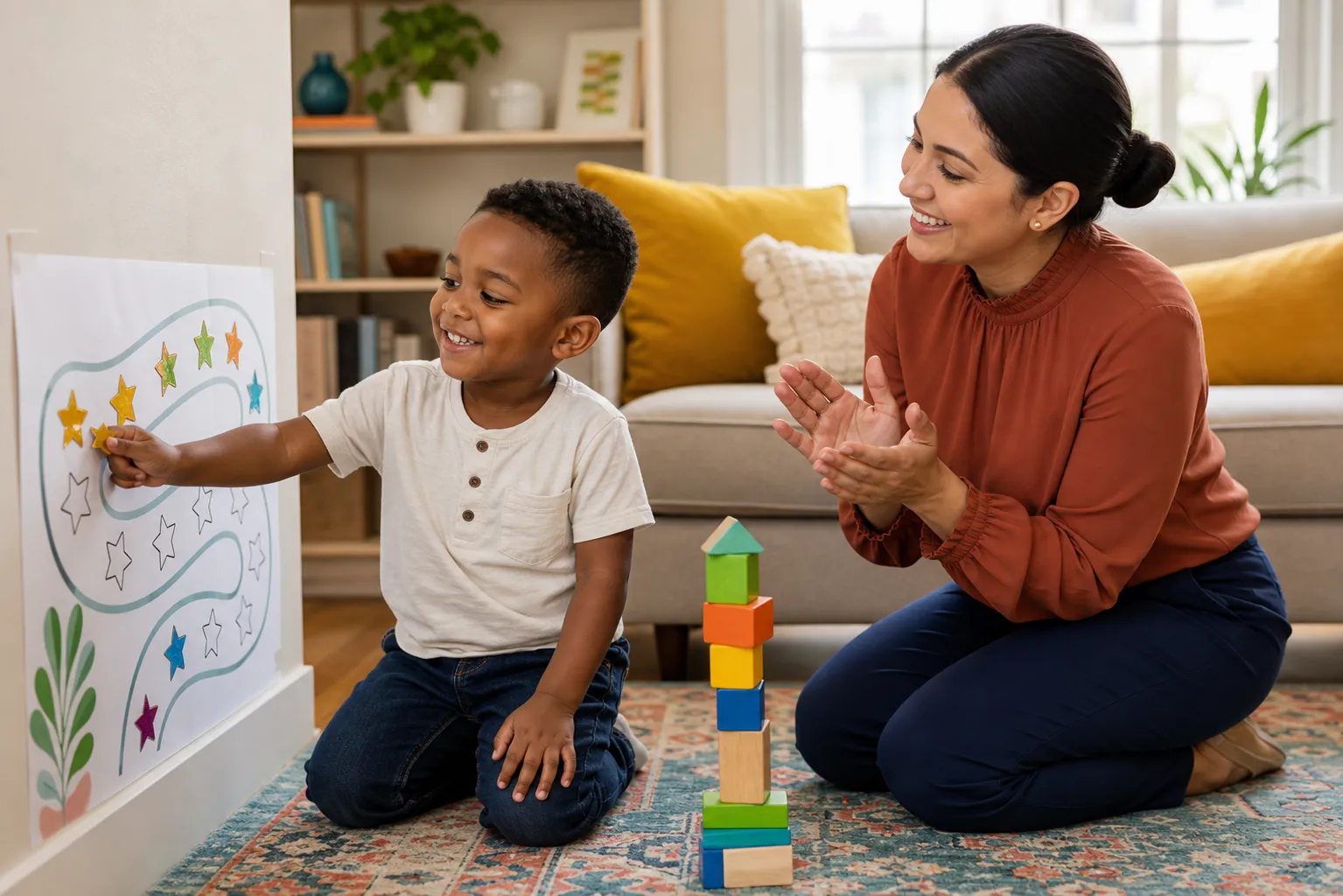
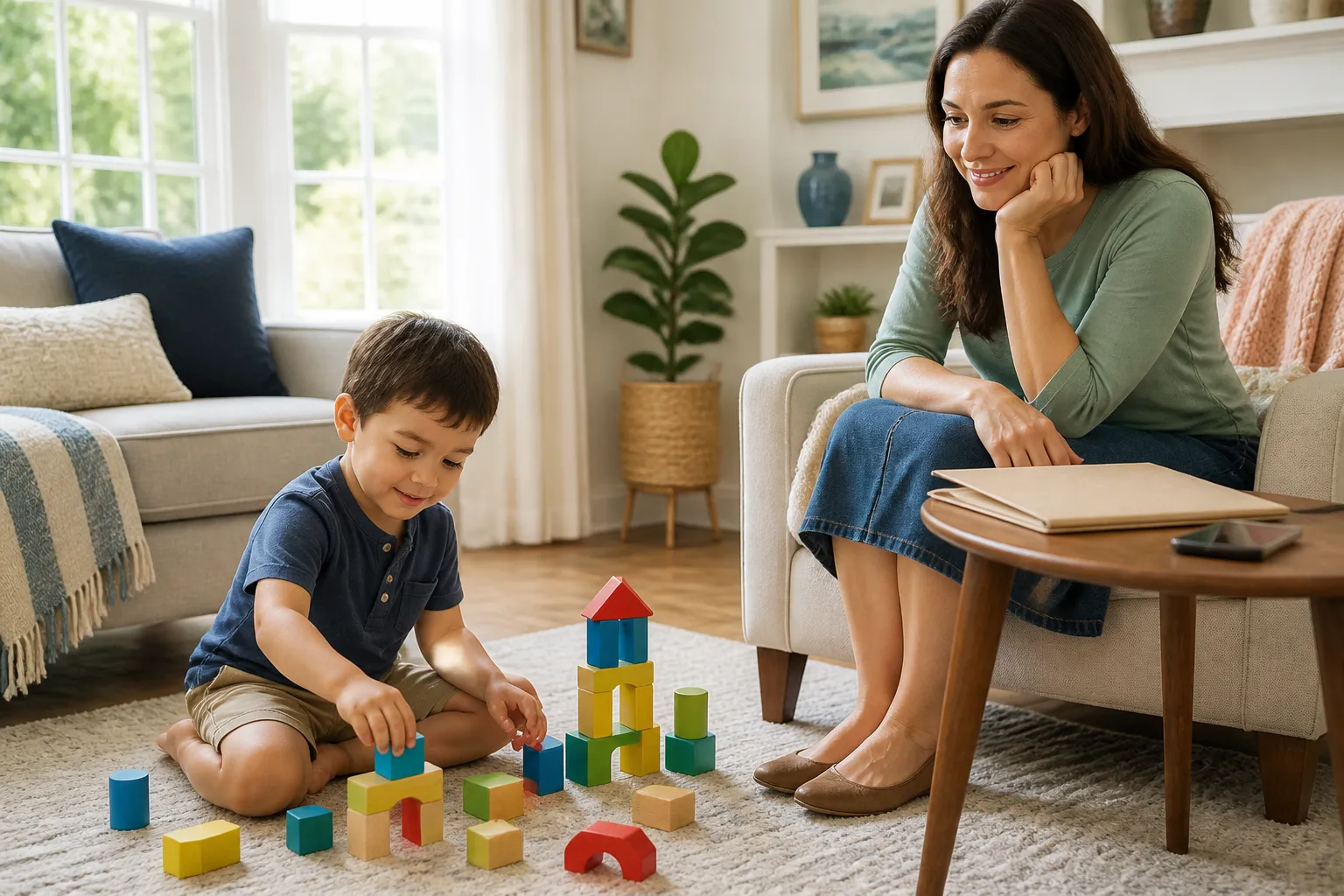
Natural environment teaching uses a child's own motivation, whatever currently holds their attention, as the entry point for a specific skill. If a child is drawn to building blocks, a Board Certified Behavior Analyst might design opportunities around that interest to target requesting, sharing, or following multi-step directions. The skill being taught is the same one that might otherwise be practiced in a structured format, but it is embedded in an activity the child chooses, which tends to produce responses that generalize better once therapy time ends for the day.
This matters because a skill only practiced in one narrow, adult-directed context often does not transfer anywhere else. A child who can label colors on command during a drill but never spontaneously mentions color while playing has not yet generalized that skill in a way that shows up in daily life. Play-based teaching is one of the more reliable ways to close that gap, since it asks a child to use a skill in something closer to how they will actually need it.
What families in Charlotte should expect to see
Providers offering behavioral therapy in charlotte generally blend structured teaching with these more naturalistic, play-based sessions depending on the goal and the child. A parent watching a session should expect to see moments that look almost entirely like ordinary play alongside moments that look more clearly instructional, and both serve a purpose within the same plan.
It is worth asking directly how a provider balances the two, and how they decide which approach fits a particular goal on a particular day. A provider who treats play only as a reward for finishing "real" work is using an older model than one who treats play itself as the primary teaching context whenever it fits the goal.
Behavior reduction through what play makes possible
Play also matters for reducing challenging behavior, though not in the way people sometimes assume. Rather than suppressing a behavior directly, therapists frequently use engaging activities to teach a replacement skill, a more effective way for a child to get a need met that the challenging behavior was previously meeting. A child who used to grab a toy might instead be taught, through repeated practice inside preferred play, to request it, which tends to reduce the original behavior without ever punishing it directly.
None of this makes therapy indistinguishable from ordinary playtime, and a good provider will say so plainly. But the presence of joy in a session is not incidental to the work. For many children, it is the condition that makes the rest of the plan possible at all.























Sign in to leave a comment.