

Industrial separation processes are essential for producing high-quality materials, recovering valuable components, and maintaining efficient manufacturing operations. Industries such as chemical processing, petrochemicals, pharmaceuticals, and environmental treatment rely on separation equipment to manage complex mixtures of gases and liquids. The effectiveness of these processes depends on equipment design, operating conditions, and the quality of the internal components used in separation towers.
Packing materials play an important role in improving contact between gas and liquid streams inside packed columns. By providing a large surface area within a relatively compact space, they support mass transfer and help achieve the desired separation performance. Selecting suitable packing can also influence pressure drop, energy consumption, maintenance requirements, and overall operating costs.
Understanding the role of random packing, its different types, benefits, and industrial applications helps engineers make informed decisions when designing or upgrading separation systems.
Understanding Random Tower Packing
Random tower packing manufacture consists of individual packing elements placed loosely inside a column or tower. Unlike structured packing, where elements are arranged in an organized pattern, random packing creates a three-dimensional bed through which gas and liquid streams can flow.
These elements are available in different shapes, sizes, and materials. Common examples include Pall rings, Raschig rings, saddle-shaped packing, and other specialized geometries. Each design offers different characteristics related to surface area, liquid distribution, mechanical strength, and resistance to gas flow.
Inside a packed tower, liquid typically flows downward over the packing while gas moves upward. The packing promotes contact between the two phases, allowing components to transfer from one phase to another. This process supports operations such as absorption, stripping, and certain distillation applications.
The effectiveness of the packing depends on several factors, including element geometry, bed depth, liquid distribution, gas velocity, and the physical properties of the process fluids. Proper selection and installation are therefore essential for achieving consistent performance.
How Random Packing Improves Industrial Separation
1. Increases Gas-Liquid Contact
Efficient separation requires sufficient contact between gas and liquid streams. Random packing provides surfaces where liquid can spread into films while gas flows through the available openings.
This interaction creates opportunities for mass transfer, allowing selected components to move between the phases. In gas absorption, for example, a target gas component may transfer into a liquid absorbent. In stripping, dissolved components may move from a liquid into a gas stream.
Suitable packing geometry and effective liquid distribution help maximize the use of the available surface area and improve separation performance.
2. Supports Efficient Mass Transfer
Mass transfer is a fundamental mechanism in many industrial separation processes. Packing design influences the area available for contact, liquid wetting, and the movement of gas through the column.
Different packing geometries offer different combinations of surface area and flow resistance. Pall rings, for example, include openings that promote fluid movement and provide additional contact surfaces. Saddle-shaped elements can support liquid distribution, while simpler ring designs may be suitable for particular process requirements.
The best choice depends on the required separation efficiency, fluid properties, operating conditions, and column configuration.
3. Helps Manage Pressure Drop
Pressure drop refers to the reduction in pressure as gas passes through the packed bed. Excessive pressure drop can increase the energy required to move gas through a system and may affect operating costs.
Random packing with suitable open areas can provide favorable flow characteristics while maintaining useful mass transfer performance. However, pressure drop depends on packing size, gas velocity, liquid loading, and the condition of the packed bed.
Engineers should evaluate both separation efficiency and hydraulic capacity rather than selecting packing based on surface area alone.
4. Supports Flexible Process Design
Random packing is available in a wide range of dimensions, shapes, and materials. This flexibility allows engineers to select configurations that match the requirements of different towers and process applications.
Existing packed columns may also be upgraded with alternative packing designs when suitable for the tower dimensions and internal components. Before making changes, engineers should assess the support system, liquid distributor, operating capacity, and compatibility with the process.
This flexibility makes random packing a practical option for many industrial separation systems.
Major Types of Random Tower Packing
Pall Rings
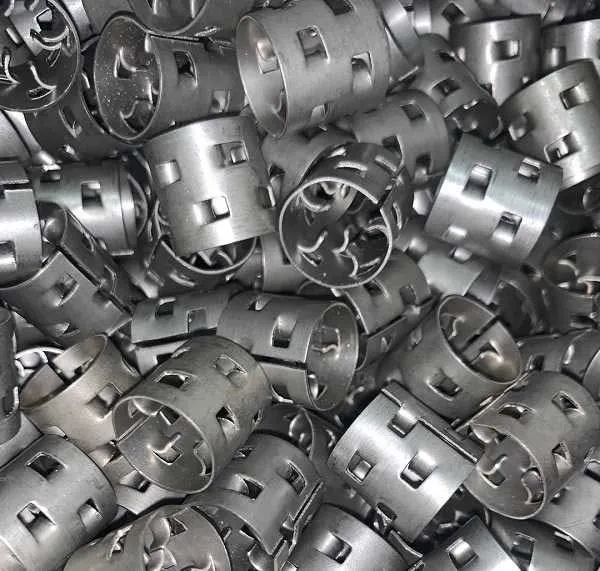
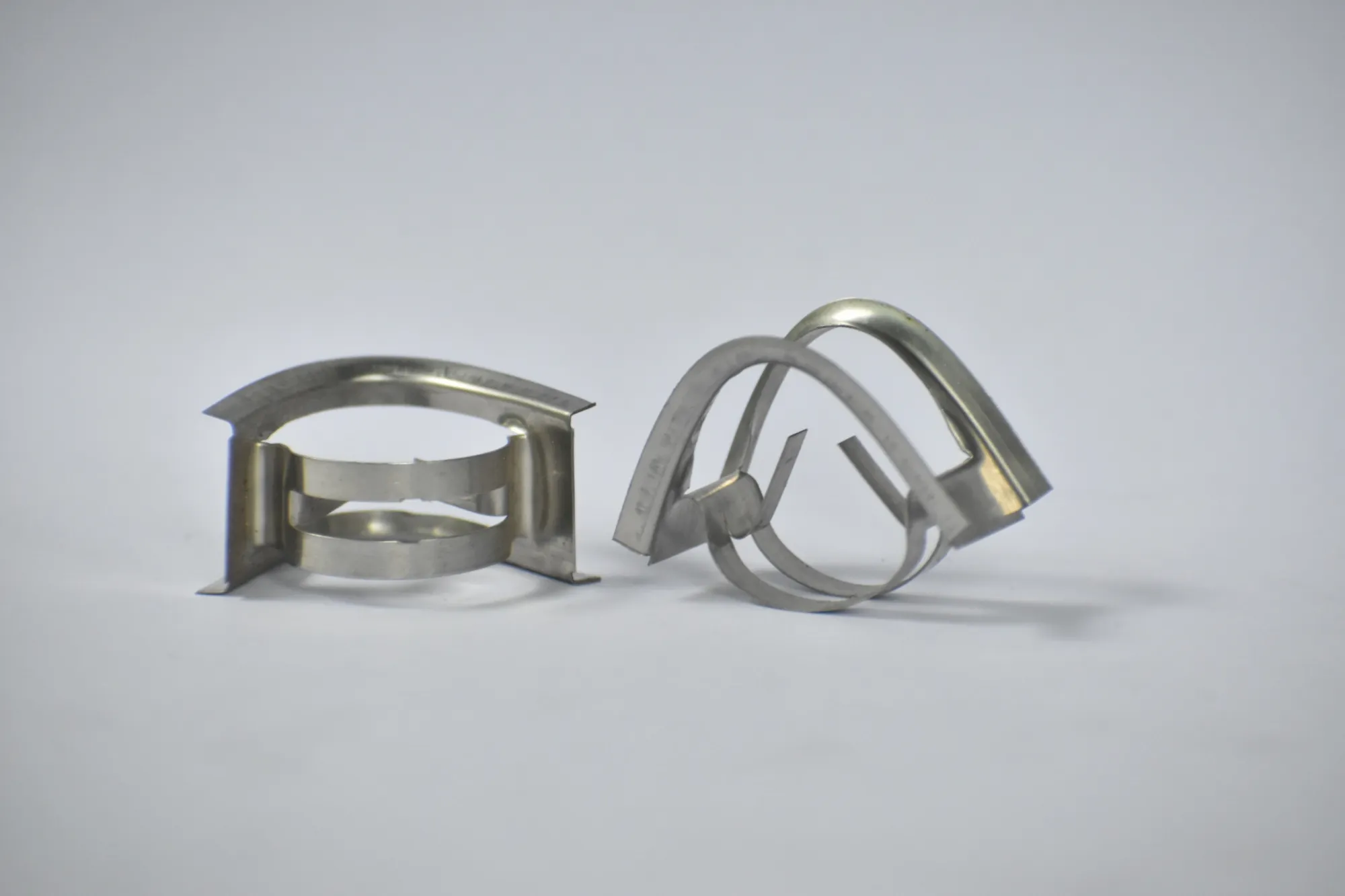
Pall rings feature a cylindrical shape with openings in the sidewall and internal projections. Their design helps improve fluid movement through the packing bed and supports gas-liquid contact.
They are commonly available in metal, plastic, and ceramic materials. The appropriate option depends on operating temperature, chemical compatibility, mechanical requirements, and process conditions.
Raschig Rings
Raschig rings are simple cylindrical packing elements with a length generally comparable to their diameter. They provide contact surfaces for gas and liquid movement and are used in selected absorption and separation applications.
Their straightforward geometry can make them suitable for certain applications, although their hydraulic and mass transfer performance should be compared with alternative designs before selection.
Saddle-Shaped Packing
Saddle-shaped packing is designed to promote fluid distribution and provide contact surfaces within the packed bed. Different ceramic, plastic, and metal saddle designs are available for industrial applications.
Material selection depends on the operating environment, including chemical exposure, temperature, and the mechanical demands of the process.
Material-Based Selection
Metal packing is often considered for applications requiring mechanical strength and suitable temperature performance. Plastic packing offers low weight and resistance to many chemicals, depending on the polymer and operating conditions. Ceramic packing may be appropriate for selected corrosive or high-temperature environments but requires careful handling because it can be brittle.
Each material has specific advantages and limitations. Compatibility with the actual process fluid must always be verified.
Industrial Applications of Random Tower Packing
Chemical Processing
Chemical plants use packed towers for gas absorption, stripping, and other separation operations. Random packing helps provide contact between process fluids and can support chemical recovery, purification, and contaminant removal.
The packing material must withstand the chemicals and temperatures present in the system while meeting the required performance targets.
Petrochemical and Refining Industries
Petrochemical facilities rely on separation equipment to process gas streams, recover components, and support selected refining operations. Packed columns can be used in appropriate absorption and stripping duties.
Engineers must consider gas composition, operating pressure, temperature, and hydraulic capacity when selecting packing for these environments.
Environmental Treatment
Gas scrubbing systems use liquid absorbents to remove selected contaminants from industrial exhaust streams. Random packing creates contact between the gas and treatment liquid, supporting the transfer of target components into the liquid phase.
Packing selection should account for the nature of the contaminants, liquid chemistry, potential solids accumulation, and cleaning requirements.
Water and Wastewater Treatment
Some water and wastewater treatment systems use packed towers for gas transfer, air treatment, or biological processes. Packing provides surfaces that support contact between fluids or, in certain biological systems, surfaces for microbial growth.
The appropriate design depends on the treatment objective, operating conditions, and potential for fouling.
Pharmaceutical and Specialty Chemical Production
Specialty chemical and pharmaceutical processes may require controlled separation conditions and compatible construction materials. Packed columns can support selected purification and recovery operations.
In these applications, engineers should consider contamination control, cleaning requirements, material compatibility, and the specific quality standards governing the process.
Factors to Consider When Selecting Random Packing
Choosing the right packing requires an evaluation of the complete separation process rather than one isolated performance feature.
Process requirements: Determine the target separation, required product purity, expected recovery rate, and operating range.
Packing size and geometry: Smaller packing elements can provide greater geometric surface area per unit volume but may increase flow resistance. Larger elements can provide greater flow capacity in suitable applications but may reduce available surface area per unit volume.
Material compatibility: Evaluate chemical composition, temperature, pressure, and potential corrosion or degradation risks.
Hydraulic performance: Assess pressure drop, flooding limits, liquid distribution, and the risk of entrainment under expected operating conditions.
Installation and maintenance: Consider tower access, packing support arrangements, loading procedures, cleaning needs, and replacement costs.
A reliable supplier or process engineering specialist can help compare suitable designs and confirm that the selected packing matches the intended operating conditions.
Best Practices for Maintaining Separation Efficiency
Proper installation is important for achieving the expected performance from random packing. Packing should be loaded according to the manufacturer's recommendations, with attention to bed uniformity and the condition of support plates and retaining systems.
Liquid distribution equipment should also be inspected to ensure that the liquid reaches the packed bed evenly. Poor distribution can cause channeling, reduce effective contact area, and limit separation performance even when high-quality packing is used.
During operation, monitoring pressure drop, flow rates, and product quality can help identify developing problems. Deposits, broken packing elements, or changes in operating conditions may affect performance and require corrective action.
Routine inspections and appropriate cleaning procedures help control fouling and support reliable operation. Maintenance activities should follow established safety procedures and recommendations for the specific packing material.
Conclusion
Random tower packing is an important component in many industrial separation systems because it supports gas-liquid contact, mass transfer, and efficient use of column space. Different packing geometries and materials offer advantages for specific operating conditions, making careful selection essential for achieving reliable results.
By evaluating process requirements, pressure drop, chemical compatibility, installation conditions, and maintenance needs, industrial facilities can choose suitable packing for their applications. Proper column design and routine monitoring further help maintain separation performance, manage operating costs, and support long-term process reliability.






















Sign in to leave a comment.