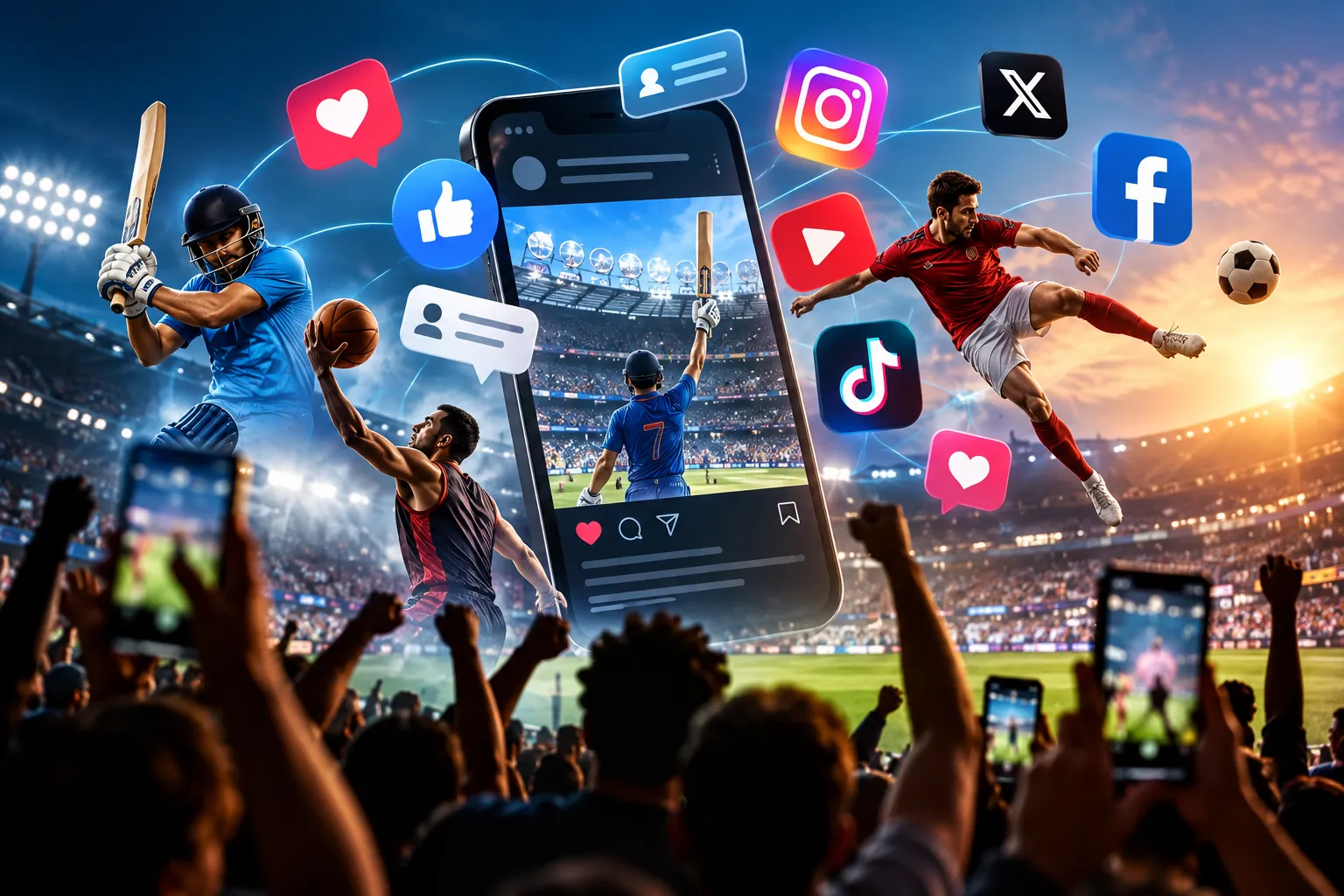


There was a time when the final whistle meant the end of the conversation. Fans would head home, read the newspaper the next morning, and wait for the next match to come around.
That rhythm has changed completely.
Today, a big sporting moment can live online for days, sometimes weeks. A spectacular goal becomes a short video within minutes. A player's reaction turns into a meme before the post-match interview is even over. Fans argue about a referee's decision on social media, share clips with friends, and follow athletes they may never have heard of a few years earlier.
Social media has become part of the sports experience itself. It connects athletes, teams, leagues and fans in ways that were difficult to imagine in the past. It has also changed how people discover matches, follow results and engage with sports online.
From Watching Sports to Taking Part in Them
One of the biggest changes brought by social media is the way fans participate.
Watching a cricket match or football game used to be a fairly simple experience. You watched the broadcast, cheered for your team and perhaps discussed the result with friends later.
Now, fans are part of a much larger conversation.
During a match, thousands of people may be posting reactions at the same time. A missed chance can trigger thousands of comments. A last-minute winner can dominate timelines within seconds. Even people who are not watching the game live may discover what happened through a clip or post.
This has made sports feel more immediate and communal. A fan sitting alone at home can still feel connected to a huge crowd.
Athletes Have Their Own Voice
Social media has also changed the relationship between athletes and their audiences.
Previously, most information about a player came through journalists, television interviews or official team announcements. Today, athletes can speak directly to supporters through platforms such as Instagram, X and YouTube.
A player might post a training video in the morning, share a photograph from the team bus in the afternoon and respond to fans after the match. Small moments like these help supporters see the person behind the statistics.
For younger athletes in particular, social media can become an important part of building a personal identity. Their audience is not limited to people who watch their matches. A footballer can attract followers because of his personality, a cricketer can become popular through behind-the-scenes content, and an athlete can build an international fan base without relying entirely on traditional media.
That direct connection can be powerful, although it also means athletes have to be careful about what they post. One impulsive comment can travel much further than intended.
How Teams and Leagues Build Their Brands
Sports organisations have noticed the same opportunity.
Clubs and leagues now use social media for much more than announcing fixtures. Training-ground videos, player interviews, dressing-room celebrations, historical photographs and short match highlights all help create a stronger connection with supporters.
A good social media post can make an ordinary Tuesday feel like part of the season.
This matters commercially, too. Strong digital communities give teams more opportunities to promote merchandise, sponsorships, ticket sales and other products. Sponsors also benefit because their brands can appear alongside moments that already have millions of people paying attention.
The result is a sports ecosystem where the match itself is only one part of the experience.
Short Videos Have Changed Sports Content
The rise of short-form video has probably had the biggest impact on sports content.
People do not always have time to watch an entire match or a 30-minute analysis programme. A 20-second clip showing a brilliant goal, unbelievable catch or dramatic finish can tell a story almost instantly.
This has made sports content easier to consume and share.
It has also helped lesser-known sports find new audiences. A spectacular moment from a sport that receives limited television coverage can suddenly reach viewers across the world when the right clip is shared widely.
The downside is that short clips rarely provide the full context. A controversial incident can look very different when viewed from one angle or without seeing what happened before it. Fans therefore need to remember that a viral clip is often only one small piece of the story.
Social Media and Sports Online
The growth of social platforms has happened alongside the wider expansion of sports online.
Fans now have more ways to follow fixtures, scores, statistics, commentary and sporting discussions without depending entirely on television coverage. Digital platforms have made it easier to keep track of a favourite team even when a person is travelling, working or simply away from the television.
Platforms and services such as Lotus 365 are part of this broader digital sports environment, where fans increasingly look for convenient ways to stay connected with sporting activity.
The important change is not simply that sports have moved onto the internet. It is that the internet has made sports more continuous. There is always another update, another conversation, another statistic or another piece of content waiting to be seen.
The Influence on Sports Journalism
Social media has also changed sports journalism.
Journalists no longer have to wait for the next day's newspaper to publish a story. Breaking news can be shared almost instantly, and reporters can communicate directly with their audiences.
At the same time, the speed creates new challenges.
A rumour can spread before it has been verified. A misleading headline can attract thousands of clicks. Old photographs can resurface and be mistaken for current events. The pressure to publish quickly can sometimes compete with the need to check information carefully.
For fans, this makes media literacy increasingly important. Following several credible sources and checking the original information before sharing a dramatic claim can prevent a lot of confusion.
When Social Media Becomes Too Much
There is another side to the story.
The constant connection between athletes and fans can create enormous pressure. Players are not only judged on their performances anymore. Their posts, interviews, celebrations and personal lives can all become subjects of public discussion.
Online abuse is another serious problem. A player who misses a penalty or drops an important catch may face thousands of angry messages within minutes. Behind a screen, people sometimes say things they would never say face-to-face.
Fans can also become overwhelmed by the endless stream of content. Every match generates reactions, debates, clips and opinions. Sometimes it becomes difficult to simply enjoy the sport without immediately thinking about how the moment will perform online.
Finding that balance matters.
A New Kind of Sports Community
Despite its problems, social media has created something remarkable: a global sports community that never really sleeps.
A supporter in India can discuss a European football match with someone in Brazil. A cricket fan can follow a player's journey from domestic cricket to an international debut. An old sporting photograph can introduce a legendary player to a completely new generation.
The distance between athletes and supporters has become smaller, an



























Sign in to leave a comment.