

Ask most people how water soluble packaging works, and they will offer a simple answer: it dissolves. The reality is far more nuanced. A pouch designed to break down in a cold laundry cycle behaves very differently from one engineered for hot industrial cleaning, and the film chemistry behind each is carefully tuned to match its intended environment. POLYVA has spent years studying these distinctions, and its machine systems are built to accommodate the full spectrum of solubility requirements. Understanding how cold, medium, and hot water solubility differ, and how POLYVA's equipment responds to each, reveals the depth of science that sits behind every roll of film and every sealed pouch.
What Solubility Actually Means at the Molecular Level
Water soluble films are typically made from polyvinyl alcohol, a polymer whose molecular chains are held together by hydrogen bonds. When the film meets water, those bonds begin to weaken, allowing the polymer chains to separate and disperse into the surrounding liquid. The speed and completeness of this process depend on the strength of those bonds, which in turn depends on how the film was formulated and processed. Temperature plays a decisive role because heat energizes water molecules and accelerates bond disruption. POLYVA's engineers work with this molecular reality, selecting films and machine settings that align with the temperature conditions a product will actually encounter.
Cold Water Solubility and Its Formulation Challenges
Cold water solubility is the most demanding category to engineer because the dissolving medium offers less energy to break the polymer structure. Films designed for cold water must use modified polymer grades that dissolve at lower temperatures, often through adjustments to molecular weight and the addition of specific plasticizers. These formulations tend to be more sensitive to moisture during storage, which places additional demands on packaging equipment. POLYVA's machines handle these delicate films with gentle tension control and sealing systems that avoid overheating the material, preserving the very properties that make cold water dissolution possible.
Medium Water Solubility as the Practical Middle Ground
Many household and industrial products are designed to dissolve in warm water, typically in the range encountered in residential washing machines or manual cleaning routines. Films in this category balance dissolution speed with mechanical strength, allowing pouches to survive handling and shipping without dissolving prematurely. POLYVA's equipment for medium solubility applications focuses on consistent sealing and precise film tension, because variations in either can shift the dissolution threshold in unintended directions. This middle ground serves a large share of the detergent and cleaning product market, where reliability matters more than extreme performance at either temperature.
Hot Water Solubility for Demanding Industrial Applications
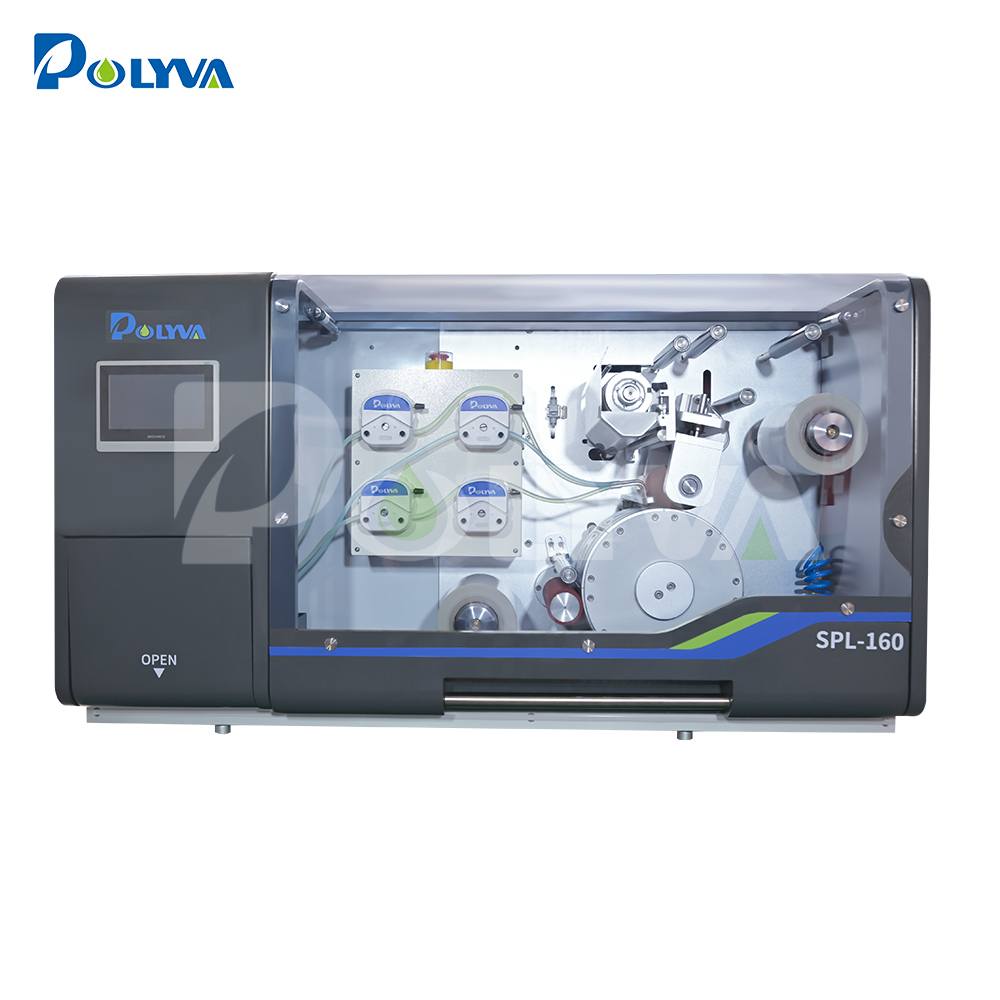
Hot water soluble packaging machine suits applications where pouches are introduced into heated tanks, industrial washers, or processes with active agitation. Films engineered for these conditions can afford greater mechanical toughness because the water itself provides ample energy for dissolution. Agrochemical dosing, industrial cleaning concentrates, and certain food service applications often fall into this category. POLYVA's machines for hot soluble films accommodate thicker materials and higher sealing temperatures without compromising the film's ability to dissolve fully once it reaches its intended environment.
How Temperature Affects Machine Calibration
Temperature is not just a property of the water; it is a variable inside the machine as well. Sealing jaws, forming plates, and film transport systems all generate heat, and that heat interacts with the film's solubility profile. POLYVA calibrates each machine according to the film it will run, adjusting sealing temperature, dwell time, and cooling intervals to avoid altering the film's designed dissolution behavior. This calibration is not a one-time setting; it is documented and revisited whenever a client changes film types or product formulations.
Testing Dissolution Across the Full Temperature Spectrum
POLYVA evaluates films and finished pouches across a range of water temperatures to confirm that performance matches expectations. Cold, medium, and hot conditions are tested separately, with observations recorded on dissolution time, residue, and film integrity. Clients receive this data as part of the machine acceptance process, giving them confidence that their packaging will behave correctly in the hands of end users. This testing also helps identify the boundaries of a film's performance, so clients understand where it will succeed and where it will not.
Matching Solubility to the Product and the User
The choice between cold, medium, and hot solubility is ultimately a decision about the end user's experience. A consumer washing clothes in cold water expects the pod to vanish completely. An industrial operator dosing a heated tank expects the same reliability under different conditions. POLYVA's role is to connect these expectations to the right film and the right machine settings, ensuring that the science of solubility translates into packaging that performs exactly as intended. That alignment, more than any single feature, is what makes POLYVA's systems dependable across the full temperature spectrum.

























Sign in to leave a comment.