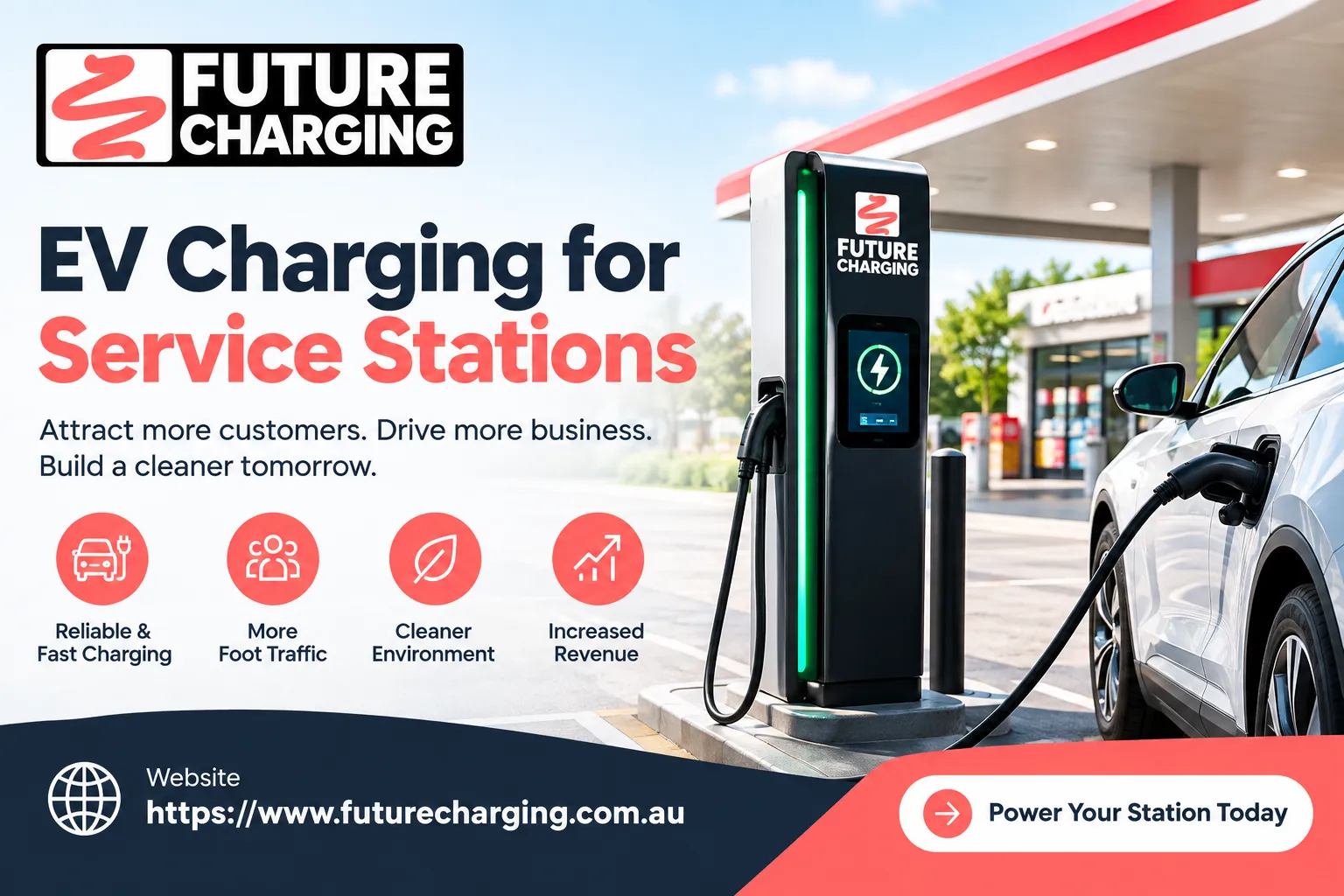

A service station visit is changing as more drivers switch to electric vehicles. Fuel customers may be in and out within minutes, while EV drivers can spend longer at the same site. That creates new questions around space, amenities, charging speed and customer experience. EV Charging for Service Stations now involves more than adding a charger beside existing pumps. It requires thinking about how drivers move, what they do while charging and what makes them choose the same stop again.
Are Service Stations Becoming More Than Just Places to Refuel?
For decades, a service station meant one thing: pull in, fill up, pay and leave. That pattern is changing as more EV drivers arrive. Charging takes longer, giving customers time to use nearby amenities and creating new possibilities for service stations.
That extra time near the shop, the food counter, or a place to sit is not dead time, and the charging fee itself adds a revenue line a fuel bowser cannot.
How Can EV Charging Fit Into an Existing Service Station?
Adding chargers only works when fuel and EV customers can move through the site without getting in each other’s way. Clearly marked bays should allow easy entry and exit without blocking fuel lanes. Ultra-fast chargers suit quick-stop locations, while extra electrical load may require upgrades. Planning conduits or wiring early also makes future EV Charging for Service Stations easier.
What Will EV Drivers Expect From a Service Station Charging Stop?
An EV driver pulling in does not just want a charger to exist. They want the stop itself to work without friction.
Payment and reliability
Payment needs to be simple, whether that is tap and go, an app, or a card reader that actually functions. A driver should not need to call anyone to figure out how to pay. Chargers also need to stay in working order, and reliability is what keeps a driver from writing the site off after one bad visit.
Support and speed
When something does go wrong, there should be a clear way to get help, since a broken charger with no support line is worse than no charger at all. Faster charging times help too, and less waiting is what turns a one-time visitor into someone who comes back.
When the charging experience works smoothly, drivers have more reason to return to the same location. EV Charging for Service Stations can influence where people choose to stop, especially when charging, payment, reliability and support all work together. A well-planned experience can turn a necessary charging stop into a preferred destination.























Sign in to leave a comment.