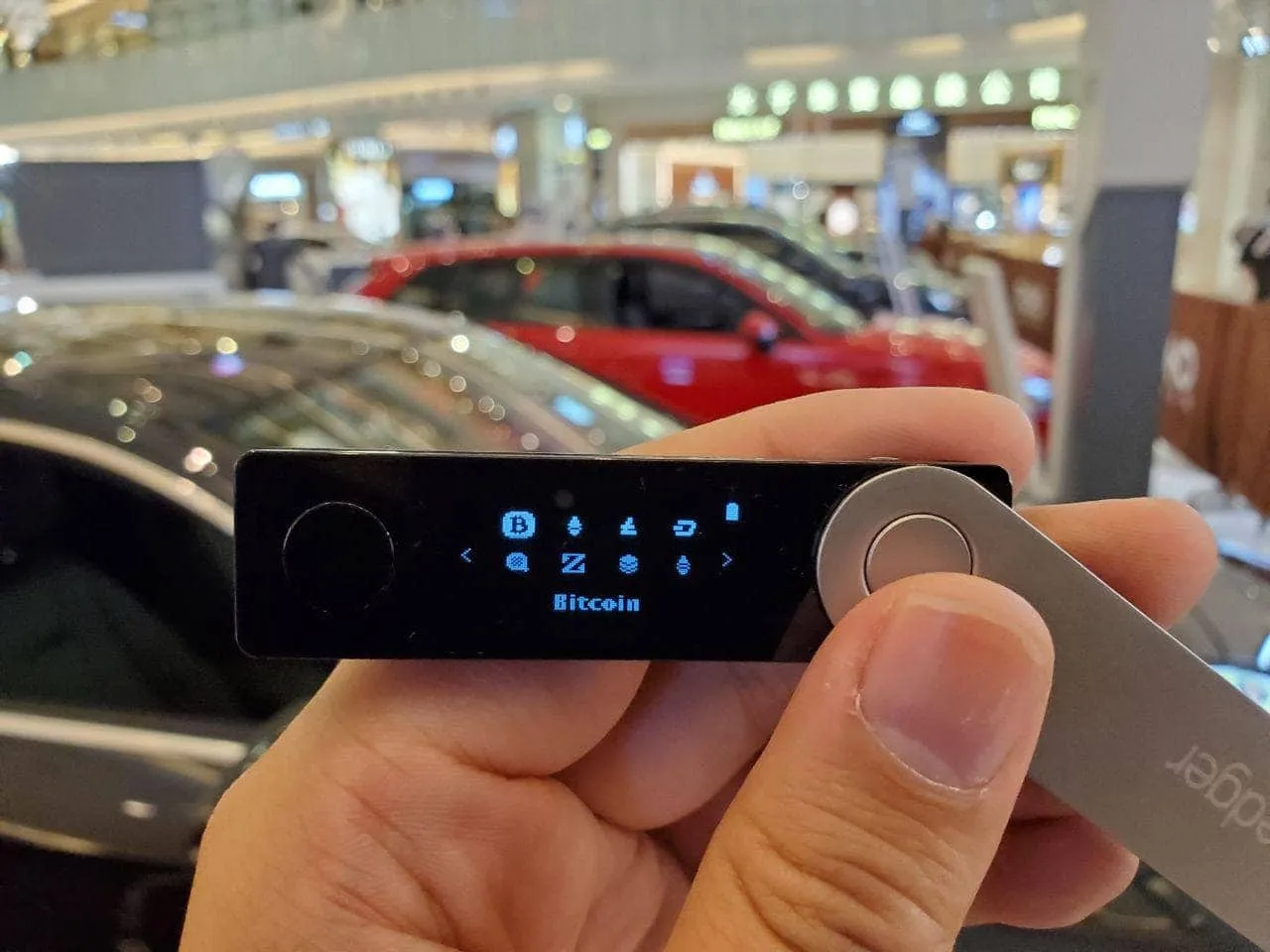

On October 9, 2026, users across Southeast Asia woke up to empty wallets. Not partially drained — emptied. Bitcoin, TRON, ETH — gone across five blockchains in a 47-minute window. By the end of the day, on-chain analysts had confirmed $92.9 million missing from 311 wallets. The source: Ledger hardware wallets sold by an authorized reseller called CryptoBilis.
Four days later, Ledger's in-house security research lab — Ledger Donjon — published a technical confirmation that changed how the crypto security community thinks about hardware wallet threats. The devices had been physically modified. A custom spy chip had been installed inside the casing. It read the 24-word seed phrase off the screen during first-time setup and transmitted it silently over a cellular network using an embedded SIM.
No hack of Ledger's servers. No malware. No phishing. The attack happened inside the device, before the user ever saw it.
The timeline: from first reports to confirmation
October 9, 2026 — Friday morning. Users in Malaysia, Indonesia, and the Philippines begin posting on Reddit and X about drained wallets. All bought devices from CryptoBilis, an authorized Ledger reseller operating across Southeast Asia. On-chain analysis shows simultaneous drains across multiple wallets — TRON, Bitcoin, Ethereum, and two smaller chains — within a 47-minute window. The coordination points to a single actor with pre-acquired seed phrases, not a real-time hack.
Ledger's support account responds: "We are investigating a specific issue concerning CryptoBilis and have asked them to pause all sales and shipments." Anyone who purchased from CryptoBilis in the past 90 days is advised not to initialize unused devices. Anyone who already configured a device is told to treat their seed phrase as compromised.
October 9 — same day. Mark Karpelès — former CEO of Mt. Gox, now a security researcher — publicly requests that CryptoBilis provide devices from remaining inventory for forensic examination. He begins physically inspecting units. Changpeng Zhao (CZ) posts on X calling it a supply chain attack at a single vendor. Bitquery publishes on-chain breakdown: TRON accounts for $70.5M of losses, Bitcoin $16.8M, remainder across other chains.
October 10–12. Security researchers note that CryptoBilis recently changed ownership — corporate records show transfer to an individual named Jiaming, identified as a Chinese national. The ownership change preceded the drain. MediaMarkt Saturn stops selling Ledger devices in stores and online across Europe. Trezor and OneKey cut ties with CryptoBilis. A possibly separate tampered device surfaces in Singapore, raising questions about whether the attack extends beyond CryptoBilis.
October 13 — Ledger Donjon publishes technical confirmation. The implant is real. Here is what Ledger's security team found.
The implant: what was inside the device
The implant is confirmed by Ledger Donjon as a separate physical component installed inside the device casing. It does not modify the Ledger's Secure Element — the dedicated security chip that generates and stores private keys. It does not alter the operating system. It does not interfere with transaction signing. The Secure Element, the part of the device that is supposed to be the impenetrable core, was never touched.
The attack targeted something different: the moment the device displays the seed phrase.
When you set up a Ledger hardware wallet, the device generates a 24-word recovery phrase — the BIP39 mnemonic that is the master key to every wallet on that device. The device displays these words on its screen one at a time. You write them down. That phrase, and only that phrase, controls your funds forever. The Secure Element is designed so the phrase never leaves the device in digital form.
The implant doesn't need it to leave the Secure Element. It waits for the phrase to appear on the screen.
According to Aviatrix's threat research, the component consists of:
A custom PCB — a small printed circuit board designed to fit inside the Ledger Nano X casing without visibly altering the device's external appearance. An STM32 microcontroller — a common, inexpensive embedded processor used to decode the visual output of the display. An embedded eSIM with LTE connectivity — allowing the implant to transmit data over cellular networks independently, with no need for the victim's phone, computer, or WiFi connection.
The attack sequence, as described by Halborn:
User initializes new Ledger device ↓ Device generates seed phrase in Secure Element ↓ Seed phrase transmitted to display controller for rendering ↓ Implant monitors display output ↓ STM32 microcontroller decodes each word as it appears on screen ↓ All 24 words assembled into complete recovery phrase ↓ eSIM transmits phrase over LTE to attacker's server ↓ Attacker stores phrase — waits ↓ User deposits funds over days, weeks, months ↓ Attacker monitors balances across all compromised devices ↓ When total value reaches threshold: simultaneous drain ↓ 311 wallets. 47 minutes. $92.9 million.
The patience is deliberate. Draining immediately after setup would flag the attack early and limit total value extracted. Waiting allows victims to deposit more — and means by the time the drain happens, users have no reason to suspect their device, which has been functioning normally for weeks or months.
As noted on dev.to: "The implant here is more dangerous because the owner generates the seed correctly on the device and is still compromised." This is the key point. Every standard security check passes. The device behaves normally. The Secure Element is genuine and unmodified. But the seed phrase was stolen the moment it appeared on screen.
How the implant got into the devices
Ledger's October 15 blog post describes the operation: "A highly organized criminal group spent many months buying genuine Ledger devices, opening them, fitting custom-built hidden components designed to capture the recovery phrase during setup, and returning them to distribution through resellers in Southeast Asia."
This is a classic supply chain interdiction — a technique documented in intelligence community literature for decades, now applied to consumer crypto hardware at scale.
The operational steps required:
Procurement of genuine Ledger devices in bulk. A manufacturing capability to produce custom PCBs with eSIM/LTE functionality small enough to fit inside the Ledger Nano X casing. A surgical process for opening devices, installing the implant, and resealing them — leaving tamper-evident stickers and packaging intact or convincingly reproduced. A cellular infrastructure — eSIM provisioning, a receiving server for transmitted seed phrases, a system for monitoring balances across thousands of compromised wallets. The drain operation itself — coordinated across five blockchains, 311 wallets, in 47 minutes.
The ownership change at CryptoBilis — transfer to Jiaming shortly before the drain — suggests either that the criminal group acquired the reseller to ensure compromised devices entered the distribution channel, or that someone inside CryptoBilis facilitated the seeding of tampered inventory. The investigation is ongoing; neither Ledger nor law enforcement has confirmed the operational chain.
Why the eSIM/LTE approach is significant
Previous hardware wallet attacks — both real and theoretical — assumed some form of connectivity through the victim's environment: WiFi, Bluetooth, or physical access to the device after setup. The eSIM/LTE approach eliminates that dependency entirely.
The implant has its own cellular subscription. It doesn't need the victim's network. It doesn't appear in the victim's device list. It doesn't require any action by the victim beyond the initial setup. Once the 24 words appear on screen, the implant captures them and transmits them — from anywhere with LTE coverage, which is most of Southeast Asia.
This makes detection essentially impossible for the end user. No unusual network traffic on their router. No Bluetooth pairing requests. No visual difference in the device. The only way to detect the implant is physical disassembly — which Ledger itself warns against because opening the device can damage it.
Privacy Guides notes: "The implant chip is an entirely separate component and does not modify the operating system on the Ledger." This is both technically accurate and the most alarming aspect of the attack — the device passes every software-level security check because the attack is entirely at the hardware layer.
The financial breakdown
Bitquery's on-chain analysis of the October 9 drain:
TRON: approximately $70.5 million — primarily USDT-TRC20. The concentration on TRON reflects both the regional preference for TRON-based stablecoins in Southeast Asia and the speed and low cost of TRON transactions, making rapid movement easier. Bitcoin: approximately $16.8 million. Ethereum and others: the remainder.
Tether froze approximately $10 million in USDT on TRON linked to drain addresses. The freeze represents roughly 11% of total losses — the remaining $82+ million moved through DEXs, bridge protocols, and mixing services before freezes could be applied. According to Shattered.io, total confirmed losses across all chains reached $92.9 million from 311 affected wallets.
The $10 million freeze is a real number, but it illustrates the limitation of the freeze mechanism against a coordinated, pre-planned drain: the attacker had months to plan the exit route. By the time Tether identified the addresses, most funds were already through the first hop.
The fallout: industry-wide
The CryptoBilis incident has triggered responses beyond Ledger.
MediaMarkt Saturn suspended Ledger sales across Europe — both in-store and online — as of October 13. The decision appears precautionary: no MediaMarkt-sourced devices have been confirmed as tampered, but the retailer's scale made the reputational risk of continued sales too high pending Ledger's broader supply chain review.
Trezor announced tightened reseller controls in response to the incident. OneKey, another hardware wallet manufacturer, offered replacement devices to customers who had purchased through CryptoBilis channels. Both actions reflect an industry-wide recognition that the CryptoBilis attack revealed a supply chain vulnerability shared across hardware wallet manufacturers, not just Ledger.
SlowMist issued a threat intelligence alert on October 16 warning of a secondary attack exploiting the incident: fraudulent "Ledger firmware update" campaigns targeting users who heard about the hack and may be anxious to "secure" their devices. SlowMist's advice: never update Ledger devices through website links, never enter your recovery phrase anywhere outside the device itself.
Questions remain open about whether tampered devices exist outside the CryptoBilis channel. A separately reported tampered device in Singapore — not connected to CryptoBilis purchases — has not been confirmed as linked to the same operation. Ledger's security review is ongoing.
What this means for seed phrase security
The CryptoBilis attack forces a rethink of the threat model for seed phrase security. The standard model assumes:
The hardware wallet generates the seed phrase securely inside the Secure Element. The phrase is displayed to the user and written down. The phrase never leaves the device in digital form. Security depends on keeping the written phrase physically secure.
The CryptoBilis attack breaks assumption three at the hardware layer. The phrase does leave the device — not through the Secure Element, but through a monitoring component that intercepts the display output. The Secure Element's guarantees are intact. They just don't cover this vector.
The implications for seed phrase hygiene go beyond "buy from official sources":
The setup environment matters. The implant transmits over LTE — but future variants could transmit via other methods, or could be triggered by specific conditions. Initializing a hardware wallet in a Faraday cage (blocking all wireless signals) would prevent LTE transmission during setup, forcing the implant to store the phrase locally — where it might eventually be detected, or might never successfully exfiltrate.
Air-gap the setup process. Setting up a hardware wallet on an air-gapped machine — a computer with no network connectivity, WiFi disabled at hardware level, Bluetooth off — removes many of the environmental attack surfaces, though not the eSIM vector which uses its own cellular connection.
Shamir's Secret Sharing as a partial mitigation. If a seed phrase is split using SSS into multiple shares — such that 3 of 5 shares are required to reconstruct it — a single compromised device setup reveals one share to the attacker, not the complete phrase. This requires hardware that supports SLIP39 (Trezor's implementation) rather than standard BIP39. The trade-off is setup complexity.
Verify before you initialize. Both Ledger and Trezor publish device verification processes — checking firmware authenticity, verifying the device's cryptographic attestation. These checks confirm the Secure Element is genuine. They do not detect hardware implants that sit outside the Secure Element. Physical inspection by a qualified hardware security engineer is the only current method to detect this class of implant — and even that requires knowing what to look for.
The purchase source is now a security decision. This was always theoretically true. The CryptoBilis attack makes it empirically true. Authorized resellers in Ledger's network were considered equivalent to direct purchase. They no longer are, without additional verification. The safest current option is direct purchase from the manufacturer's website, shipped directly, with tamper-evident packaging inspected before opening.
This is not an esoteric practice reserved for paranoids. Major cloud providers have long been building exactly this trust model. Microsoft Azure offers confidential VM families with AMD SEV-SNP, where even the hypervisor and host administrators cannot read the VM’s memory. AWS supports SEV-SNP on Dedicated Hosts, and Oracle Cloud offers confidential computing instances with hardware-based attestation, allowing cryptographic verification of the environment before secrets are released. LUKS FDE, meanwhile, has been the de facto standard for full-disk encryption on Linux for years. And Measured Boot with TPM 2.0 is used for remote attestation — the server cryptographically proves it booted an approved firmware and kernel before being granted access to a Zero Trust network. These three layers — measured boot, encrypted disk, encrypted memory at runtime — work together to minimize the list of trusted parties. The same principle, applied to a hardware wallet’s setup environment, means that even a compromised machine or network cannot “see” the seed phrase at the moment it exists in memory. The technical stack behind these guarantees is described in detail in the UMBRA guide (xmrvps.cc/umbra/umbra-guide.php), but the logic is universal: don’t rely on no one looking — make it impossible for them to see anything.
The broader context: 2026 as the year hardware wallets became a priority target
The CryptoBilis incident is not isolated. July 2026 brought the Coldcard firmware incident — a bug in specific device batches caused faulty entropy generation during seed phrase creation, allowing attackers to mathematically predict seed phrases from the flawed output. TRM Labs tallied approximately $116 million drained from over 5,200 addresses across four attack waves. That was a firmware attack, not a hardware implant — a different vector, but the same fundamental target: the seed phrase at the moment of generation.
Two major hardware wallet attacks in three months, affecting two different manufacturers, using two different attack vectors, draining a combined $209 million. The pattern is a signal. Hardware wallets — as the primary mechanism for high-value self-custody — have become a priority target for sophisticated, well-resourced criminal operations.
The cryptography hasn't been broken. The Secure Element design remains sound. What's being attacked is the trust chain that surrounds the cryptography — the supply chain, the firmware update process, the setup procedure, the display output. Every point where the seed phrase becomes visible or transmittable, even briefly, is now a known attack surface.
Nobody cracked a private key in 2026. They just found earlier points in the chain to intercept the words that generate it.
What to do right now
If you purchased a Ledger device from CryptoBilis and haven't set it up: don't. Contact Ledger support directly and request guidance on obtaining a verified replacement.
If you purchased from CryptoBilis and have already configured the device: treat your seed phrase as known to an attacker. Move all funds immediately to a wallet generated on a trusted device with a freshly generated seed phrase. Do not transfer your existing seed phrase to a new device — generate a completely new one.
If you purchased from any other reseller and are uncertain about chain of custody: physical inspection of tamper-evident seals, cross-referencing with Ledger's device verification process, and monitoring the ongoing investigation for any expansion beyond CryptoBilis are the current best options.
For all hardware wallet users going forward: buy direct from the manufacturer. Inspect tamper-evident packaging before opening. Never use a device that arrives with a pre-written seed phrase. Generate your own phrase on first setup — always. And treat the setup environment itself as part of your security model.
Sources
CoinTelegraph — Ledger details LTE-enabled spy implants in wallets sold by CryptoBilis
The Block — Ledger confirms hardware implant in CryptoBilis reseller units
Halborn — Explained: The Ledger Supply Chain Incident (October 2026)
Privacy Guides — Spy Chip Implanted in Ledger Wallets to Steal Cryptocurrency
Aviatrix Threat Research — Sophisticated Spy Chip Implants Compromise Ledger Hardware Wallets
dev.to — Ledger Finds LTE Seed-Stealing Implant in Wallets Sold by CryptoBilis
CryptoTimes — Ledger Explains CryptoBilis Hack as Questions Over Tampered Wallets Persist
CryptoTimes — Fake Ledger Firmware Update Scam Exploits CryptoBilis Hack, SlowMist Warns
Shattered.io — Ledger CryptoBilis Hack: $92.9M Drained, 311 Wallets
BitPinas — Founder Confirms CryptoBilis Sold Before Ledger Supply Chain Attack

















Sign in to leave a comment.