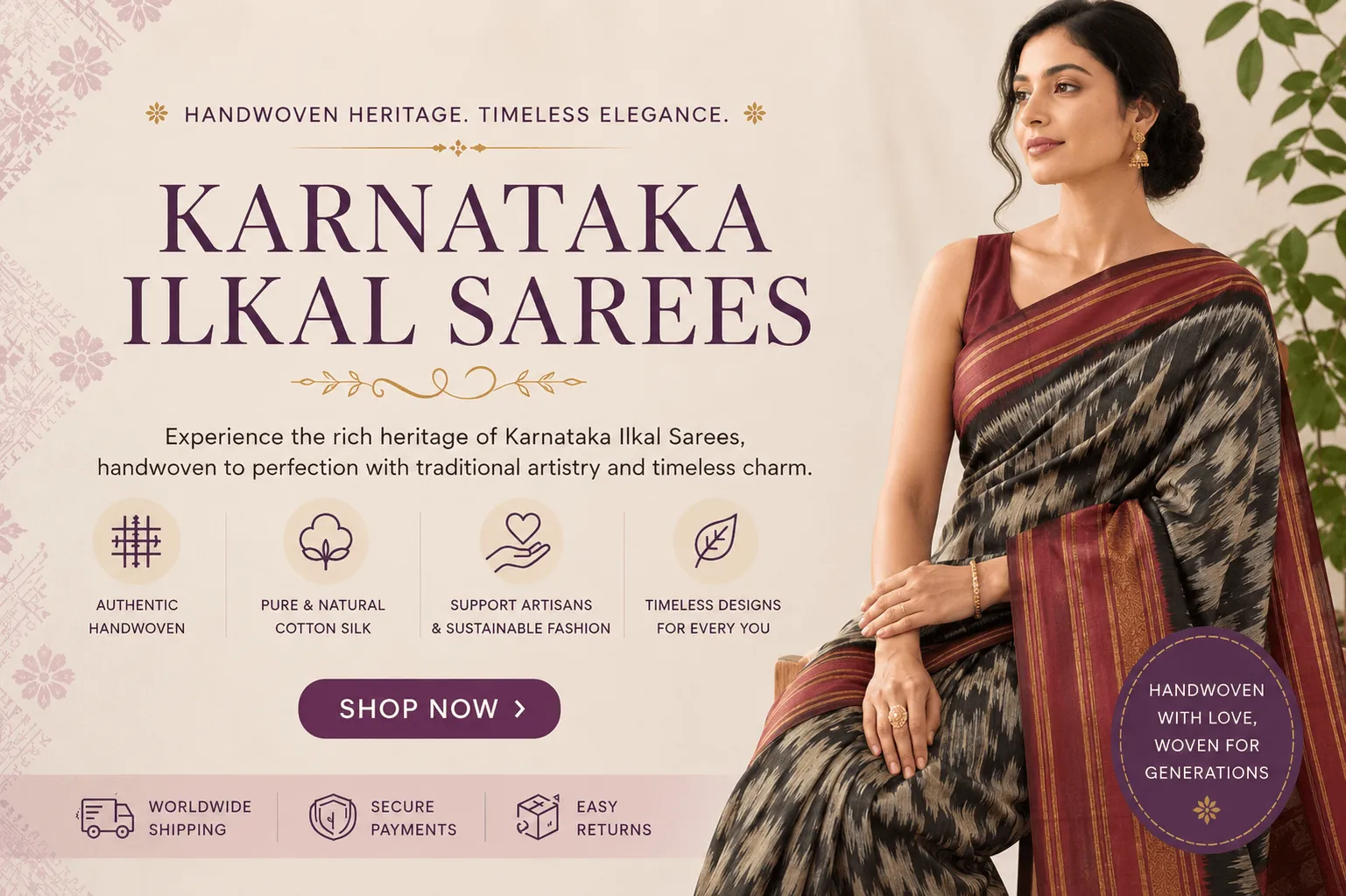

The Ilkal Saree Tradition traces back to the town of Ilkal in Karnataka's Bagalkot district, where handloom weaving has shaped local livelihoods and identity for generations. What makes this craft stand out isn't just its age — it's how an ilkal saree continues to move from temple courtyards and weddings into modern, everyday wardrobes without losing its original character. This piece looks at where the tradition comes from, what sets an ilkal saree apart from other handloom weaves, and what to check for before buying one.
What Makes the Ilkal Saree Tradition Unique?
An ilkal saree is defined by its construction, not just its pattern. The body of the saree is woven in cotton, while the border and pallu (the decorative end piece) use art silk or pure silk — two different yarns joined using a technique called Tope Teni, an interlocking method that fuses the body and pallu without stitching them together. This is what gives an authentic ilkal saree its distinctive strength and drape, and it's a big part of why the craft earned a Geographical Indication (GI) tag, officially protecting its origin and weaving method.
How Old Is the Ilkal Weaving Tradition?
Local weaving in Ilkal is believed to date back to around the 8th century AD, with documented evidence appearing much later — the 1884 Gazetteer of the Bombay Presidency recorded 684 active looms in the town as far back as 1883. That record confirms Ilkal was already an established weaving hub well over a century ago, and the craft has been passed down through weaver families since.
What Are the Distinguishing Features of an Ilkal Saree?
- Tope Teni technique: The unique method of joining the cotton body to the silk border/pallu without a seam.
- Temple border (Gomi/Chikki patterns): Traditional geometric temple-tower motifs along the border.
- Bold color contrast: Deep red, maroon, and earthy tones dominate, often paired with a contrasting pallu.
- Kasuti embroidery accents: Some ilkal sarees feature hand embroidery depicting temple gopurams, chariots, and floral motifs.
- Cotton-silk blend body: Lightweight enough for daily wear, sturdy enough for festive occasions.
Where Are Ilkal Sarees Made, and Why Does That Matter?
Ilkal sarees are woven across roughly 25 weaving centres spread over four districts of Karnataka, with the town of Ilkal itself remaining the heart of the tradition. This regional concentration is exactly why the GI tag matters — it legally ties the "Ilkal saree" name to sarees actually woven using the traditional method in this region, protecting weavers from imitation products made elsewhere with power-loom shortcuts.
Handloom Ilkal Saree vs. Machine-Made Imitations: What's the Difference?
| Feature | Authentic Handloom Ilkal Saree | Machine-Made Imitation |
| Body-pallu join | Tope Teni interlocking (no seam) | Machine-stitched or printed join |
| Fabric texture | Slightly uneven, natural handloom feel | Uniform, mechanically smooth |
| Border motifs | Woven-in temple/geometric patterns | Often printed or embroidered on top |
| Yarn used | Cotton body with silk/art silk border | Synthetic blends, mixed yarns |
| GI tag eligibility | Yes, when made in the designated region | No |
| Price range | Reflects weaver labor and time | Lower, mass-produced pricing |
How Do You Identify a Genuine Ilkal Saree Before Buying?
- Check the join line: Run a finger where the body meets the pallu — a genuine Tope Teni join feels slightly raised, not flat or glued.
- Look at the border pattern: Traditional temple towers, Gomi (mango-like) motifs, or Chikki Paras designs should look woven, not printed.
- Ask about the GI tag: Sellers dealing in authentic pieces should be able to confirm regional handloom sourcing.
- Feel the fabric weight: Genuine handloom cotton has a slightly textured, breathable feel rather than a slick synthetic finish.
- Compare pricing to labor: Handwoven pieces typically cost more than machine-made lookalikes due to the time each saree takes to weave.
Is It Safe and Practical to Buy an Ilkal Saree Online?
Buying an ilkal saree online has become common as more weaver cooperatives and heritage-focused sellers list directly to buyers outside Karnataka. The key is choosing sellers who are transparent about sourcing — clear photos of the border join, fabric composition details, and weaver or cluster information are good signs. Since the Tope Teni join and border motifs are hard to fake convincingly in photos, closely zoomed product images are a practical way to verify authenticity before purchase.
How Should You Style an Ilkal Saree Today?
- Everyday wear: Pair a lighter cotton-body ilkal saree with a simple contrast blouse for comfortable daily use.
- Festive occasions: Choose one with a heavier silk pallu and Kasuti embroidery for weddings or festivals.
- Modern draping styles: The sturdy cotton body holds pleats well, making it suitable for both traditional Nivi drape and contemporary draping styles.
- Accessorizing: Temple jewelry complements the traditional border motifs without overpowering the saree's own detailing.
Brands and sellers such as Indeloom work within this handloom space by sourcing traditional weaves like the ilkal saree for buyers looking for authentic, regionally rooted textiles rather than mass-manufactured alternatives.
Quick FAQ: Ilkal Saree Tradition
What does GI tag mean for an ilkal saree?
It legally certifies that the saree was woven in the designated Karnataka region using the traditional method, protecting the craft's authenticity and the weavers' livelihood.
Is ilkal saree the same as other Karnataka handloom sarees?
No — while Karnataka has multiple handloom traditions (like Molakalmuru), ilkal sarees are specifically identified by their Tope Teni join technique and cotton-silk construction.
Can an ilkal saree be worn for everyday use, not just festivals?
Yes, lighter cotton-bodied ilkal sarees with simpler borders are commonly worn for daily or office wear, while heavier silk-pallu versions are reserved for special occasions.
How do I care for a handloom ilkal saree?
Dry cleaning or gentle hand-washing in cold water is recommended, along with storing it folded in breathable cloth to protect the natural fibers.
For readers interested in the official recognition behind this craft, the Ilkal Sarees page on Incredible India, Government of India documents the region's weaving history and the Tope Teni technique in detail.
The Ilkal Saree Tradition endures because it hasn't needed to change to stay relevant — the same cotton-silk construction and Tope Teni technique that defined it centuries ago is what still draws buyers to an authentic ilkal saree today, whether picked up locally in Karnataka or sourced through a trusted ilkal saree online seller.




















Sign in to leave a comment.