
Key Takeaways
- Tree roots don't cause sewer line cracks, they exploit cracks and joints that already exist
- A single hairline gap at a pipe joint is enough to draw roots toward a sewer line from yards away
- Glassboro's older neighborhoods with mature street trees see this problem more often than newer developments
- Slow drains throughout an entire house, not just one fixture, are the clearest early sign of root intrusion
- Camera inspection is the only reliable way to confirm root intrusion before it becomes a full backup
Glassboro's tree-lined residential streets are one of the town's defining features, and also one of the more overlooked risks to its underground plumbing. Roots don't need much of an opening to find their way into a sewer line, and the moisture, oxygen, and nutrients inside that pipe make it one of the most attractive targets a root system can find underground. A Glassboro plumber who handles sewer calls in the borough's older sections sees the same story on a regular basis: a homeowner assumes their slow drains are a coincidence, when in fact a root mass has been growing inside the line for years.
Roots Follow Moisture, They Don't Create the Opening
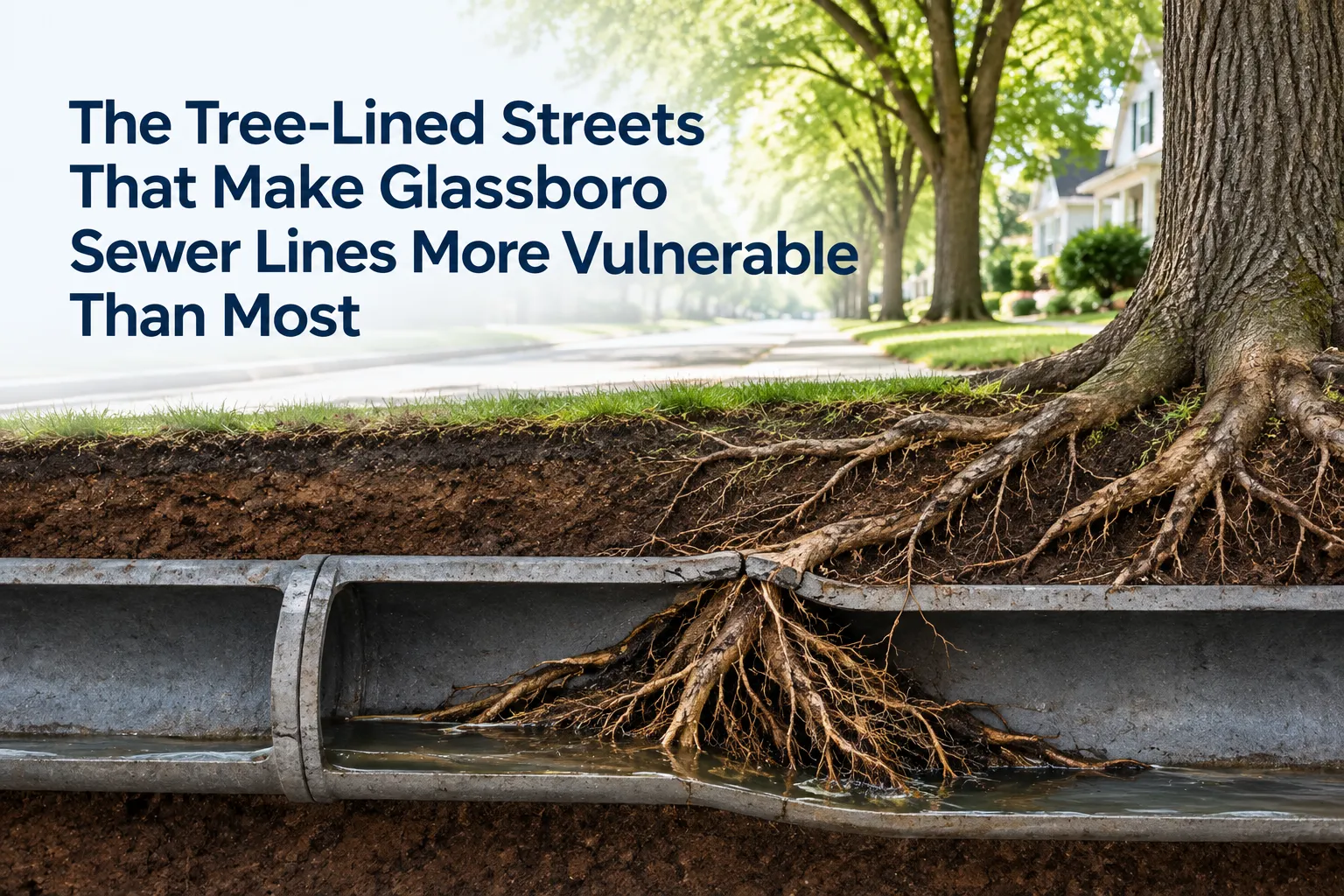
It's a common misconception that tree roots are strong enough to crack open an intact sewer pipe. In reality, roots are opportunistic. They grow toward the smallest available source of moisture and oxygen, and a sewer line leaking even a small amount of moisture through a hairline crack, a loose joint, or a deteriorated seal becomes an obvious target. Once a root finds that opening, it doesn't stop growing. It continues to expand inside the pipe, wrapping around itself and catching debris, waste, and paper until the line narrows dramatically or blocks entirely.
This means the root intrusion itself is really a symptom of an underlying pipe issue, not the original problem. Addressing only the roots without addressing the joint or crack that let them in typically results in the same issue returning within a year or two.
Why Glassboro's Older Sections See This More Often
Neighborhoods with mature, established trees, which describes a meaningful share of Glassboro's older residential streets, carry significantly higher root intrusion risk than newer developments with young or minimal landscaping. Root systems from large, decades-old trees can extend well beyond the visible canopy, often reaching sewer lines on properties the tree isn't even located on. Clay and older cast iron pipe, both still common in this part of South Jersey, are also more prone to joint separation over time than modern PVC, which gives roots more entry points to work with in the first place.
The Warning Signs Are Easy to Dismiss Individually
A single slow drain gets blamed on hair, grease, or whatever went down that particular fixture last. But when multiple drains throughout the house are slow at the same time, especially the lowest fixtures in the home like a basement floor drain or ground-floor toilet, that pattern points to a partial blockage in the main line rather than an isolated clog. Gurgling sounds from drains when another fixture is used, and sewage odors that come and go, are two more signs that often get attributed to something else entirely before the real cause is identified. This overview of signs and prevention for root intrusion covers the fuller list of symptoms worth watching for.
Confirming the Problem Before It Becomes an Emergency
Guessing at what's happening inside a sewer line rarely ends well. A camera inspection is the only way to see the actual condition of the pipe, confirm whether roots are present, and identify the specific joint or crack that let them in. This matters because it determines the right fix. A localized root mass with a single compromised joint might only need spot repair, while a line with widespread root intrusion across multiple joints often points toward trenchless lining or a longer-term repair strategy. For a full breakdown of how these situations get diagnosed and addressed, this guide on tackling tree roots in a sewer line walks through the process from inspection to resolution.
Why Waiting Rarely Works in the Homeowner's Favor
Root masses inside a sewer line don't shrink or slow down on their own. Left alone, they continue expanding with every growing season, and the gap between "slow drains that are mildly annoying" and "complete sewer backup" can close faster than homeowners expect, particularly heading into spring when root growth accelerates. What starts as an inconvenient afternoon of slow drainage can turn into a basement floor drain backing up sewage into the home, which is a considerably more expensive and disruptive problem to solve.
Conclusion
The trees that make Glassboro's older streets appealing are the same trees putting steady pressure on the sewer lines running beneath them. Root intrusion is rarely a sudden event. It's a slow process that starts at an existing weak point in the pipe and builds for months or years before producing an obvious backup. Homeowners who take multiple slow drains seriously, rather than treating each one as an isolated inconvenience, are the ones who catch this early enough to fix it with a targeted repair instead of an emergency call.























Sign in to leave a comment.