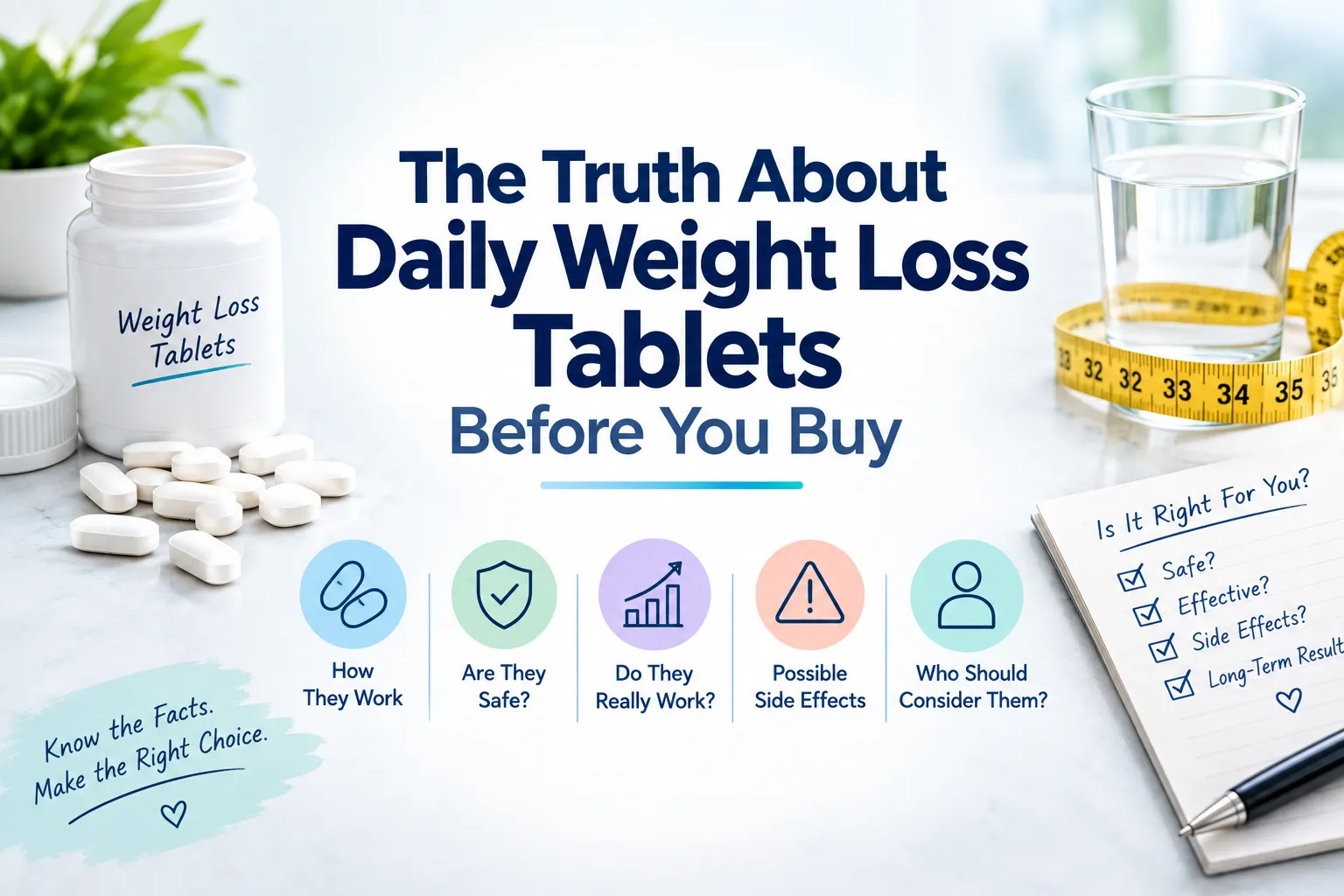

The weight loss tablet market is worth billions, and that scale attracts both genuinely helpful medical treatments and products that rely purely on clever marketing. Before spending money on any tablet, it helps to understand what's actually happening inside your body, what claims are backed by real research, and what questions you should be asking before you buy.
Why This Market Is So Confusing
Search for weight loss tablets online and you'll find an overwhelming mix of prescription medications, herbal supplements, and products sitting somewhere in between. Marketing language often blurs these categories deliberately, using terms like "clinically proven" or "doctor recommended" loosely, without pointing to specific trials or credentials.
This is exactly why understanding the difference between regulated and unregulated products matters. A regulated clinic such as Weight Medics operates under medical oversight, meaning tablets and treatments are only offered after an assessment of your health history, current medications, and suitability. Unregulated supplements, by contrast, are sold with no such requirement, which shifts all the risk assessment onto the buyer.
The Truth About How Weight Loss Tablets Work
There are really only a few biological mechanisms tablets can use to support weight loss:
Appetite suppression. Some tablets act on the brain's hunger signals, making you feel less hungry so you naturally eat less.
Increased metabolism. Stimulant based ingredients can raise resting energy expenditure slightly, though the effect is usually small and temporary.
Reduced fat or carbohydrate absorption. A small number of medications block a portion of fat digestion, though this often comes with digestive side effects.
Increased fullness. Fiber based tablets expand in the stomach, creating a feeling of fullness that may reduce portion sizes.
Once you understand which mechanism a product claims to use, you can judge whether the claim is even biologically plausible or simply marketing language with no clear mechanism attached.
What the Evidence Actually Supports
Prescription Options With Real Clinical Backing
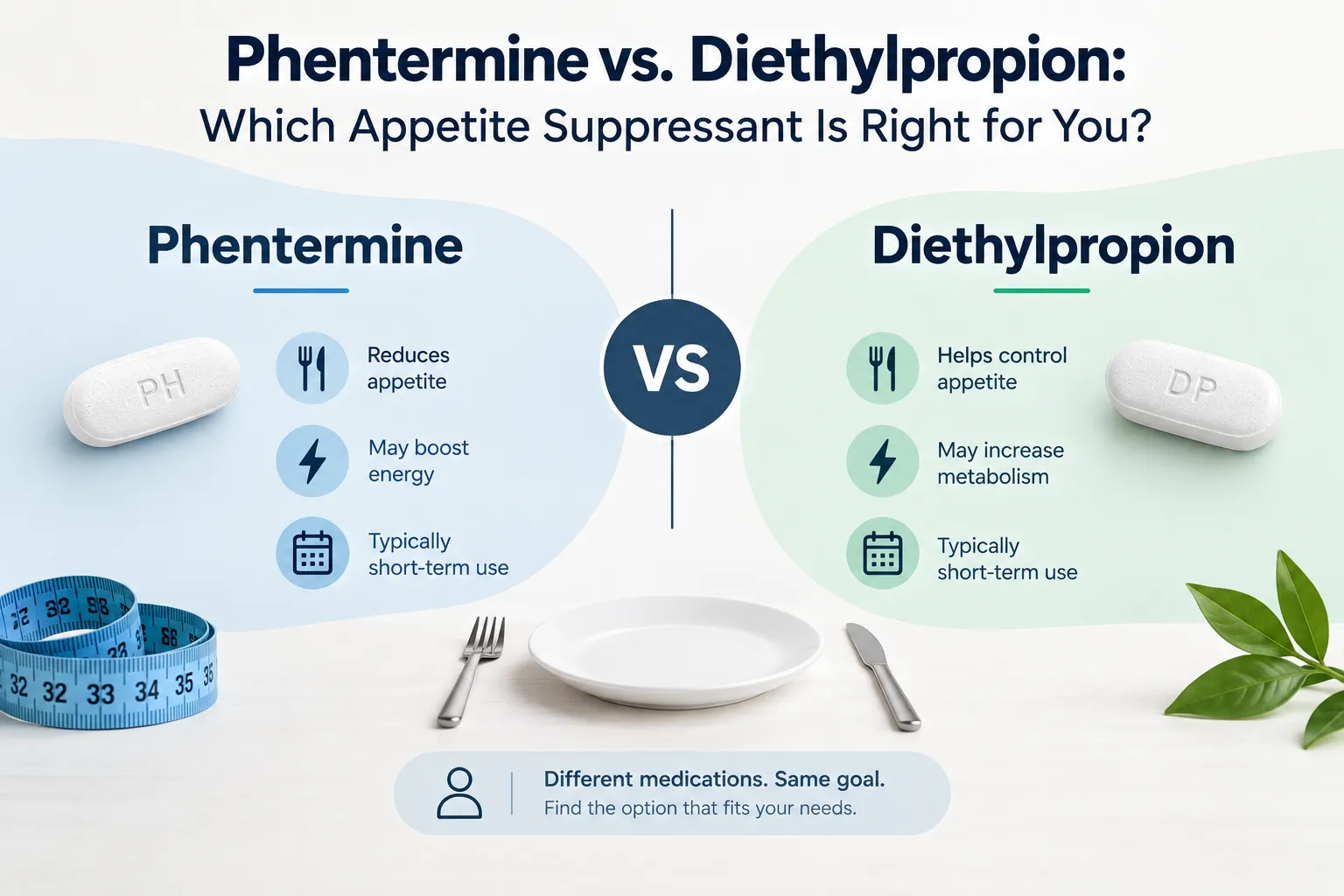
Phentermine and Diethylpropion tablets in the UK are among the longest studied appetite suppressants available by prescription. They're generally prescribed for a limited period alongside dietary changes, and clinical data shows they can meaningfully support weight loss in the short term for people who meet the medical criteria. Because they affect the central nervous system, they aren't appropriate for people with certain heart conditions, high blood pressure, or a history of anxiety disorders, which is why prescribing them requires a proper consultation rather than a simple online purchase.
The Rise of GLP 1 Treatments
Perhaps the most significant recent development in weight management has come from GLP 1 receptor agonists. Mounjaro and Wegovy injections have shown substantially greater average weight loss in clinical trials than most oral tablets on the market, largely because they work on multiple hunger and blood sugar regulation pathways at once. This has led to growing interest in oral versions of similar treatments.
If you come across marketing for Daily Weight Loss Tablets, it's worth checking exactly what's inside the formulation. Some are genuine oral GLP 1 based products, while others are simply rebranded appetite suppressants using similar sounding names to capitalize on GLP 1 popularity.
What the Evidence Doesn't Support
Miracle Timeframes
If a tablet promises rapid, dramatic weight loss within a week or two with no dietary change required, treat that claim with skepticism. The body simply doesn't lose significant fat that quickly without a substantial calorie deficit, and any rapid early weight loss from such products is usually water weight rather than fat.
Unregulated "Proprietary Blends"
A significant number of online weight loss supplements list ingredients as part of a proprietary blend, without disclosing exact dosages. Independent lab testing has repeatedly found some of these products contain undisclosed stimulants or, in more serious cases, banned pharmaceutical substances. Without transparent labeling, there's no reliable way to know what you're actually taking or in what amount.
Testimonial Only Evidence
Before and after photos and customer reviews are not the same as clinical trial data. Genuine weight loss treatments should be able to point to peer reviewed research, not just satisfied customer stories, which can be selectively chosen or, in some cases, entirely fabricated.
Questions to Ask Before You Buy
Before purchasing any weight loss tablet, it's worth working through a short checklist:
Does this require a prescription, and has a healthcare professional actually assessed my suitability for it?
Can the seller provide exact ingredient names and dosages rather than vague blend descriptions?
Is there published clinical research behind this specific product, not just the general ingredient category?
Does the claimed rate of weight loss align with realistic medical expectations?
What are the known side effects, and does the seller disclose them clearly?
If a product or seller can't answer these questions satisfactorily, that's a meaningful red flag.
Why Medical Supervision Matters
Going through a regulated provider changes the entire risk profile of taking a weight loss tablet. At Weight Medics, for example, the process typically starts with a health assessment rather than a straightforward purchase, which allows a clinician to rule out contraindications and set realistic expectations for results. This is fundamentally different from ordering an unregulated tablet online based on an advertisement, where no one is checking whether the product is appropriate for your specific health situation.
The Bottom Line
Weight loss tablets exist on a wide spectrum, from well researched prescription medications to unregulated products with little more than marketing behind them. The tablets most likely to produce genuine, lasting results are the ones backed by clinical evidence and offered through proper medical assessment, not the ones promising the fastest results with the least effort. Combining any tablet with sustainable changes to diet and activity levels remains the most reliable path to lasting weight loss, regardless of which specific product you choose.
Frequently Asked Questions
Are daily weight loss tablets actually effective?
Some are, particularly prescription appetite suppressants used alongside dietary changes. Many over the counter supplements have far weaker evidence supporting their claims.
How do I know if a weight loss tablet is legitimate?
Look for clear ingredient disclosure, published clinical research, and whether the product requires any form of medical assessment before purchase.
Do weight loss tablets work as well as injections?
Generally, no. Clinical trials show GLP 1 injections like Mounjaro and Wegovy tend to produce greater average weight loss than most oral tablets currently available.
Is it safe to buy weight loss tablets online without a prescription?
This carries more risk, since there's no medical check on suitability. Prescription options are generally safer because a healthcare professional reviews your health history first.
What should I do before starting any weight loss tablet?
Speak with a doctor or a regulated weight management provider to check the product is appropriate for your health situation and to set realistic expectations.

















Sign in to leave a comment.