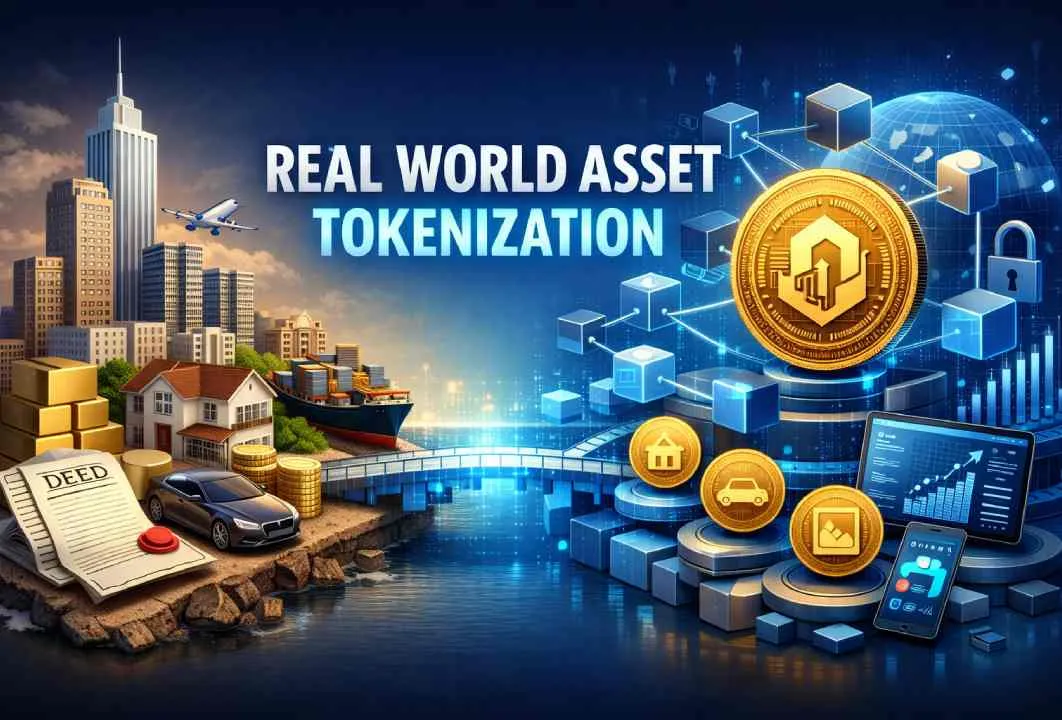

Real-world asset tokenization is often described as the process of putting physical or traditional financial assets on blockchain networks. But that description only captures the visible layer. The deeper opportunity lies in what happens after an asset becomes digital. A token can carry more than a reference to an asset. It can be connected to ownership rights, transfer conditions, compliance requirements, payment logic, governance rules, and continuously updated asset information. This creates a new model in which rules, rights, and real-time data can become part of the asset infrastructure itself. That shift could make RWA tokenization more than a digitization exercise. Instead, it could create a programmable architecture for representing and managing assets throughout their lifecycle.
What Is the Untapped Layer of RWA Tokenization?
The first generation of tokenization largely focused on representation.
A property, bond, fund, commodity, receivable, or other asset could be represented by a blockchain-based token.
The next layer is more sophisticated.
Instead of asking only:
“How can this asset become a token?”
Businesses and financial institutions can ask:
“What rules, rights, data, and actions should exist around that token?”
This introduces several connected layers:
- Asset identity
- Ownership rights
- Economic rights
- Compliance rules
- Transfer conditions
- Cash-flow logic
- Governance permissions
- Real-time asset data
- Lifecycle events
- Settlement instructions
Together, these components can transform a token from a static digital representation into a more dynamic financial instrument.
From Asset Representation to Asset Logic
Traditional assets generally depend on external systems to define how they can be used.
A property deed establishes ownership.
A legal agreement establishes contractual rights.
A securities register records ownership.
A fund administrator calculates distributions.
A compliance system determines whether a participant is eligible.
A bank processes payments.
These functions often operate across disconnected systems. Tokenization creates the possibility of bringing some of these functions closer to the asset itself. For example, a tokenized financial instrument could potentially contain or connect to rules defining:
- Who can hold it
- Who can transfer it
- When it can be transferred
- What documentation is required
- How income is distributed
- What happens at maturity
- Which events trigger specific actions
The asset therefore becomes part of a programmable environment.
Why Rules Matter in RWA Tokenization
Rules are one of the least discussed components of tokenized assets.
A real-world asset rarely has unrestricted ownership or transferability.
A commercial property may involve multiple stakeholders.
A private security may only be available to eligible participants.
A tokenized fund may have subscription and redemption requirements.
A bond has maturity, coupon, and settlement conditions.
A receivable has a debtor, payment date, and contractual obligation.
Tokenization can potentially encode or enforce some of these conditions through digital infrastructure.
Programmable Transfer Rules
A tokenized asset could include restrictions around transfers.
For example:
Wallet A → Eligibility Check → Transfer Approval → Wallet B
Instead of allowing unrestricted movement, the platform can verify predefined conditions before completing a transfer.
Automated Distribution Rules
Income-generating assets can also benefit from programmable distribution mechanisms.
For example:
Rental income → Collection → Calculation → Token-holder allocation → Settlement
The same concept can apply to:
- Bond coupons
- Fund distributions
- Receivable payments
- Royalty income
- Dividend-like distributions
- Other contractual cash flows
The exact structure depends on the legal rights attached to the token.
Rights Could Become More Granular
Another important layer is the ability to separate different types of rights. Traditional ownership structures can bundle multiple rights together. Tokenization can potentially allow those rights to be represented more precisely.
For example, an asset could involve:
- Ownership rights
- Voting rights
- Income rights
- Redemption rights
- Governance rights
- Usage rights
- Economic participation rights
These rights do not necessarily have to be represented by one identical token. Different digital instruments could potentially represent different economic or contractual interests. This creates possibilities for more flexible asset structures.
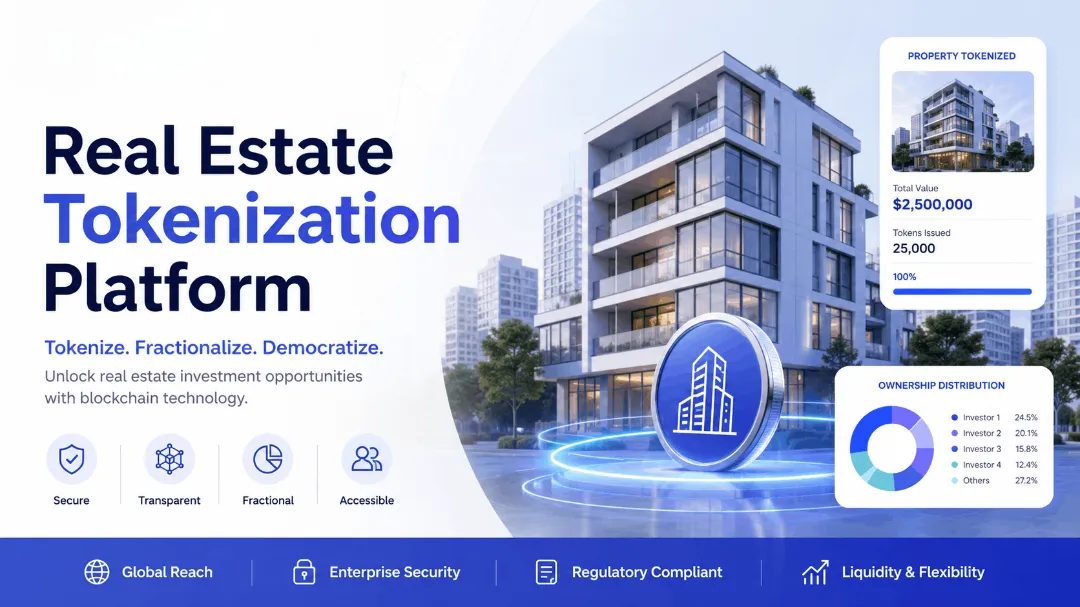
Example: Tokenized Real Estate
Consider a commercial property.
Instead of simply creating a token that represents “property ownership,” a platform could structure different rights around the asset.
One class could represent economic participation.
Another could represent governance rights.
Another could be connected to specific income distributions.
The underlying legal structure would determine what each instrument actually represents.
The important development is not simply fractionalization. It is the ability to design digital representations around specific rights and obligations.
Real-Time Assets: Bringing Live Data Into the Structure
Another underdeveloped area is the connection between tokenized assets and continuously changing information. Traditional financial assets are often evaluated using periodic information. Tokenized infrastructure could potentially connect assets with real-time or near-real-time data sources. Consider a tokenized property.
Its digital infrastructure could connect to information such as:
- Rental collections
- Occupancy
- Property valuations
- Maintenance events
- Insurance status
- Operating expenses
- Lease activity
Similarly, a tokenized supply-chain asset could potentially incorporate:
- Shipment status
- Delivery confirmation
- Inventory levels
- Payment events
- Logistics information
The token itself does not automatically know whether these events occurred. External data systems, trusted data providers, or oracles are needed to bring off-chain information into blockchain environments. That creates another important layer of RWA infrastructure: asset data connectivity.
The Emergence of Data-Driven Tokenization
The future of RWA platforms may therefore depend on more than blockchain networks. It may require connections between blockchain infrastructure and existing business systems.
A sophisticated RWA platform could connect:
Physical Asset → Data Source → Verification → Smart Contract → Token → Financial Activity
This architecture can create a continuous relationship between the real-world asset and its digital representation. For example, when an underlying event occurs, the platform could update relevant records or trigger predefined processes. This could make tokenized assets more responsive to real-world activity.
Tokenization Could Turn Lifecycle Events Into Digital Events
Assets go through multiple stages.
A property can be acquired, leased, refinanced, renovated, sold, or transferred.
A bond can be issued, traded, pay coupons, reach maturity, and be redeemed.
A receivable can be originated, financed, partially paid, and settled.
Traditional systems manage these events through multiple operational processes.
Tokenized infrastructure could potentially represent these events digitally.
For example:
Asset Created → Token Issued → Ownership Transferred → Income Generated → Distribution Made → Asset Matured
Each stage can become part of an auditable digital lifecycle.
This creates an important distinction between simply tokenizing an asset and building a lifecycle-aware tokenization platform.
RWA Tokenization and Embedded Compliance
Compliance is another area where tokenization can move beyond simple asset representation.
Traditional compliance processes can happen before or after transactions. A programmable tokenization environment could potentially incorporate certain compliance requirements directly into transaction workflows.
Possible components include:
- Identity verification
- KYC processes
- AML screening
- Investor eligibility
- Geographic restrictions
- Holding limits
- Transfer restrictions
- Regulatory reporting
For example:
Transfer Request → Identity Verification → Eligibility Check → Rule Validation → Settlement
This does not mean every regulatory requirement can or should be automated. Legal and regulatory obligations remain dependent on the relevant jurisdiction, asset type, and structure. But tokenization can create infrastructure where some rules become machine-readable.
The Role of Smart Contracts
Smart contracts are central to this transformation because they can execute predefined logic.
Instead of using blockchain only as a ledger, platforms can use smart contracts to manage selected asset functions.
Possible applications include:
Ownership Management
Recording changes in token ownership.
Distribution Management
Calculating and executing predefined distributions.
Transfer Controls
Checking whether a proposed transaction satisfies defined conditions.
Maturity Events
Triggering redemption or settlement processes when predefined dates arrive.
Governance
Managing voting or decision-making mechanisms where legally appropriate.
Collateral Management
Tracking digital representations associated with collateral arrangements.
The key principle is that smart contracts should automate clearly defined rules, not replace the legal agreements and operational processes that establish those rules.
Why Real-Time Data Could Change Asset Markets
If tokenized assets can connect to reliable real-world data, the relationship between asset ownership and asset information could become more dynamic. Imagine a tokenized property platform where authorized participants can access updated information about rental collections and occupancy. Or a tokenized receivables platform where payment events update financing records. Or a tokenized commodity platform where inventory and custody information feeds into asset records. Or a tokenized fund where portfolio information is connected to investor-facing digital infrastructure. These models could potentially improve visibility across asset lifecycles.
However, data quality becomes critical.
Bad data + automation = automated bad decisions.
That means RWA platforms need strong verification, governance, data provenance, and exception-handling mechanisms.
The New RWA Architecture
The emerging architecture of RWA tokenization can be viewed as several connected layers.
| Layer | Purpose |
|---|---|
| Asset Layer | Represents the underlying real-world asset |
| Legal Layer | Defines ownership and contractual rights |
| Identity Layer | Establishes participants and permissions |
| Compliance Layer | Applies eligibility and regulatory rules |
| Data Layer | Connects real-world information |
| Smart Contract Layer | Automates predefined logic |
| Token Layer | Represents ownership or economic rights |
| Settlement Layer | Handles transactions and payments |
| Reporting Layer | Provides visibility and records |
This layered model highlights why RWA tokenization is becoming more complex.
The blockchain is only one component.
The real infrastructure sits at the intersection of legal structures, financial systems, data networks, identity, compliance, and blockchain technology.
From Fractional Ownership to Programmable Ownership
Fractionalization has been one of the most frequently discussed benefits of tokenization.
But fractional ownership is only one possible outcome.
The broader opportunity is programmable ownership.
Programmable ownership can mean that digital representations of assets have defined relationships with:
- Rights
- Rules
- Participants
- Payments
- Data
- Events
- Restrictions
This could allow businesses to design financial products around specific economic relationships rather than simply dividing an asset into smaller pieces.
That distinction could become increasingly important as tokenization moves into more sophisticated financial and commercial assets.
What This Could Mean for Businesses
Businesses exploring RWA tokenization may increasingly need to think beyond token creation.
A complete strategy could involve questions such as:
- What exactly is being tokenized?
- What legal right does the token represent?
- Who can hold the token?
- Can it be transferred?
- What conditions apply to transfers?
- How are payments handled?
- What external data does the asset require?
- How are real-world events verified?
- What happens when the asset changes?
- What happens when the asset reaches maturity or is sold?
These questions move tokenization from a technology project toward an asset-infrastructure project.
Where RWA Tokenization Could Expand
The rules-and-rights model can apply across multiple asset classes.
Real Estate
Property ownership, rental income, governance, and transfer rights can be represented through structured digital instruments.
Bonds
Coupon payments, maturity, ownership records, and transfer conditions can potentially become part of digital bond infrastructure.
Private Credit
Loans and credit agreements can potentially be represented through tokenized structures connected to payment schedules and borrower information.
Trade Finance
Invoices, receivables, trade claims, and other commercial payment obligations can be connected with digital financing infrastructure.
Funds
Fund interests can potentially be represented digitally while connecting subscriptions, distributions, and investor eligibility with platform rules.
Commodities
Tokenized commodities can connect digital ownership records with custody, inventory, and verification systems.
The Road Ahead
The next phase of RWA tokenization may not be defined simply by how many assets become tokens.
A more important question may be:
How much intelligence and structure can be built around those tokens?
The combination of programmable rules, granular rights, trusted data, identity, compliance, and blockchain settlement creates the foundation for a different type of asset infrastructure.
Instead of:
Asset → Token
the architecture could increasingly look like:
Asset → Rights → Rules → Data → Token → Transactions → Events → Settlement
That is the untapped layer.
The token is no longer simply the destination of the process. It becomes one component of a broader digital system designed to manage an asset throughout its lifecycle.
Conclusion
RWA tokenization is evolving beyond the simple digitization of traditional assets.
The next opportunity lies in connecting tokens with the rules that govern them, the rights they represent, and the real-time information that describes the underlying assets.
This could enable a new generation of financial infrastructure where ownership, compliance, payments, data, and asset events interact through programmable systems.
For businesses, financial institutions, and platform developers, the strategic question may therefore shift from “What asset should we tokenize?” to “What digital infrastructure should surround the tokenized asset?” That shift from token representation to rules, rights, and real-time asset intelligence could define one of the most important layers in the continued development of real-world asset tokenization.

















Sign in to leave a comment.