

Introduction
Therapeutic activities play an important role in supporting autistic children as they develop communication, social interaction, sensory processing, and everyday life skills. These activities provide opportunities for children to explore their interests, express themselves, build confidence, and learn at their own pace.
Every autistic child has unique strengths, preferences, and support needs. Choosing activities that match a child's individual abilities and interests can make learning more enjoyable, meaningful, and effective. Through structured play, creative expression, movement, and daily routines, therapeutic activities can help children develop essential skills while encouraging independence and participation in everyday life.
Play-Based Activities
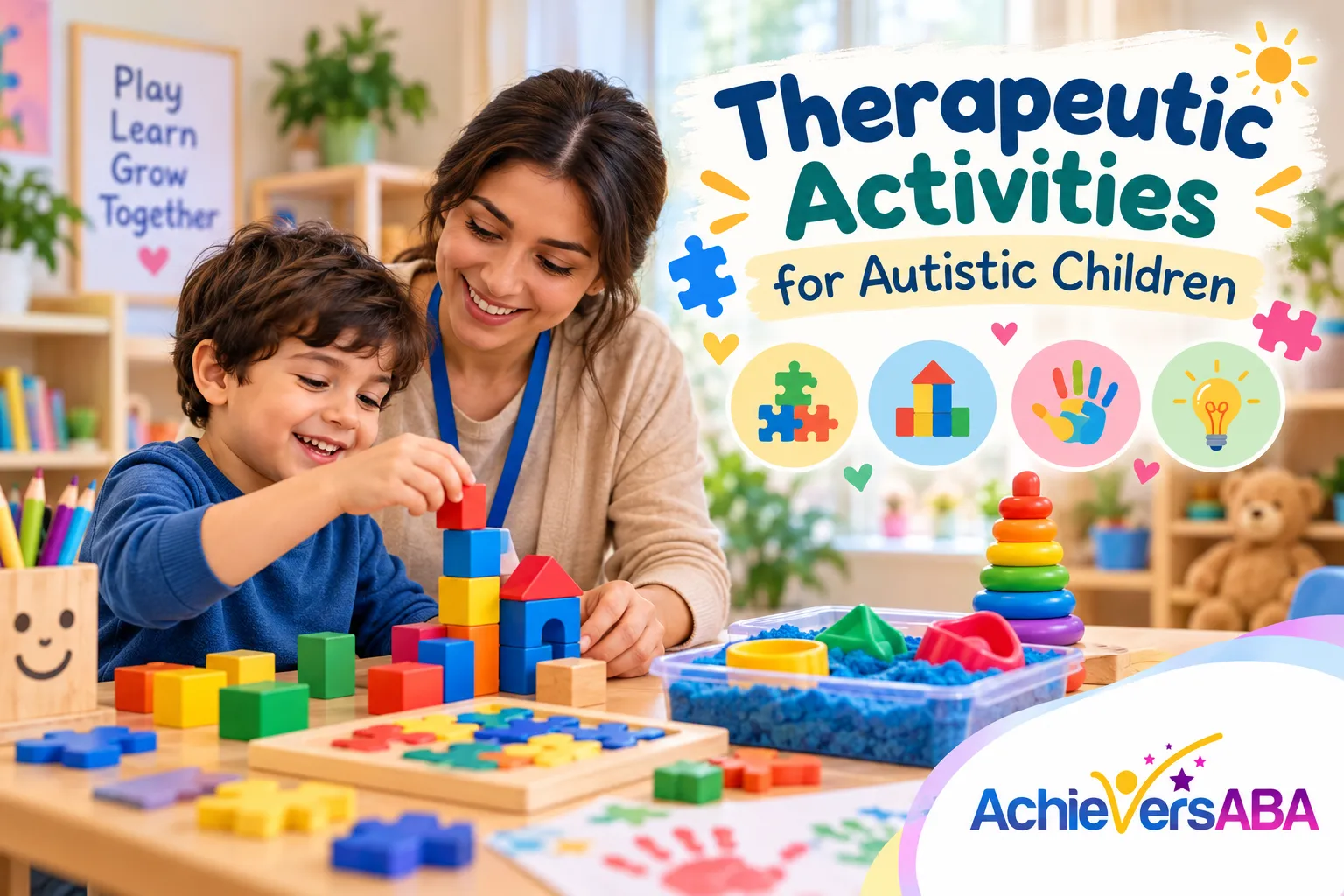
Play-based activities create a natural and enjoyable environment for learning. Building with blocks, completing puzzles, playing with toy animals, and engaging in pretend play can encourage curiosity, problem-solving, and interaction.
These activities help children practice turn-taking, follow simple instructions, make choices, and share attention with others. Play also provides opportunities to develop creativity, emotional expression, and flexible thinking in a comfortable setting.
Communication and Language Activities
Communication-focused activities help children express their thoughts, needs, and preferences in ways that work for them. These may include picture cards, storytelling, matching games, interactive songs, and activities that encourage requesting or making choices.
Visual supports and augmentative and alternative communication (AAC) tools can help children who communicate through pictures, gestures, or communication devices. These approaches support meaningful communication, strengthen understanding, and encourage children to participate more confidently in everyday interactions.
Sensory-Based Activities
Sensory activities allow children to explore different textures, sounds, movements, and materials in a way that suits their sensory preferences. Examples include playing with kinetic sand, water play, handling soft fabrics, exploring textured objects, and engaging with sensory bins.
These experiences can support sensory exploration, body awareness, and engagement with the environment. When activities are adapted to a child's comfort level, they can also provide opportunities to practice attention, coordination, and self-regulation.
Art and Creative Expression
Art-based activities such as painting, drawing, coloring, and modeling with clay offer children different ways to express themselves. Creative activities can be especially valuable for children who find verbal communication challenging.
Working with art materials also helps develop fine motor coordination, concentration, and decision-making skills. Allowing children to choose their own colors, materials, and subjects encourages creativity and gives them a sense of control over their work.
Social Skills and Group Activities
Group activities provide opportunities for children to practice social interaction in a supportive environment. Cooperative games, shared art projects, simple board games, and guided play can encourage turn-taking, cooperation, and shared enjoyment.
These experiences can help children learn how to initiate interactions, recognize social cues, and communicate their preferences. Activities should respect each child's comfort with social interaction and allow different ways of participating, including observing before joining in.
Movement and Physical Activities
Movement-based activities such as dancing, obstacle courses, ball games, stretching, and balance exercises can support physical development and coordination.
These activities encourage body awareness, balance, motor planning, and physical confidence. Movement can also offer enjoyable opportunities for shared play and may help some children manage their energy levels and sensory needs.
Daily Living and Independence Skills
Everyday activities can become valuable learning opportunities for developing independence. Tasks such as dressing, brushing teeth, washing hands, preparing simple snacks, and organizing personal belongings can be practiced through step-by-step guidance.
Visual schedules, picture sequences, and consistent routines can make these tasks easier to understand and follow. Gradually reducing support as a child gains confidence helps build practical skills, self-reliance, and participation in daily routines.
Music and Rhythm Activities
Music-based activities can create enjoyable opportunities for communication, movement, and shared attention. Singing familiar songs, playing simple instruments, clapping to a rhythm, and taking turns making sounds can encourage interaction and creative expression.
Rhythm and repetition may help some children anticipate what comes next and participate more comfortably. Music activities can also support listening, coordination, and emotional expression when adapted to each child's sensory preferences.
Making Therapeutic Activities Meaningful
The effectiveness of therapeutic activities depends on how well they match a child's individual needs, interests, and abilities. A supportive approach should focus on meaningful participation rather than expecting every child to complete activities in the same way.
Following a child's interests can make activities more engaging and enjoyable. Clear instructions, manageable steps, and visual supports can help children understand what is expected. Respecting sensory preferences and allowing children to make choices also encourages comfort, confidence, and independence.
Parents, caregivers, educators, and qualified professionals can work together to incorporate appropriate activities into everyday routines and support each child's development.
Conclusion
Therapeutic activities offer autistic children meaningful opportunities to develop communication, social interaction, sensory awareness, motor coordination, and independence. From creative play and music to daily living tasks and sensory exploration, each activity can support learning in a different way.
By creating an environment that respects individual differences, encourages choice, and builds on personal strengths, families and professionals can help autistic children develop useful skills, express themselves, and participate more confidently in everyday life.





















Sign in to leave a comment.