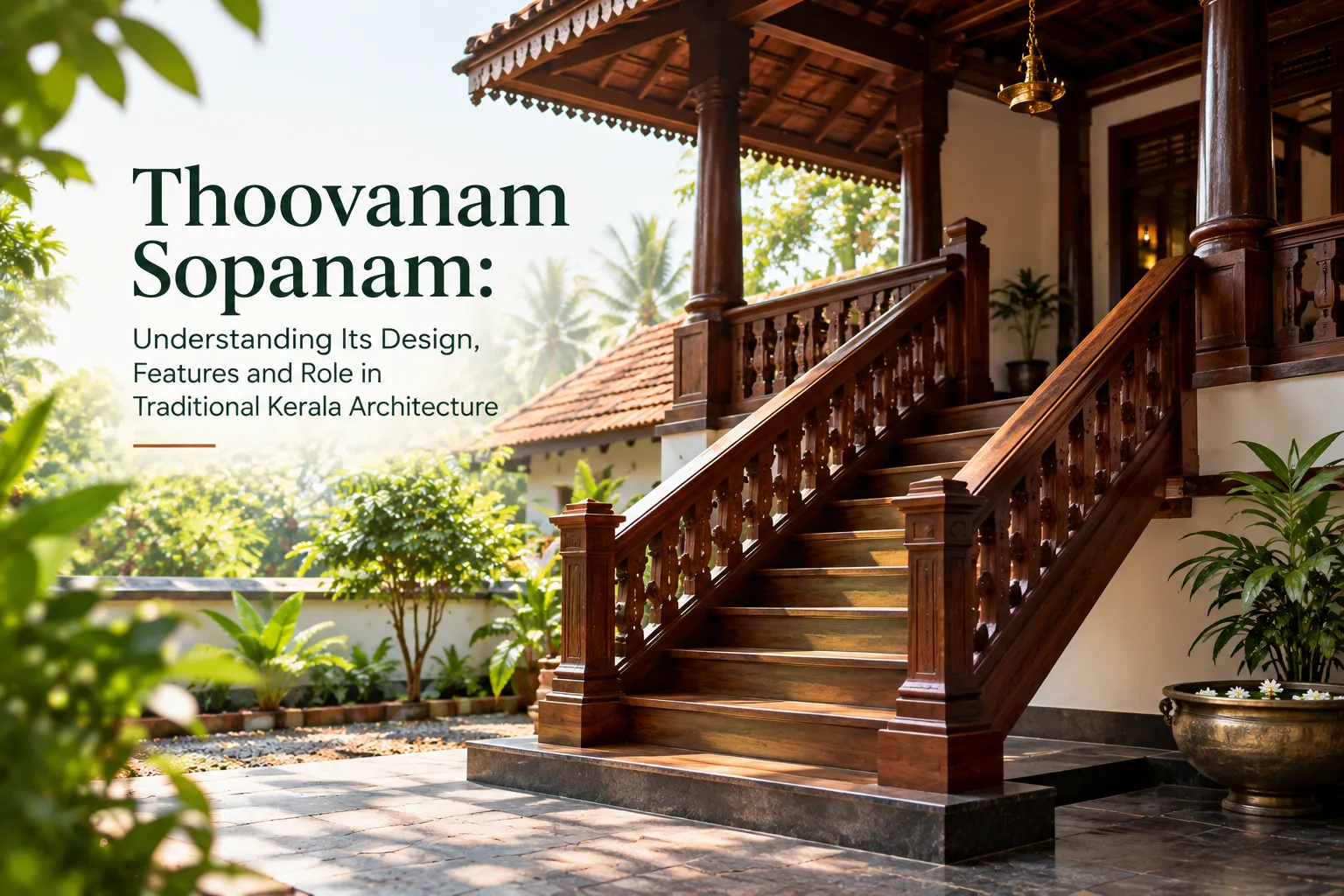

Kerala's traditional architecture is known for its distinctive details, natural materials, sloping roofs, courtyards, wooden craftsmanship, and carefully designed entrances. Among the traditional elements associated with Kerala-style homes, Thoovanam Sopanam is a term that many people may have heard but may not fully understand.
For homeowners planning a traditional or Kerala-inspired house, understanding what Thoovanam Sopanam means can help in making better decisions about architectural details and decorative woodwork.
What Is Thoovanam Sopanam?
The terms Thoovanam and Sopanam are associated with traditional architectural elements and decorative craftsmanship used in Kerala-style buildings. Sopanam is commonly associated with steps or a traditional entrance staircase, while Thoovanam can refer to decorative architectural work, including borders and ornamental elements.
The exact design and usage can vary depending on the architectural style, location, and craftsman's interpretation. In traditional Kerala homes, such elements are valued not simply as functional components but also for the visual character and craftsmanship they bring to an entrance or façade.
This is why Thoovanam Sopanam is often considered as part of a larger traditional design language rather than just a standard staircase or decorative piece.
Why Is Sopanam Important in Kerala Architecture?
The entrance of a traditional Kerala home often has a strong visual and cultural significance. The steps leading into the house are not necessarily treated as an ordinary access point. Their proportions, materials, surrounding details, and relationship with the entrance can contribute to the character of the entire building.
A traditional Sopanam can therefore become an important architectural feature. Its design can be simple and understated or highly detailed depending on the overall style of the house.
Traditional craftsmanship is particularly visible when decorative patterns, carved elements, borders, and other details are incorporated into the design.
What Makes Thoovanam Sopanam Different?
One of the most interesting aspects of Thoovanam Sopanam is the combination of functional architecture and decorative detailing.
Instead of treating every element separately, traditional Kerala architecture often brings together structure, proportion, material, and ornamentation to create a unified appearance.
For example, an entrance can combine steps with decorative borders, pillars, woodwork, roof elements, and other architectural features. When these details are designed together, the entrance can create a strong traditional identity for the home.
Materials Used for Traditional Designs
Historically, wood has played an important role in Kerala architecture because of its availability and suitability for detailed craftsmanship. Skilled artisans have traditionally used wood for doors, pillars, ceilings, decorative panels, and other architectural elements.
Today, homeowners have more material options. Engineered and modern board materials can also be used for selected decorative applications, depending on their technical properties and suitability.
For example, Thomson Multiwood own material information specifically lists Sopanam & Thoovanam among specialized woodwork applications. MMultiwood
This creates possibilities for combining the visual language of traditional Kerala architecture with contemporary material solutions.
Thoovanam Sopanam in Modern Homes
Traditional architecture does not necessarily mean that a house has to look old-fashioned. Many modern Kerala homes combine contemporary floor plans and facilities with selected traditional architectural features.
A homeowner might use a traditional-inspired entrance, decorative staircase detailing, carved panels, or Kerala-style borders while keeping the rest of the building modern.
This approach can create a balance between heritage-inspired aesthetics and present-day functionality.
The key is proportion. Decorative elements should complement the architecture rather than overpower it.
What Should You Consider Before Choosing the Design?
If you are planning a Thoovanam Sopanam feature for your home, consider the overall architectural style first.
The size of the entrance, staircase dimensions, available space, colour scheme, surrounding walls, roof design, and other decorative elements should work together.
Material selection is also important. Ask about the board or wood specifications, moisture resistance, finishing requirements, maintenance, and suitability for the intended location.
The craftsmanship matters just as much as the material. Detailed traditional designs require accurate cutting, shaping, finishing, and installation to achieve a clean result.
Traditional Craftsmanship Meets Modern Materials
One reason traditional Kerala architectural elements continue to attract attention is their ability to give a home a distinctive identity. At the same time, modern homeowners often want materials that can meet contemporary requirements.
This is where products such as Thomson Multiwood can be considered for specialized decorative and architectural applications. The company identifies Thoovanam and Sopanam among its applications and also highlights capabilities such as carving, grooving, painting, gluing, and shaping for its Multiwood material. MMultiwood+1
However, the appropriate material should always be selected according to the specific application, design, installation conditions, and manufacturer's technical specifications.
Conclusion
Thoovanam Sopanam represents an interesting part of Kerala's architectural design tradition, combining functional elements with decorative craftsmanship. While many people may initially know the term only by name, understanding its connection with traditional entrances, steps, borders, and ornamental architectural work provides a clearer picture of its importance.
Today, these traditional design ideas can be adapted to modern homes without losing their distinctive character. Whether you prefer a fully traditional house or a contemporary home with Kerala-inspired details, thoughtful use of Thoovanam Sopanam can add visual depth and a sense of craftsmanship to the entrance and overall architecture.
The most important considerations are good design, appropriate materials, skilled workmanship, and proper installation. When these elements come together, traditional Kerala architectural details can continue to have a place in modern homes while preserving the character that makes them unique. :::



















Sign in to leave a comment.