

Choosing the right flooring or wall finish can have a major impact on how a home looks and functions. Tile is one of the most popular options because it offers durability, easy maintenance, and a wide range of styles. From kitchen backsplashes to bathroom floors and entryways, the right tile can make an ordinary space feel more polished and inviting.
When planning a renovation, many homeowners start by looking for tile installers near me because professional installation can save time and prevent expensive mistakes. While installing tile may appear straightforward, getting straight lines, consistent spacing, secure adhesion, and a smooth finish requires proper preparation and experience.
Why Tile Is a Popular Choice for Homes
Tile works well in many areas because it combines practical performance with design flexibility. Homeowners can choose from countless colours, patterns, sizes, textures, and materials to create a look that matches their property.
Some of the main advantages include:
- Durability: Quality tile can handle everyday wear and heavy foot traffic.
- Easy maintenance: Most tile surfaces are simple to clean.
- Moisture resistance: Many tile products are suitable for kitchens and bathrooms.
- Design flexibility: Different patterns and layouts can create very different appearances.
- Long-term value: Properly installed tile can remain attractive for many years.
The key is choosing a product that suits the specific room rather than selecting a tile based only on appearance.
Choosing the Right Tile for Each Room
Different rooms have different requirements. A tile that looks excellent on a bathroom wall may not be appropriate for a busy kitchen floor.
Before purchasing materials, consider:
- Where the tile will be installed
- How much foot traffic the area receives
- Exposure to water or moisture
- Cleaning requirements
- Slip resistance
- Tile size and weight
- Overall design of the room
For floors, durability and slip resistance are especially important. Bathrooms may require materials and installation methods that can handle regular exposure to moisture. Decorative wall tiles provide more freedom because they do not have to withstand the same level of physical stress.
Understanding the Preparation Process
One of the most important parts of a successful project happens before the first tile is installed. The surface needs to be suitable for the material being applied.
Depending on the existing condition, preparation may involve:
- Removing old flooring or wall coverings
- Cleaning the surface
- Repairing cracks or damaged areas
- Checking that the surface is level
- Addressing moisture concerns
- Applying suitable underlayment or backer material
- Planning the tile layout
Skipping preparation can cause problems later. Tiles may crack, shift, loosen, or develop uneven areas when installed over an unsuitable surface.
Planning the Tile Layout
Good layout planning can make a noticeable difference in the final appearance. A professional installer generally considers the room's dimensions, focal points, doorways, cabinets, fixtures, and visible edges before making permanent cuts.
Starting from the wrong location can leave very narrow pieces of tile along a prominent wall. A balanced layout usually looks more intentional.
Before work begins, it helps to decide:
- Where the pattern should start
- Which areas should have full tiles
- Where cuts will be placed
- How grout lines will align
- Whether a border or accent tile is needed
- How the pattern will continue around corners
Taking a little extra time during planning can prevent unnecessary waste and improve the overall appearance.
Ceramic Tile Installation: What Homeowners Should Know
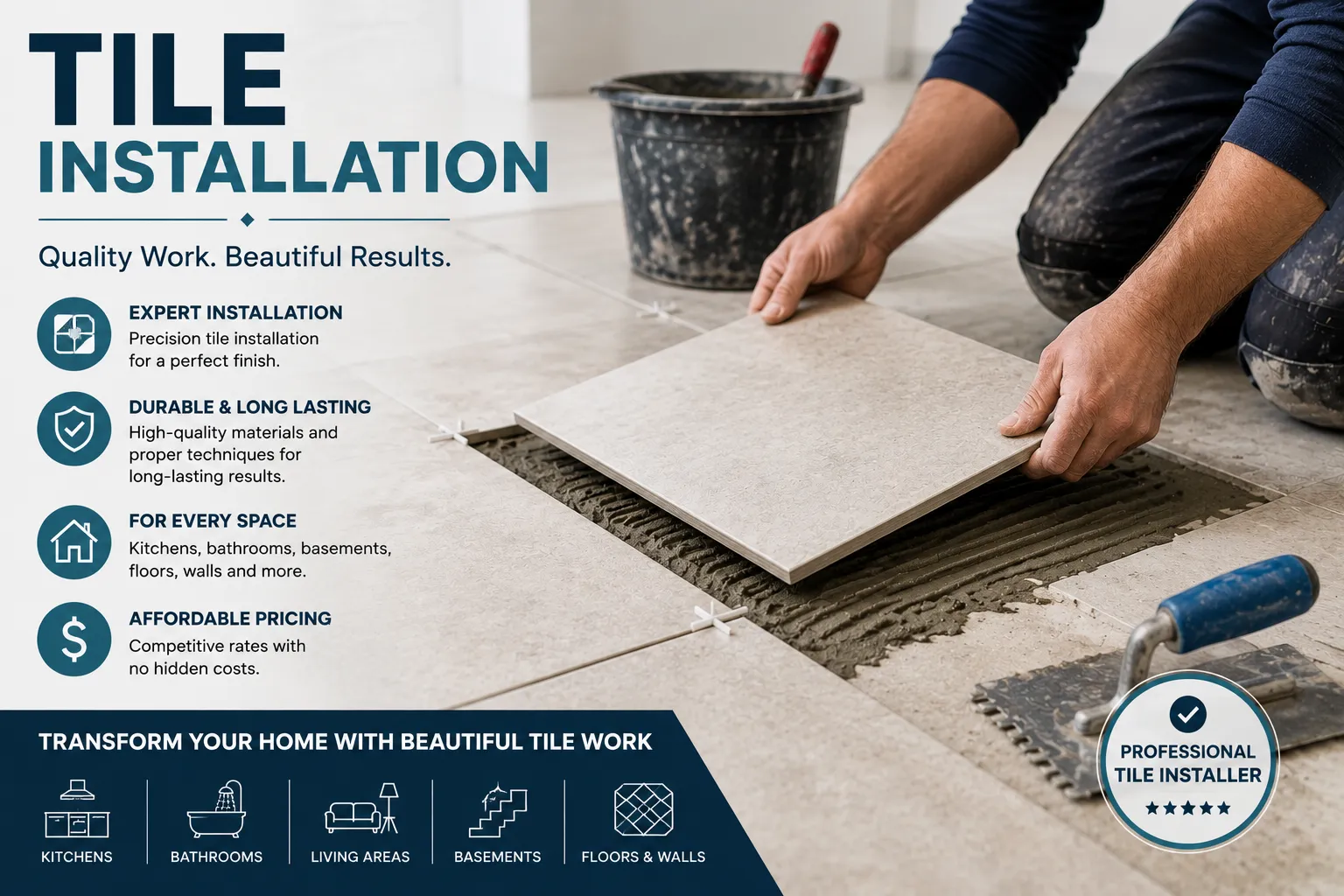
Ceramic tile installation involves more than placing individual pieces onto a surface. The adhesive or mortar needs to be applied correctly, tiles must be positioned carefully, and spacing needs to remain consistent throughout the project.
Grout is another important part of the finished surface. Consistent grout lines help create a clean appearance, while the appropriate grout type can improve durability and make maintenance easier.
Homeowners should also remember that tiles need adequate time for adhesives and grout to cure. Using a newly tiled surface too soon can interfere with the finished result.
Common Tile Installation Mistakes
Even a high-quality tile can produce disappointing results when the installation is rushed or poorly planned.
Some common mistakes include:
Installing Over an Uneven Surface
Small uneven areas can become much more noticeable once tiles are installed. Proper surface preparation helps reduce this problem.
Poor Layout Planning
Improper planning can result in awkward cuts, uneven borders, or patterns that do not line up.
Inconsistent Spacing
Uneven grout lines can make an otherwise attractive installation look unprofessional.
Using the Wrong Materials
Adhesives, grout, and underlayment should be selected according to the tile and installation location.
Ignoring Moisture
Bathrooms and other wet areas require appropriate waterproofing and installation practices. Tile itself does not automatically make an underlying surface waterproof.
DIY or Professional Installation?
Some homeowners enjoy handling small improvement projects themselves, and simple tile work may seem manageable. However, larger or more complicated installations can become challenging quickly.
Professional installation may be worthwhile when:
- The room has an unusual shape
- The surface needs significant preparation
- Large-format tiles are being used
- Waterproofing is required
- The pattern is complicated
- Several rooms are being renovated
- A high-end finish is expected
The goal is not simply to put tiles on a surface. It is to create a level, secure, attractive installation that performs well over time.
How to Choose a Reliable Installer
Choosing the right professional is just as important as selecting the tile itself. Do not be afraid to ask questions before agreeing to a project.
Consider asking:
- How much experience do you have with similar projects?
- What preparation will be included?
- How will the existing surface be assessed?
- What materials will be used?
- How will waterproofing be handled where necessary?
- How long is the project expected to take?
- Is cleanup included?
- Can you provide examples of previous work?
A clear estimate should explain what is included rather than simply giving one overall price.
How to Keep Your Project on Budget
Tile projects can become more expensive when homeowners change their plans halfway through the work. Having the design, tile choice, pattern, and general scope decided beforehand can make budgeting easier.
It is also smart to account for additional materials. Broken pieces, future repairs, or unexpected cuts can increase material requirements, so purchasing a small amount of extra tile may be useful.
To manage your budget:
- Compare several estimates
- Choose materials based on the room's needs
- Avoid sacrificing preparation to save money
- Confirm labour and material costs
- Ask about possible additional charges
- Keep spare tiles for future repairs
Final Thoughts
A successful tile project starts with good planning. Choosing suitable materials, preparing the surface correctly, and creating a balanced layout can have as much impact as the tile itself. Homeowners should focus on long-term performance rather than simply choosing the cheapest option available.
Whether you are updating a bathroom, kitchen, hallway, or another part of your home, professional help can make the process smoother and give you greater confidence in the finished result. With careful planning and attention to detail, a well-installed tile surface can provide an attractive and practical upgrade for years to come.
























Sign in to leave a comment.