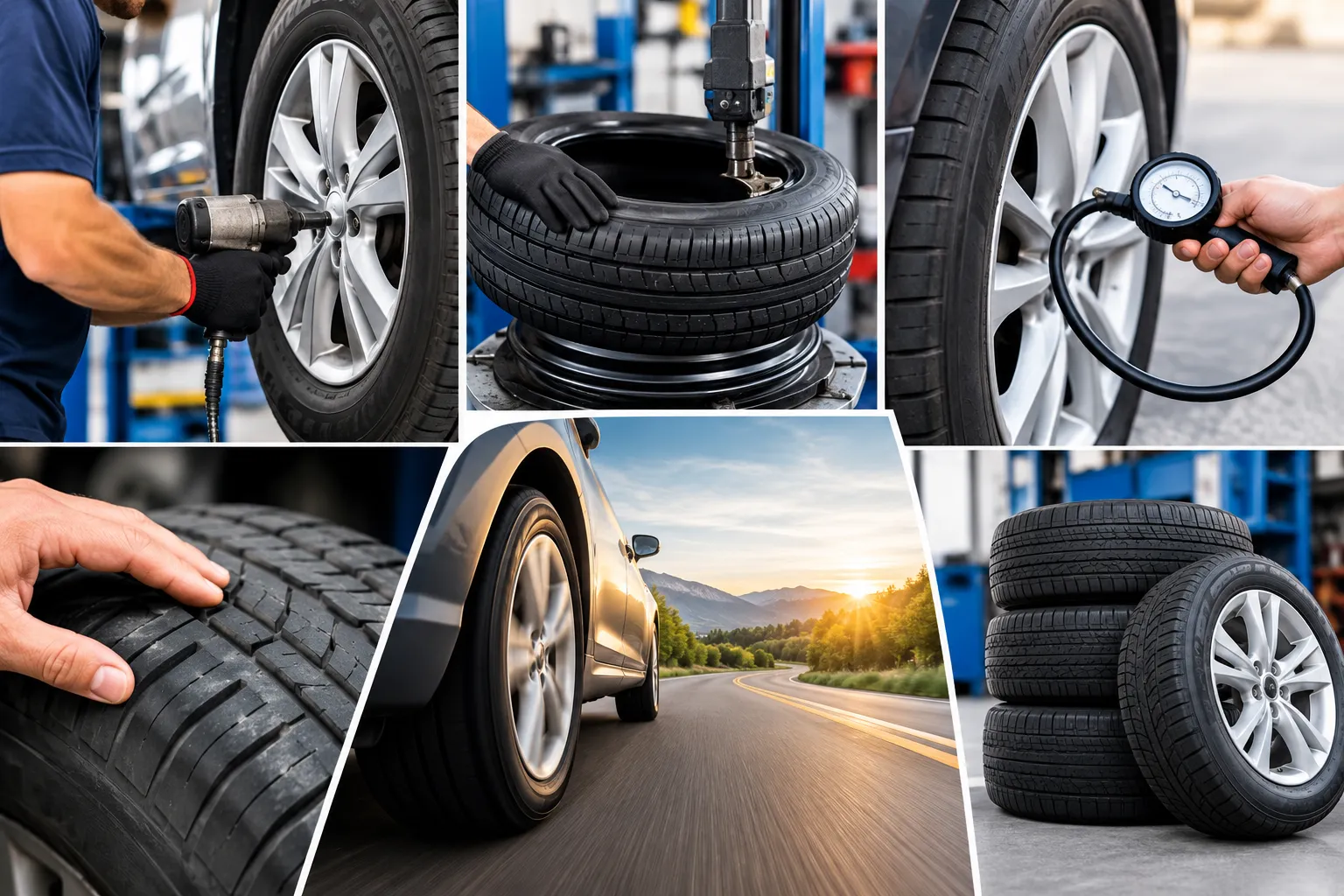

Installing tires may look straightforward from the outside, but the process requires the right equipment, measurements, and procedures. Small mistakes can affect how a vehicle handles and how evenly its tires wear. Some installation errors can also create serious safety concerns, which is why proper procedures matter.
What are the most common tire installation mistakes?
Using the wrong tire size, skipping wheel balancing, incorrect inflation, improper lug torque, and failing to inspect the wheel are common problems that can affect a vehicle after installation. Professional tire installation should follow vehicle and tire manufacturer recommendations at every stage of the process.
Here are several mistakes drivers should know about.
Installing the wrong tire size
Every vehicle is designed around specific tire dimensions and load requirements. Installing a tire simply because it fits physically does not mean it is appropriate for the vehicle.
The correct size can usually be found on the driver's door placard or in the owner's manual. If you are considering a different size, check with a qualified tire professional first.
Skipping wheel balancing
A tire can be installed correctly and still create vibration if the tire and wheel assembly is not properly balanced.
An imbalance may become more noticeable as speed increases. It can also contribute to irregular tread wear and make driving less comfortable. NHTSA recommends balancing new tires during installation.
Using incorrect tire pressure
Putting air into a tire based solely on the number printed on its sidewall is a common mistake. That number generally represents the tire's maximum allowable pressure, not necessarily the pressure your vehicle requires.
The correct cold inflation pressure is listed on the vehicle's tire information placard or in the owner's manual.
Incorrect lug nut torque
Lug nuts need to be tightened according to the manufacturer's specifications. Over-tightening and under-tightening can both cause problems.
USTMA recommends using a torque wrench for final tightening and following accepted tightening procedures. Improper torque can contribute to damaged studs, damaged wheel assemblies, or wheel attachment problems.
Ignoring the condition of the wheel
A new tire cannot correct a damaged wheel. Before installation, the wheel should be checked for obvious cracks, bends, corrosion, or other conditions that could interfere with proper mounting or sealing.
A damaged wheel may also contribute to air loss or vibration.
Why should tire installation be handled carefully?
Mounting and inflating a tire involves stored energy, so improper procedures can be dangerous. USTMA states that tire mounting should be performed by specially trained personnel using appropriate equipment and safety procedures.
This is one reason DIY tire mounting can be more complicated than it appears. Changing a wheel on a vehicle is not the same as removing a tire from a wheel and installing a replacement tire.
After installation, drivers should also pay attention to warning signs. Persistent vibration, pulling, unusual noise, or pressure loss should be checked promptly rather than ignored.
A good installation is only the beginning of tire maintenance. Drivers should regularly check pressure, inspect tread and sidewalls, and follow the recommended rotation schedule. NHTSA also recommends alignment and balancing services as part of proper tire maintenance.
FAQ
Can improper tire installation damage a car?
Yes. Incorrect balancing, inflation, mounting, or lug torque can contribute to vibration, uneven wear, component damage, or wheel attachment problems.
Is it safe to install a tire at home?
Changing a complete wheel and tire assembly is different from mounting a tire onto a wheel. Tire mounting and inflation require specialized equipment and training, so professional service is generally the safer option.






























Sign in to leave a comment.