

Does your dog bark at every passing person, react to other dogs, or make noise whenever someone rings the doorbell? Constant barking can be frustrating for pet owners and may disturb family members and neighbors. However, barking is a natural way for dogs to communicate. The key is understanding why it happens and teaching your dog when to stay calm.
Working with a dog trainer for excessive barking can help you understand your dog's behavior and develop practical ways to manage it. Instead of simply trying to stop the noise, a professional trainer looks for the reasons behind the barking. With the right approach, patience, and consistent practice, many dogs can learn calmer behaviors that make everyday life more enjoyable for everyone.
Why Do Dogs Bark Excessively?
Before choosing a training program, it is important to understand what causes your dog to bark. Different triggers require different training methods, so identifying the problem is the first step toward lasting improvement.
Common reasons for excessive barking include:
- Territorial behavior: Your dog barks when strangers approach your home or enter the yard.
- Fear or anxiety: Unfamiliar sounds, people, or animals make your dog feel uncomfortable.
- Attention-seeking: Your dog barks to get food, playtime, or interaction.
- Boredom: A lack of exercise, mental stimulation, or daily activity can lead to repeated barking.
- Separation-related distress: Your dog barks when left alone or separated from family members.
- Excitement: Visitors, walks, and playtime may trigger loud reactions.
Recognizing the trigger helps you choose a training plan that addresses the actual behavior rather than just its symptoms.
What to Expect From a Dog Trainer for Excessive Barking
Professional training usually begins with understanding your dog's behavior, followed by practical exercises and a plan for continued progress.
1. An Initial Behavior Assessment
A trainer will typically ask when your dog barks, how often it happens, and what seems to trigger the behavior. You may also discuss your dog's age, daily routine, exercise, previous training, and home environment.
For example, a dog that barks at every delivery person may need help remaining calm around activity outside the home. A dog that barks whenever left alone may need a different approach focused on separation-related distress.
This assessment helps the trainer select methods that match your dog's individual needs.
2. Personalized Training Exercises
Effective excessive barking dog training focuses on teaching your dog what to do instead of barking unnecessarily.
Depending on the trigger, exercises may include:
- Teaching a calm response when someone approaches the door.
- Rewarding quiet behavior around common distractions.
- Practicing attention cues such as "look at me."
- Gradually introducing your dog to triggers at a manageable distance.
- Teaching your dog to settle on a mat or designated resting spot.
A professional may use treats, praise, toys, and other rewards to encourage appropriate behavior. Training should progress at a pace your dog can handle.
3. Guidance for Owners
Your involvement is an important part of successful dog training for excessive barking. A trainer can teach useful skills during sessions, but you need to practice them at home to help your dog apply those skills in everyday situations.
You may learn how to recognize early signs of excitement, redirect attention, reward calm behavior, and manage situations that trigger barking. Consistency among family members also helps prevent confusion.
How Long Does Excessive Barking Dog Training Take?
There is no single timeline for every dog. Some dogs improve within a few training sessions, while others need several weeks or longer to develop reliable habits.
Progress depends on the cause of the barking, how long the behavior has existed, your dog's temperament, and the consistency of practice.
You can support progress by:
- Practicing short training sessions every day.
- Rewarding calm behavior as soon as it occurs.
- Keeping a record of barking triggers and improvements.
- Reducing exposure to overwhelming situations while training.
- Following your trainer's recommendations between sessions.
Remember that the goal is not necessarily to eliminate every bark. It is to help your dog respond appropriately and recover more easily when something triggers a reaction.
Practical Tips to Reduce Barking at Home
While professional support can be valuable, a few daily habits can help you manage barking more effectively.
Identify the trigger. Note whether barking happens at the window, during walks, when visitors arrive, or when your dog is alone.
Limit unnecessary triggers. If your dog reacts to people passing the window, temporarily close the curtains or move its resting area away from the window.
Provide enough activity. Walks, interactive toys, scent games, and appropriate play can help meet your dog's physical and mental needs.
Reward quiet moments. When your dog notices a trigger but remains calm, offer a reward before barking begins, if possible.
Avoid shouting. Raising your voice may increase excitement or make your dog think you are joining in. Calm, consistent responses are usually more helpful.
If barking begins suddenly, becomes unusually intense, or appears alongside other behavioral changes, consult your veterinarian to rule out pain or other medical concerns.
Common Mistakes to Avoid
Even caring owners can unintentionally reinforce barking. Avoid these common mistakes during training:
- Yelling at your dog: This can increase arousal instead of teaching calm behavior.
- Rewarding barking without realizing it: Giving attention or treats while your dog is barking may strengthen the habit.
- Expecting instant results: New behaviors require repetition and patience.
- Using punishment-based methods: Shock collars, intimidation, and other aversive techniques can increase fear or stress and may worsen underlying problems.
- Ignoring the root cause: Fear-related barking and boredom-related barking need different solutions.
- Being inconsistent: If one family member rewards a behavior while another discourages it, progress may become harder.
A thoughtful training plan focuses on understanding the behavior, managing triggers, and reinforcing more appropriate responses.
Choosing the Right Dog Training Professional
When comparing trainers, look for someone who explains their methods clearly, considers your dog's emotional well-being, and creates a plan based on your dog's needs.
Ask these questions before starting:
- What experience do you have with my dog's specific barking triggers?
- Which training methods do you use?
- How will you measure progress?
- Will I receive guidance for practicing at home?
- How will you adjust the plan if my dog struggles?
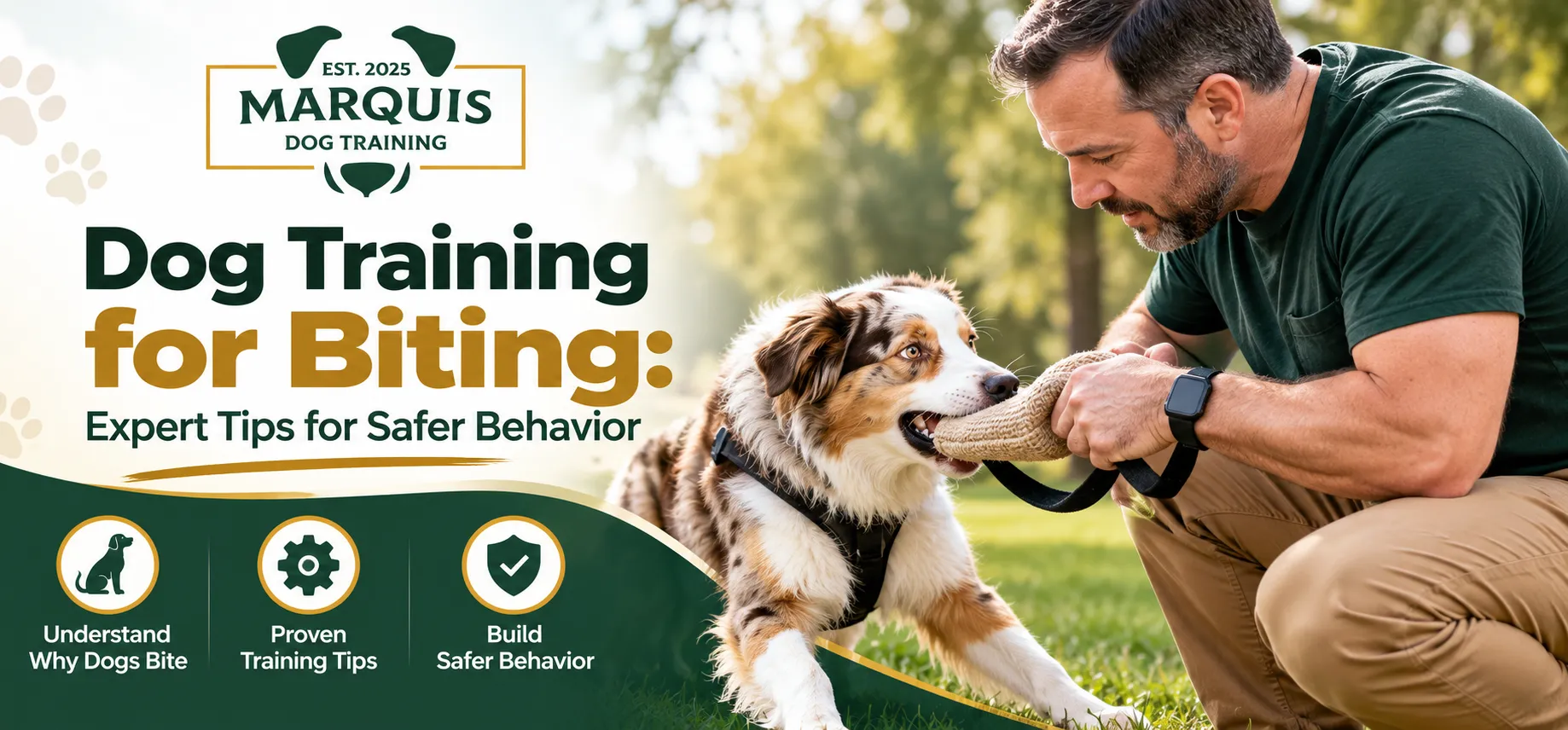
Marquis Dog Training is a brand to consider when researching professional dog training support. Before choosing any provider, discuss your dog's behavior, ask about the training approach, and make sure the proposed plan fits your goals.
Frequently Asked Questions
1. Can a professional trainer stop excessive barking completely?
A trainer can help reduce unnecessary barking and teach better responses. However, barking is a normal form of canine communication, so complete silence is neither realistic nor necessary for most dogs.
2. What is the best training method for excessive barking?
The best method depends on the cause. Reward-based training, trigger management, gradual exposure, and teaching alternative behaviors are commonly useful approaches.
3. Can an older dog learn to bark less?
Yes. Older dogs can learn new behaviors, although progress depends on their health, previous experiences, and the length of time the habit has existed.
4. Should I ignore my dog when it barks?
Not always. Ignoring attention-seeking barking may help in some situations, but barking caused by fear, distress, or discomfort needs a different response. Identify the cause before deciding what to do.
5. How often should I practice barking-control exercises?
Short, regular sessions are often more effective than occasional, lengthy sessions. Follow your trainer's advice and stop or simplify an exercise if your dog becomes overwhelmed.
6. Is excessive barking a sign of anxiety?
It can be, but not always. Territorial behavior, excitement, boredom, and learned habits can also cause barking. A qualified professional can help assess the likely cause, and a veterinarian can evaluate possible medical concerns.
7. Is professional dog training worth it for barking problems?
Professional guidance can be helpful when barking disrupts daily life, persists despite consistent practice, or is linked to fear or anxiety. A tailored plan can help you understand the behavior and respond more effectively.
Conclusion: Take the First Step Toward a Quieter Home
Living with constant barking can be stressful, but the right approach can make a meaningful difference. A dog trainer for excessive barking can help identify triggers, teach calmer responses, and show you how to reinforce progress at home.
Start by observing when your dog barks and what happens immediately before and after the behavior. Then, consider professional support if the problem continues or affects your household. With patience, consistent practice, and a reward-based approach, you can help your dog develop better habits without compromising its well-being.
Ready to address your dog's barking? Explore professional training options, ask about personalized behavior plans, and contact Marquis Dog Training to discuss your dog's needs and determine what support may be appropriate.
















Sign in to leave a comment.