
Quick Answer
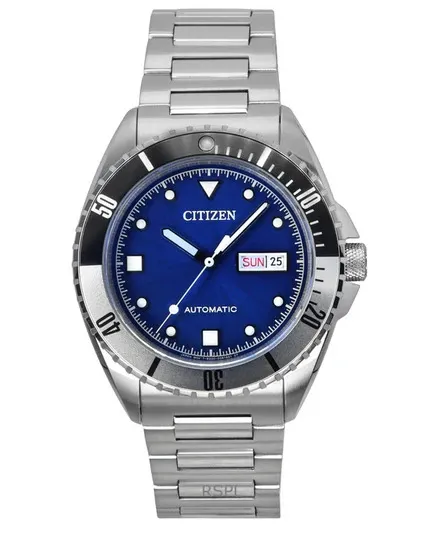
Citizen uses Super Titanium across the Promaster range, and it matters most on the largest cases. Super Titanium is titanium with a proprietary surface hardening treatment that makes it considerably more scratch-resistant than untreated titanium while retaining the weight advantage over steel. On the Sky references in particular, where slide rule bezels demand large cases, the material is the difference between a watch that can be worn all day and one that cannot. Comparing the Promaster Sky, Land and Sea families on this basis clarifies which titanium references are worth the difference.
What Super Titanium Actually Is
Titanium in its untreated state is lighter and more corrosion-resistant than steel but softer at the surface, so it marks more readily. Citizen's treatment hardens the outer layer substantially, which addresses the main practical objection to titanium in watches. The result is a case that is significantly lighter than steel and more resistant to everyday scratching than either untreated titanium or stainless steel. It is one of the more genuinely differentiated materials at this level of the market.
Why Weight Matters on Promaster
Promaster cases are large because their functions require space. A slide rule bezel needs diameter. A dive bezel with a legible scale needs diameter. Sensor modules need volume. A case of that size in stainless steel is heavy enough to move on the wrist during activity and to cause fatigue over a full day. Titanium reduces that weight by roughly forty percent, which changes the watch from something worn occasionally to something worn constantly.
Titanium in Promaster Sky
The Sky references are the largest in the range and the ones that benefit most from titanium. The Navihawk and Skyhawk families combine slide rule bezels, world time, chronograph functions and in some cases radio or satellite synchronisation, all of which demand case volume. In steel these watches are substantial. In Super Titanium they become wearable for people who would otherwise find the size prohibitive. This is where the material earns its place most clearly.
Titanium in Promaster Sea
On the dive references, titanium adds corrosion resistance to the weight advantage. Salt water is hard on steel over years, and titanium handles it better. The reduced weight also matters underwater and during surface swimming, where a heavy watch is more noticeable than on land. Citizen offers both steel and titanium versions of several Sea references, and for anyone using the watch in salt water regularly the titanium version is the more sensible long-term purchase.
Titanium in Promaster Land
The Land references vary more widely in size, and titanium appears on the larger and more sensor-heavy models. For field and expedition use, the weight reduction matters during extended wear and the corrosion resistance matters in humid conditions. On the smaller field-watch style references the benefit is less pronounced, since those cases are not heavy enough in steel for weight to be the limiting factor.
How Titanium Looks
Titanium is darker and greyer than stainless steel, with a matte quality even when polished. Some buyers prefer the tone and some find it less bright than they expect from photographs, which usually show titanium under lighting that flatters it. Brushed finishes suit the material better than polished ones and hide wear more effectively. Citizen applies coloured coatings over titanium on some references, which changes the appearance considerably. Buyers comparing photographs across sellers should be aware that lighting affects how titanium reproduces more than it affects steel, so an in-person look or a video is worth seeking out before committing to a titanium Promaster.
Scratch Behaviour Compared
Untreated titanium marks more readily than steel but the marks are less visible because of the lower reflectivity. Super Titanium resists marking better than both. Over several years of daily wear the difference is substantial and visible when a treated and untreated case are compared side by side. Deep scratches are harder to refinish on titanium than steel, which makes the surface treatment more valuable rather than less.
Hypoallergenic Properties
Titanium does not contain nickel, which is the most common cause of skin reactions to watch cases. For anyone who has had irritation from steel bracelets, titanium usually resolves it entirely. This is a genuine medical rather than marketing consideration and it is the reason a meaningful proportion of titanium watch buyers choose the material. The coating applied to some references should be checked if sensitivity is the primary reason for the purchase.
Eco-Drive and Titanium Together
The combination of Super Titanium and Eco-Drive is the strongest long-term ownership proposition in the Promaster range. The case resists corrosion and scratching for years. The movement needs no battery change, so the sealed case does not need opening. Together they produce a tool watch that can be worn hard for a decade with almost no intervention beyond periodic gasket checks. For a watch used in demanding environments, that combination is difficult to match.
Sizing Considerations
Titanium reduces weight but does not reduce footprint. A large case is still large regardless of what it is made from. Lug-to-lug remains the measurement that determines whether the watch sits properly on the wrist, and on the Sky references it is substantial. Buyers frequently assume the weight reduction will solve a size problem and find that it does not. Check the dimensions independently of the material.
Buying the Right Titanium Promaster
Confirm the reference uses Super Titanium rather than untreated titanium or a titanium-tone coating over steel, since all three appear across the wider market. Check crystal type, since sapphire is the sensible pairing on a case built to last. Check the water resistance rating against the intended use. And check lug-to-lug against your wrist. Working through the Promaster titanium references on those four points produces a shortlist quickly.
Long-Term Ownership
A Super Titanium Eco-Drive Promaster needs very little. Gaskets should be checked every few years if the watch is used in water. The rechargeable cell may need replacing after a decade or more. Bracelets and straps are consumable. The case itself will outlast most of the watches bought alongside it, which is the strongest argument for paying the difference over steel on a watch intended for long-term hard use rather than occasional wear.
Frequently Asked Questions
What is Super Titanium?
Citizen's surface-hardened titanium. It retains the weight advantage of titanium while resisting scratching considerably better than untreated titanium or stainless steel.
How much lighter is titanium than steel?
Roughly forty percent at comparable dimensions, which is immediately noticeable on the larger Promaster cases.
Does titanium prevent skin reactions?
It contains no nickel, which is the usual cause of reactions to steel cases. For most people with that sensitivity, titanium resolves it.
Is titanium better for salt water?
Yes. It resists salt water corrosion better than most steel alloys, which matters on dive references used regularly in the sea.
Does titanium make a large watch fit better?
No. It reduces weight but not footprint. Lug-to-lug against wrist width still determines whether the watch sits properly.
Can titanium cases be refinished?
Yes, but it is more specialised than steel and not every watchmaker offers it. Brushed finishes hide wear better in the first place.
Verdict
Super Titanium is one of the few materials at this level that delivers a genuine functional advantage rather than a specification talking point. On the large Promaster Sky cases it is the difference between wearable and not. On the Sea references it adds salt water corrosion resistance. Combined with Eco-Drive it produces a tool watch that runs for a decade with almost no intervention. Check lug-to-lug separately, because titanium solves weight and not size.

























Sign in to leave a comment.