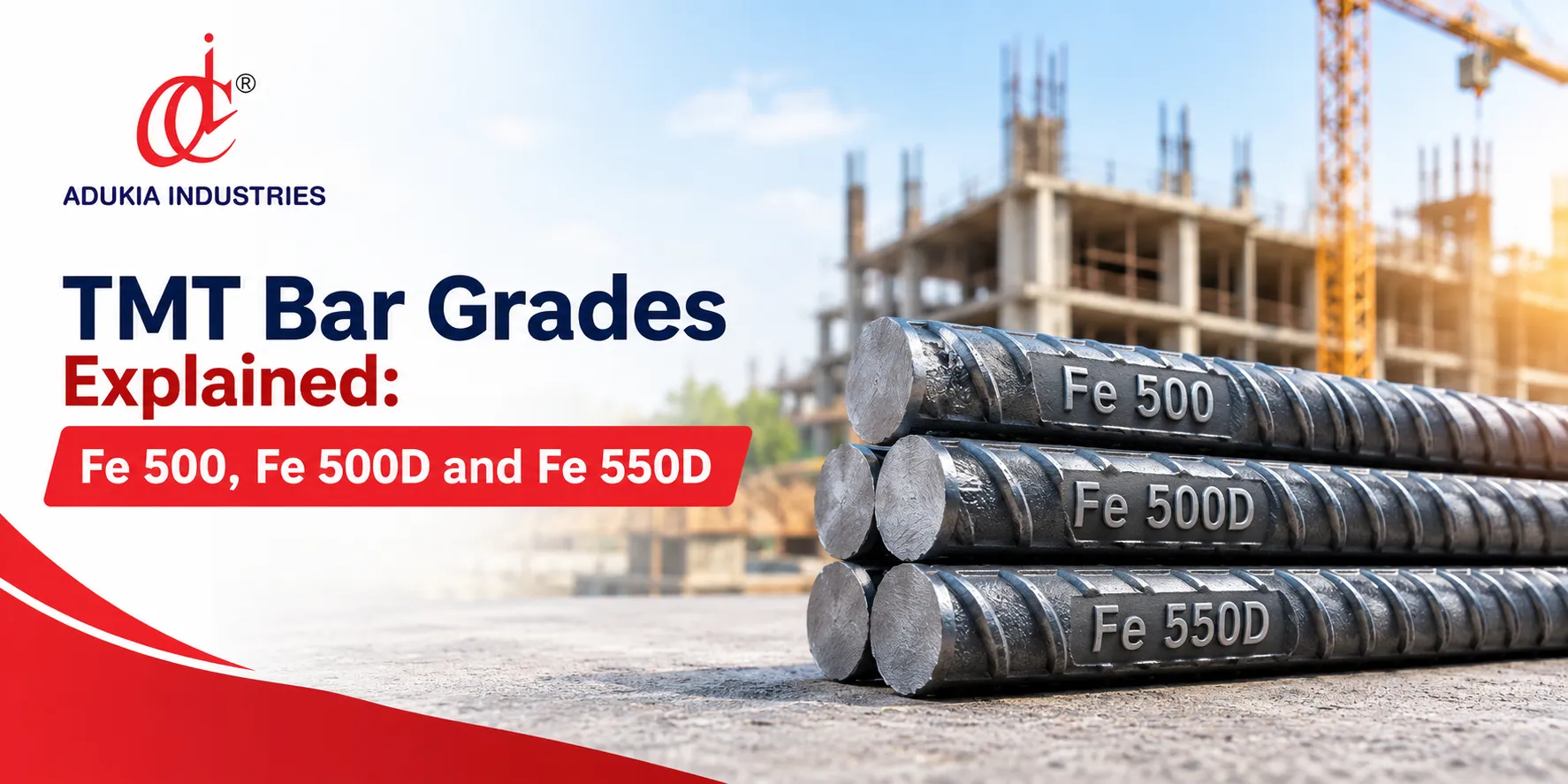

If you've ever stood at a steel dealer's counter trying to decide between Fe 500, Fe 500D, or Fe 550D, you know how confusing the choice can get. The numbers sound technical, the "D" suffix adds another layer of doubt, and most suppliers won't explain the difference unless you ask directly. Yet this single decision affects how your structure performs for decades — through earthquakes, temperature swings, and everyday load.
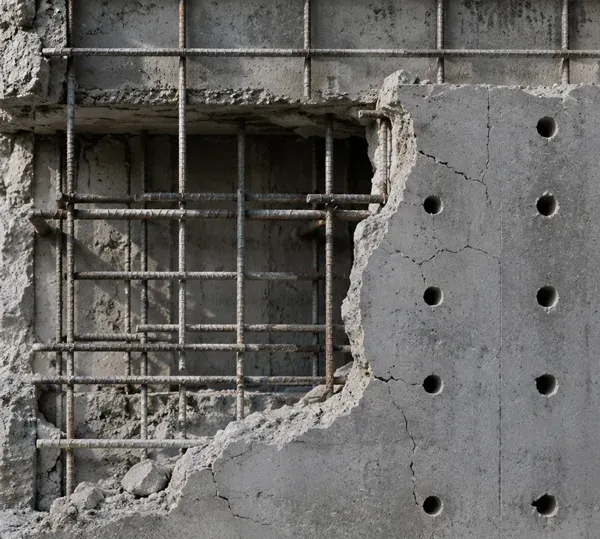
TMT bars, or Thermo-Mechanically Treated bars, are reinforcement rods used inside concrete to give it tensile strength. Concrete handles compression well but is weak under tension, which is where steel bars step in. The "Fe" in each grade name stands for iron, and the number that follows indicates the minimum yield strength in megapascals (MPa) — essentially, how much stress the bar can take before it starts to deform permanently.
Fe 500: The Standard Choice
Fe 500 has been the go-to grade for residential and mid-rise construction across India for years. With a yield strength of 500 MPa, it offers a solid balance between strength and cost, making it suitable for buildings that don't face extreme seismic activity or unusual load conditions.
What makes Fe 500 practical is its relatively higher elongation compared to older grades like Fe 415, meaning it bends and stretches a bit before breaking rather than snapping suddenly. That said, it's gradually being replaced in many projects by its more advanced counterpart, Fe 500D, especially where builders want an added safety margin without a major cost jump.
Fe 500D: Ductility Takes the Lead
The "D" here stands for ductility, and it's not a minor add-on — it's the defining feature. Fe 500D bars carry the same 500 MPa yield strength as standard Fe 500 but are manufactured to meet stricter ductility and elongation requirements as per IS 1786:2008 specifications.
In practical terms, this means Fe 500D bars can absorb more energy and deform further before failing, which matters enormously during earthquakes or sudden structural stress. They also have tighter controls on sulphur and phosphorus content, which improves weldability and reduces brittleness. For this reason, Fe 500D has become the preferred grade in seismic zones, high-rises, bridges, and any structure where sudden load reversal is a real possibility.
Builders sourcing tmt bars for construction in urban India increasingly default to Fe 500D over plain Fe 500, simply because the price difference is marginal while the safety benefit is substantial. If your project sits in an earthquake-prone zone or involves multiple floors, this grade is usually the smarter call.
Fe 550D: Built for Heavy-Duty Applications
Fe 550D pushes yield strength up to 550 MPa while still retaining the enhanced ductility properties of the D-grade family. This grade is generally reserved for large-scale infrastructure — think flyovers, industrial plants, high-rise commercial towers, and projects where reducing overall steel quantity without compromising strength is a design priority.
Because Fe 550D bars are stronger per unit weight, structural engineers can sometimes specify fewer bars or thinner sections to achieve the same load-bearing capacity, which can bring down overall material costs on large projects despite the higher per-tonne price of the steel itself. It's not a grade most homeowners need to think about, but for engineers working on commercial or industrial builds, it's a valuable option worth discussing with a structural consultant.
Choosing Between the Three
There's no single "best" grade — it depends entirely on what you're building. A two-storey home in a low-seismic zone rarely needs anything beyond Fe 500D, while a ten-storey apartment complex or a bridge deck almost always calls for either Fe 500D as a minimum or Fe 550D where load calculations justify it. Cost, seismic zoning, structural design, and local building codes should all factor into the decision, ideally in consultation with a qualified structural engineer rather than left entirely to the contractor or dealer.
It's also worth checking who manufactures the bars you're buying. Quality control varies significantly between producers, and bars from an established, ISI-certified source tend to have far more consistent mechanical properties than bars from smaller, unregulated mills. Companies like Tata Steel and JSW Steel, among India's largest and most established steel producers, maintain rigorous testing standards that smaller regional players often can't match. In fact, it's not uncommon for engineers to specifically ask which mill supplied the batch, since the reputation of the largest steel company in India producing that grade often correlates directly with fewer manufacturing defects and more reliable performance under load.
A Final Word
Understanding TMT bar grades isn't just technical trivia — it directly affects the safety and lifespan of whatever you're building. Fe 500 remains a reasonable baseline for smaller, low-risk structures, Fe 500D has become the practical standard for most modern construction due to its ductility advantage, and Fe 550D serves specialized, heavy-load applications where engineers need maximum strength efficiency. Before finalizing your order, cross-check the grade against your structural drawings and always verify the manufacturer's test certificates rather than relying on the dealer's word alone.






















Sign in to leave a comment.