
Have you ever bitten into something cold or sweet and felt a sudden, sharp jolt of pain from one tooth? A little sensitivity can be normal, but intense pain after a tooth breaks, cracks, or loses a large filling may mean something more serious is happening. In some cases, the inner part of the tooth, including the dental pulp and nerve tissue, can become exposed.
An exposed tooth nerve can be extremely uncomfortable and should not be ignored. The nerve and blood vessels inside a tooth are protected by layers of enamel and dentin. When those protective layers are damaged, the sensitive inner tissue may be exposed to air, food, bacteria, and temperature changes.
So, what causes a tooth nerve to become exposed, and what can a dentist do about it? Let’s take a closer look.
What Does It Mean When a Tooth Nerve Is Exposed?
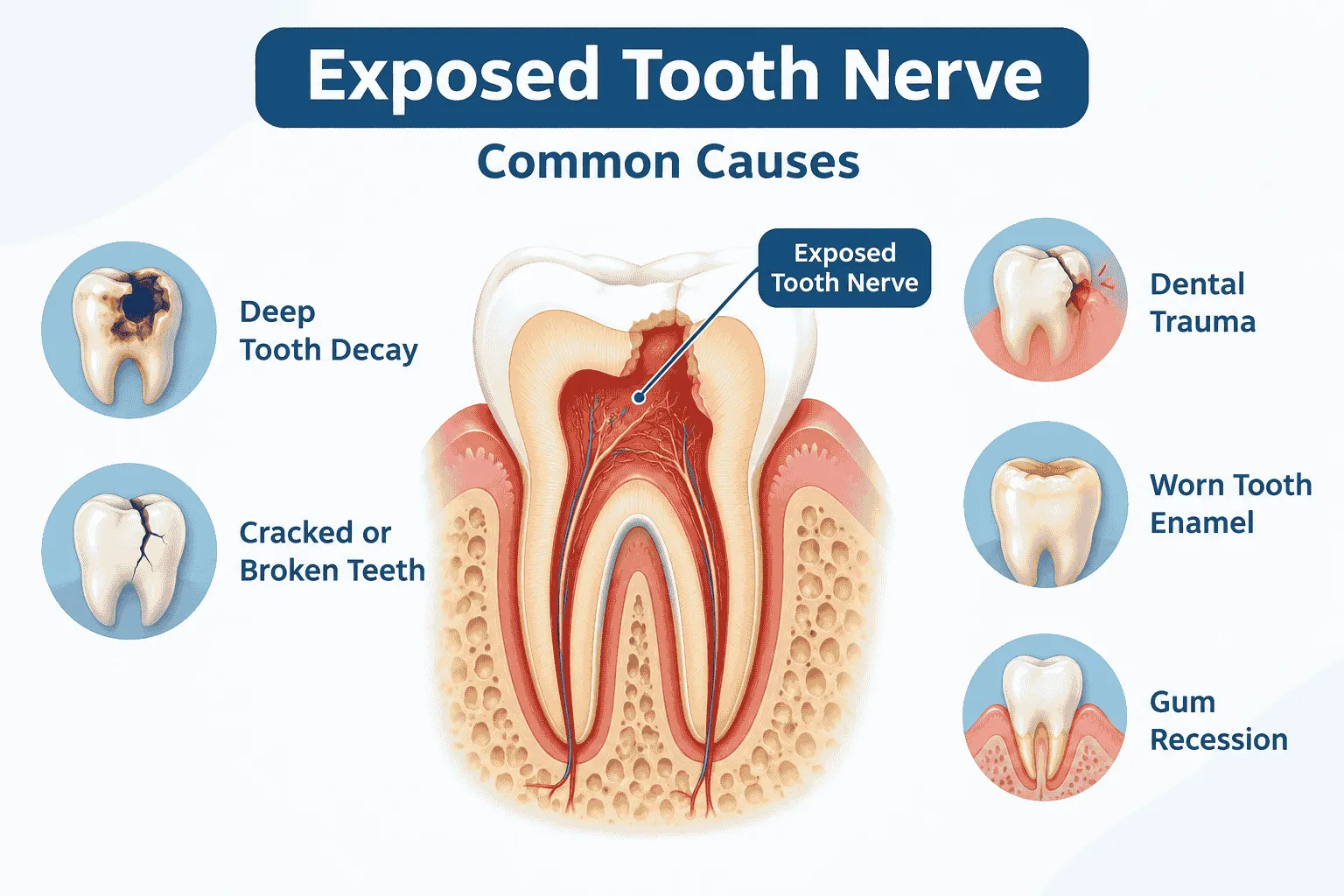
A tooth is made up of several layers, and the innermost part is called the pulp. The pulp contains nerves, blood vessels, and connective tissue that help nourish the tooth while it is developing. Once a tooth has fully matured, it can generally function without the pulp, but the nerve tissue can still cause significant pain when irritated.
Normally, enamel and dentin shield the pulp from the outside environment. If decay, trauma, a fracture, or another type of damage reaches deep enough into the tooth, the pulp may become exposed.
An exposed nerve may cause immediate sensitivity or pain. You may notice discomfort when breathing through your mouth, drinking something cold or hot, eating, or even touching the affected tooth.
What Causes an Exposed Tooth Nerve?
There isn't just one reason a tooth nerve can become exposed. Several dental problems can damage the protective layers of a tooth and allow the pulp to become irritated or exposed.
Deep Tooth Decay
Severe tooth decay is one of the most common reasons the pulp can become affected. Cavities begin by damaging the outer enamel and can gradually move deeper into the dentin.
If decay continues untreated, it may eventually reach the pulp chamber. At that stage, bacteria can irritate or infect the nerve tissue, resulting in significant toothache, sensitivity, or swelling.
Broken or Chipped Tooth
A tooth can break because of an accident, sports injury, biting down on something hard, or extensive decay that has weakened its structure.
If a large piece of the tooth breaks away, the damage may extend close to or directly into the pulp. This can leave the sensitive inner tissue exposed and cause sudden, intense pain.
Cracked Tooth
Not every damaged tooth loses a visible piece. Sometimes, a crack extends deep into the tooth and allows bacteria and irritants to reach the pulp.
You might experience pain when chewing or releasing your bite, along with sensitivity to hot or cold foods. Because cracks can be difficult to see, persistent symptoms should be evaluated by a dentist.
Dental Trauma
A blow to the mouth can damage a tooth even when there is no obvious fracture. Trauma can injure the pulp, and in more severe cases, a portion of the tooth may break away and expose the inner tissue.
Children and adults who participate in contact sports can be particularly vulnerable to dental injuries. Wearing an appropriately fitted mouthguard can help reduce the risk.
Extensive Wear or Damage
Teeth can gradually become worn down from grinding, clenching, acid erosion, or other factors. In advanced cases, this loss of tooth structure can bring the inner layers closer to the surface.
Although this may happen slowly rather than suddenly, it can eventually contribute to significant sensitivity and pulp irritation.
What Does an Exposed Tooth Nerve Feel Like?
The symptoms can vary depending on how much of the tooth is damaged and whether the pulp has become inflamed or infected.
Common signs include:
- Sharp or throbbing tooth pain
- Strong sensitivity to cold or hot temperatures
- Pain when eating or chewing
- Discomfort when air reaches the tooth
- Pain triggered by sweet or acidic foods
- A visible hole, crack, or broken portion of the tooth
- Swelling around the affected tooth
- Tender or swollen gums
- A bad taste or drainage around the tooth
Sometimes, the pain is immediate and severe. In other cases, symptoms may come and go.
One important point is that a decrease in pain does not always mean the tooth has healed. If the pulp becomes severely damaged or dies, the nerve may stop responding. However, bacteria can remain inside the tooth and cause an infection around the root.
Is an Exposed Tooth Nerve a Dental Emergency?
It can be. A tooth with exposed pulp is vulnerable to further irritation and bacterial contamination, so prompt dental evaluation is important.
Seek urgent dental care if you have severe or persistent tooth pain, facial swelling, swelling around the gums, fever, difficulty swallowing, or trouble breathing. These symptoms can indicate a more serious dental infection.
Even without severe pain, a visibly broken tooth or suspected exposed nerve deserves professional attention. Waiting may allow the damage to progress and potentially limit treatment options.
What Should You Do If Your Tooth Nerve Is Exposed?
If you suspect that the nerve of your tooth has been exposed, avoid chewing on that side of your mouth until you can see a dentist. Keep the area as clean as possible by gently brushing and rinsing your mouth.
You should also avoid very hot, cold, sweet, or acidic foods if they trigger pain.
Do not place aspirin directly against the tooth or gum. Doing so can irritate or burn the surrounding tissue.
If a piece of the tooth has broken off, keep it in a clean container and bring it with you to the dental appointment. In some situations, the dentist may be able to use the fragment when repairing the tooth.
These steps are only temporary measures. They cannot repair an exposed pulp or eliminate an infection.
How Is an Exposed Tooth Nerve Treated?
Treatment depends on the amount of damage, the condition of the pulp, and whether the tooth can be restored.
Dental Filling or Bonding
If the damage is relatively limited and the pulp has not been significantly affected, a dentist may be able to repair the tooth with a filling or dental bonding.
The goal is to seal the damaged area and restore the tooth's shape and protective structure.
Dental Crown
A crown may be recommended when a tooth has lost a substantial amount of its structure but still has enough healthy tooth remaining to support a restoration.
The crown covers the tooth and helps protect it from further damage while restoring its function and appearance.
Root Canal Treatment
When the pulp is severely inflamed, infected, or exposed, root canal treatment may be necessary.
During a root canal, the dentist removes the damaged pulp from inside the tooth, cleans and disinfects the canals, and seals the space. The tooth can then be restored, often with a crown when additional protection is needed.
Despite its reputation, modern root canal treatment is designed to relieve the pain caused by infected or inflamed pulp rather than create it.
Tooth Extraction
Extraction may be considered when a tooth is too severely damaged to restore. When possible, dentists generally evaluate whether the natural tooth can be saved before recommending removal.
If extraction is necessary, your dentist can discuss replacement options, such as a dental implant, bridge, or other appropriate restoration.
Can You Prevent an Exposed Tooth Nerve?
While accidents cannot always be prevented, many causes of severe tooth damage can be reduced with consistent dental care.
Brush twice a day with fluoride toothpaste, clean between your teeth regularly, and attend routine dental examinations. Treat cavities early rather than waiting until they become painful.
If you grind or clench your teeth, talk with your dentist about ways to protect your teeth. A properly fitted mouthguard can also help protect against sports-related dental injuries.
Regular dental visits can make a difference because problems such as cavities and cracks may be easier to manage before they reach the pulp.
Don't Ignore Sudden or Severe Tooth Pain
An exposed tooth nerve is more than an ordinary case of tooth sensitivity. Whether the problem comes from deep decay, a broken tooth, a crack, or an injury, damage to the inner pulp can cause significant pain and may lead to infection if left untreated.
The good news is that dentists have several ways to manage the problem. Depending on the condition of the tooth, treatment may range from a simple restoration to root canal therapy or, when the tooth cannot be saved, extraction and replacement.
If you think your tooth may have an exposed nerve, don't wait for the pain to become unbearable. Schedule an appointment with your dentist for an examination as soon as possible. Early evaluation can help determine what is causing the problem and which treatment can best protect your oral health.


























Sign in to leave a comment.