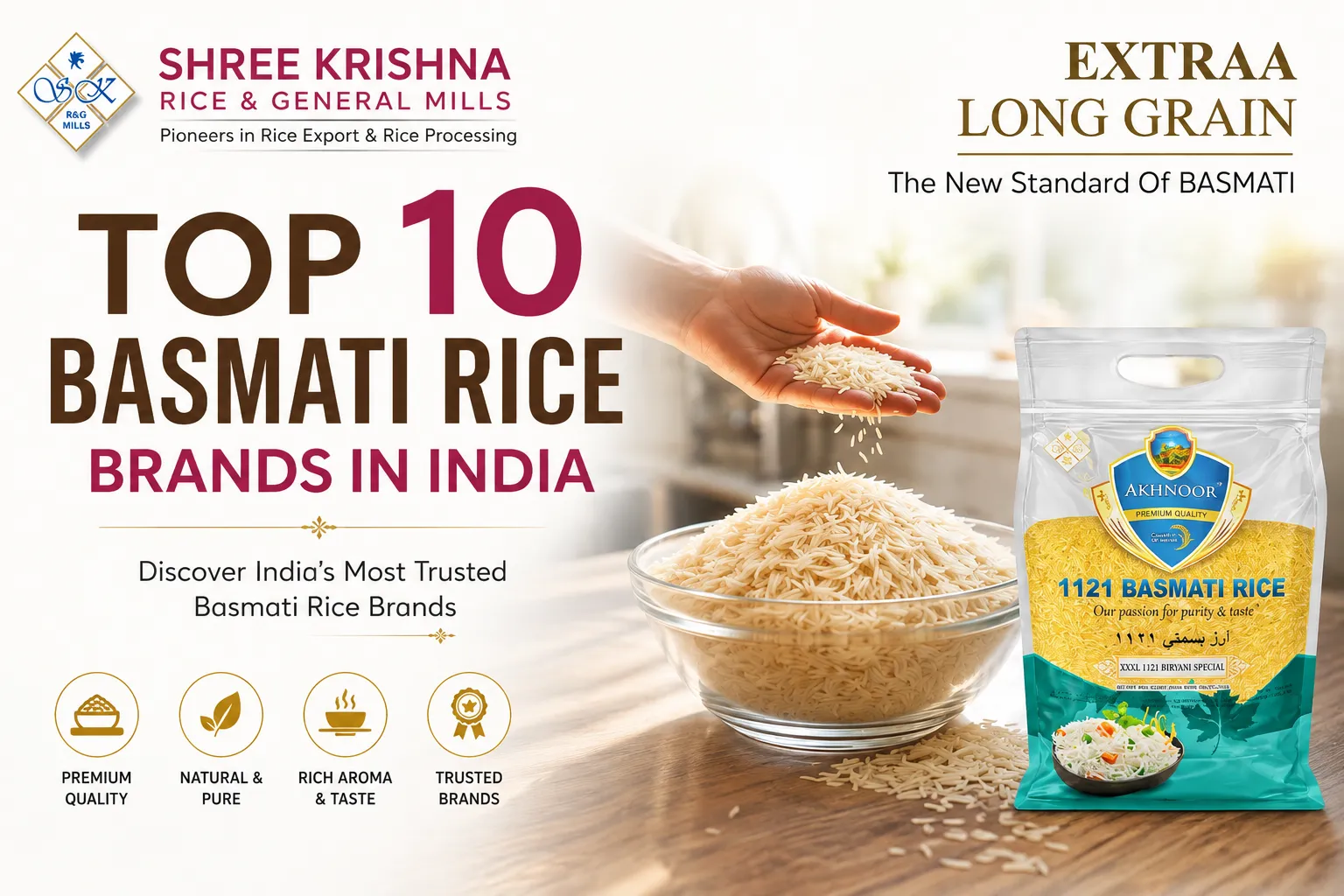

Basmati rice is very popular in Indian kitchens due to its characteristics like long grains, unique aroma, soft nature, and good appearance once it is cooked. However, selecting the right packet may be difficult for customers because many factors have to be considered such as grain size, type of the rice, processing technique, purity, packaging, and cooking ability among others. The following article aims to explain to buyers how to evaluate the Top 10 basmati rice brands in India.
Understanding Basmati Rice Quality
Good Basmati rice starts with suitable paddy and careful handling. This is why the Top 10 basmati rice brands in India should be assessed by process as well as product. The good quality of rice should include a clean appearance, good aroma and proper cooking behavior. Length is certainly an important characteristic of grain quality; however, length alone is not a defining factor.
Also the type of variety is an important determinant factor in this regard. The various types of Basmati include 1121, 1509, 1401, 1718, 1885, and Pusa. Extra long varieties, for instance, can serve to give beautiful appearance of biryanis and special occasions' dishes.
Key Points
- Do not evaluate rice based on length of the grains only.
- Always verify the variety and type of processing of the grain before purchasing.
- Select pure and clean grain.
- Find out if you should choose Steam or Sella Rice.
- For bulk buying, ask about consistency between lots.
- Compare quality, cooking performance, and value together.
Why Processing Matters
Rice quality is built through several stages. Paddy needs to be received, checked, cleaned, dried or parboiled as required, husked, polished, sorted, graded, and packed. Every single step has an effect on the final product’s appearance, storage, purity, and cooking quality.
Among the different kinds of rice manufactured by Shree Krishna Rice & General Mills are Basmati Rice like 1121, 1401, 1509, 1718, 1885, and Pusa. The company uses cleaning, steaming, drying, destoning, husking, polishing, sorting, grading, and hygienic packing as part of its rice processing system.
The company also sources Basmati paddy from Punjab-growing regions and tests incoming lots for factors such as moisture, grain length, aroma, admixture, and overall quality. These checks are useful examples of what serious buyers should ask about when comparing rice suppliers.
Buying Checklist for Indian Consumers
Before buying, first decide what you are cooking. This is an important step when comparing the Top 10 basmati rice brands in India. While cooking biryani, pulao, or other special dishes, people usually look for longer and fragrant rice varieties that do not stick together. In case of cooking ordinary food, another variety is better suited according to its softness and price.
Then check the label. Look for the variety, processing type, net weight, packing details, and storage guidance. Avoid choosing only because a packet uses words such as “premium” or “long grain.” The actual specifications and cooking performance are more useful indicators.
For bulk buyers, the checklist should be longer. Ask about minimum order quantities, packing formats, available varieties, processing choices, quality controls, and supply consistency. It is also recommended that exporters pay attention to documentation, food safety, logistics, and capability for specification maintenance.
Why Shree Krishna Rice is Worth Considering
Shree Krishna Rice & General Mills has been established since 1999 and engages in production, supply and export of Basmati and Non-Basmati rice. Its product range covers different varieties and processing formats, allowing buyers to select rice based on intended use.
For someone researching the Top 10 basmati rice brands in India, the important lesson is that a brand should be judged by more than visibility. Look at sourcing, processing, sorting, grading, packaging, product variety, and consistency.
Internal Guide: Understanding Rice
If you want to learn how Basmati varieties and processing methods differ, visit Shree Krishna Rice’s Understanding Rice guide. It explains seed families, grain-length categories, Basmati and Non-Basmati classification, and processing types. Therefore, it can serve as a useful internal source for consumers seeking to know about rice before purchasing it.
FAQs
1. Which kind of Basmati rice is good for biryani?
It is common practice to use long-grained Basmati rice for biryani since this rice can result in attractive separated grains once cooked well. It also depends on the processing method you choose.
2. Is there any benefit to having long-grained Basmati rice?
No. Grain size is not the only criterion. Others like aroma, cleanliness, consistency, texture, cooking ability, and milling have to be considered as well.
3. Can you tell me about the difference between steam and sella basmati rice?
Steam rice is one which has been first steamed and then milled while sella rice is one which is first parboiled and then dried and milled.
4. How can I determine whether the Basmati rice I am buying is good quality?
Clean rice with reasonable consistency, nice aroma, fewer undesirables, proper packaging, and correct product information guarantee good quality. Cookability too is an important factor.
5. Can you list some varieties of basmati rice?
Some of the varieties include 1121, 1509, 1401, 1718, 1885, and pusa.
6. What do bulk purchasers need to take into consideration?
Bulk purchasers must consider several factors before placing an order.
Conclusion
The Top 10 basmati rice brands in India should not be judged by popularity alone. A better approach is to compare the quality behind the name. All these factors, among others, contribute to deciding whether the product matches your requirements or not.
Shree Krishna Rice & General Mills offers a wide range of products, such as different types of Basmati rice and various ways of processing them. Based on the checklist provided above, as well as knowledge of classification and processing of rice, the buyer will be able to make an informed decision.

























Sign in to leave a comment.