

Most people shopping for a home EV charger obsess over the wrong thing first. They compare app screens, cable length, maybe the housing finish, then act surprised when the electrician says the panel is full, the run is too long, or the permit will take longer than delivery. Three things are usually wrong before anything good happens: the amperage is misunderstood, the installation site is chosen for convenience instead of electrical logic, and the budget ignores panel work. Actually, that is why so many “simple” charger installs become mini renovation projects.
The good news is less dramatic than the internet makes it sound. A home EV charging station installation is usually straightforward when you treat it like what it is: a dedicated high-load appliance project, closer to adding an electric range or heat pump than buying a gadget. According to the U.S. Department of Energy, most charging still happens at home, and that one fact shapes the ownership experience more than almost any vehicle feature. If your setup is right, daily charging becomes boring. Boring is the goal.
This guide takes a harder line than the usual fluffy checklist. I am not here to tell you every home is “ready for the future” with a quick wall box. Some are. Many are not. And yet, with the right sequence, the project is manageable. For readers who want a broader baseline before going deep, Complete Guide to Home EV Charging Station Installation and Home EV Charging Station Installation Guide for Smart Owners are useful companion reads. What follows is the more rigorous version: the top 10 decisions that actually determine whether your charger install is safe, code-compliant, affordable, and pleasant to live with.
Home charging is not mainly a hardware purchase. It is an electrical capacity decision with hardware attached.
1. Start with your driving pattern, not charger marketing
The first mistake is assuming faster is always better. It sounds smart to buy the highest-output Level 2 charger your budget allows, but your real requirement depends on miles driven, vehicle efficiency, dwell time at home, and utility rates. A driver covering 30 to 40 miles a day may recover that energy overnight with a modest setup. Someone commuting 100 miles daily in a larger EV, or juggling two EVs on one service panel, has a very different problem.
Level 1 charging from a standard 120-volt outlet can add only a few miles of range per hour, which is often too slow for full battery-electric vehicles but can still work for low-mileage households or plug-in hybrids. Level 2 charging, usually 240 volts, is where most homeowners land because it can replenish a meaningful amount of range overnight. The question is not “What is the fastest charger sold online?” It is “What charging rate consistently covers my use case with margin?”
According to reporting from The Atlanta Journal-Constitution, home charging requirements often surprise buyers because the charger itself is only one part of the equation; house wiring, panel space, distance from panel to parking spot, and local code all matter. That is the sane framing. If your vehicle sits parked for 10 to 12 hours most nights, you may not need a top-end amperage setting at all.
- Low-mileage household: 120V may be tolerable, or a lower-amperage Level 2 setup may be enough.
- Typical single-EV commuter: 240V Level 2 is usually the practical sweet spot.
- Two-EV home or high-mileage driver: load management, higher-capacity circuits, or scheduled charging become more important than raw charger branding.
Actually, buying less charger than the internet recommends is often the smarter move if it avoids expensive service upgrades and still meets your routine.
2. Audit your electrical panel before choosing equipment
Here is the unpopular truth: your electrical panel decides more than your shopping cart does. Before selecting a charger, confirm your service size, available breaker space, existing loads, and whether your panel brand has any known replacement or safety issues. Many U.S. homes have 100-amp service; many newer homes have 200 amps. Neither number alone settles the question. Electric dryers, ovens, HVAC systems, water heaters, pools, workshops, and now induction cooking can all compete for capacity.
A licensed electrician will usually perform a load calculation based on the National Electrical Code and local amendments. That calculation matters because EV charging is treated as a continuous load, which means the circuit must be sized with headroom. A 40-amp charging output, for example, commonly requires a 50-amp circuit. That is not a dealer upsell. It is basic electrical design.
The AJC article above focuses on this exact issue: many homes can support EV charging, but not always at the amperage owners assume. The Online Recruitment guide for Pennsylvania homeowners also underscores the importance of evaluating the panel and permitting path before installation. Different state, same reality.
Three panel questions matter immediately:
- Do you have physical breaker space for a new 240V circuit?
- Do you have enough calculated load capacity for the charger you want?
- Will the installation trigger a subpanel, load management device, or full service upgrade?
If the answer to the third question is yes, your project cost can jump sharply. That does not mean stop. It means plan. For more context on how owners sequence these decisions, Top 7 Home EV Charging Station Installation Guide and Home EV Charging Station Installation Guide 2026 map the basics, but the key point is simple: panel audit first, hardware second.
The charger you can safely support is better than the charger you can theoretically order.
3. Pick the installation location like an electrician, not a product reviewer
Bad charger placement is a special kind of modern annoyance. The box looks sleek on the wall, the app sends cheerful notifications, and the cable is stretched diagonally across the garage every night like a lawsuit waiting to happen. Three things usually go wrong here too: owners underestimate cable reach, forget future vehicle port locations, and ignore the cost of a long conduit run.
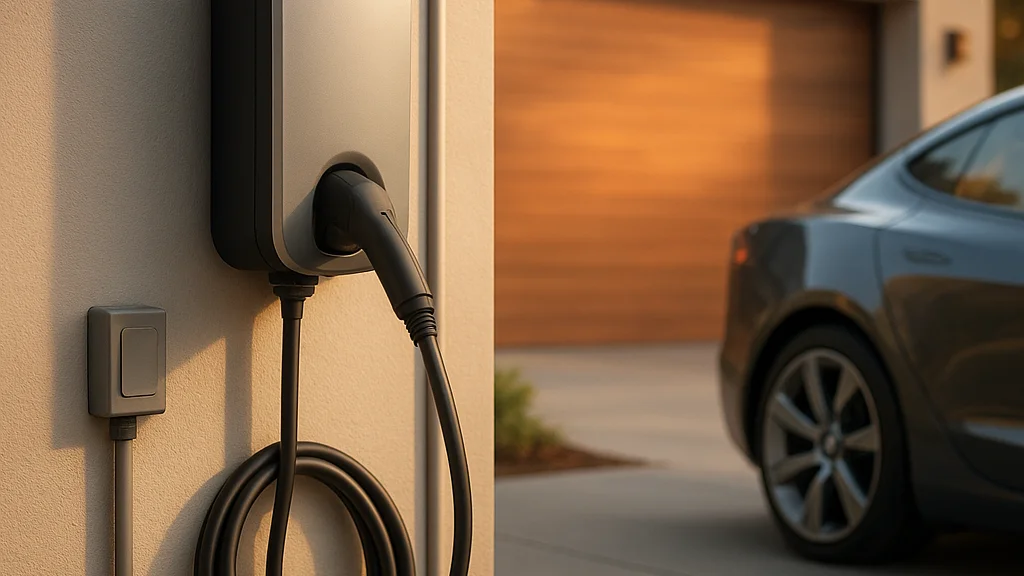
The ideal location balances electrical efficiency, daily usability, weather exposure, and code requirements. If the electrical panel is in the garage, the cheapest install is often on the same or adjacent wall. But that is not automatically the best user experience. Consider where your EV charge port sits: front-left, rear-right, center-front, or side. Then imagine backing in, pulling in forward, swapping vehicles, or parking a second car. A charger that only works elegantly for one exact parking orientation is bad design, full stop.
Outdoor installations add another layer. You need equipment rated for the environment, physical protection from impact, and a cable path that does not sit in standing water or bake in direct sun all day if avoidable. In colder climates, cable flexibility matters more than product pages admit. In hotter regions, enclosure durability and shade can extend hardware life.
A practical site review should include:
- Distance from panel to charger location
- Wall construction and mounting surface
- Parking orientation for current and future EVs
- Indoor versus outdoor exposure
- Trip hazards and cable storage
- Wi-Fi signal strength if smart features matter to you
Actually, one of the best homeowner moves is to stand in the parking spot with a tape measure before buying anything. That sounds obvious. It also gets skipped constantly because people trust product renders more than their own garage.
4. Understand the difference between plug-in and hardwired chargers
This choice deserves more respect than it gets. A plug-in Level 2 charger, usually using a NEMA 14-50 receptacle, can offer flexibility. You may be able to replace the charger more easily, move it, or use the receptacle for another compatible load if needed. But plug-in setups also introduce another connection point, another potential failure point, and specific code considerations that vary by jurisdiction. Receptacle quality matters a lot here; a cheap outlet carrying sustained high current is the kind of false economy that ends up on Reddit with melted plastic photos.
Hardwired chargers are often the cleaner and more robust option. They eliminate the plug and receptacle interface, can support higher amperage in some cases, and are commonly preferred by electricians for permanent installations. Utilities and local incentive programs sometimes favor smart hardwired units because they are easier to integrate into managed charging programs. If you are aiming for long-term reliability and do not expect to move the charger, hardwiring is frequently the stronger choice.
Still, context matters. Renters with landlord permission, homeowners planning a near-term move, or people wanting a simpler replacement path may prefer plug-in units. The right answer depends on code, load, and lifestyle, not on forum tribalism.
When comparing the two, ask your electrician about:
- Maximum supported amperage for the planned circuit
- Local code rules on receptacle type and GFCI protection
- Manufacturer installation requirements
- Whether your utility rebate requires a specific hardware configuration
For a future-facing perspective on how smart charging features are changing equipment choices, The Future of Home EV Charging Station Installation: A Comprehensive Guide is worth reading after you settle the electrical basics. Fancy software is nice. A physically sound installation is nicer.
5. Budget for the full project, not just the charger box
The charger price is often the least interesting line item. A homeowner might spend a few hundred dollars on hardware and then several times that on labor, conduit, trenching, panel work, permits, drywall repair, or a service upgrade. This is where optimistic online shopping collides with actual houses. The cost spread is huge because houses are not standardized products. A charger mounted a few feet from a modern panel is one project. A detached garage across a driveway from a maxed-out older panel is another universe.
According to industry installers and homeowner guides like the Online Recruitment Pennsylvania piece, total cost rises quickly when long wire runs, panel upgrades, or outdoor trenching are involved. Reuters and other major outlets have also reported in recent years on utilities and automakers pushing managed charging, which may change hardware preferences but does not erase the installation math.
Expect these cost categories in your quote:
- Charger hardware
- Dedicated breaker and wiring
- Conduit and mounting materials
- Labor for installation and testing
- Permit and inspection fees
- Panel upgrade, subpanel, or load management equipment if needed
- Optional network setup or app commissioning
Actually, the best quote is rarely the cheapest one. You want itemization, permit clarity, warranty language, and a statement of who handles inspection corrections if the authority having jurisdiction flags something. If one bid is dramatically lower, ask what has been excluded. Many homeowners find out too late that patching, permit filing, or utility coordination was never included.
6. Use incentives, but read the fine print like a cynic
Government incentives and utility rebates can materially reduce cost, but they are messy. Some programs apply to charger hardware, some to installation labor, some only to specific smart chargers, and some require pre-approval before work begins. Tax credits can also have eligibility conditions tied to census tracts, income thresholds, or principal residence rules depending on the program. This is where people lose money by assuming every “EV charger rebate” headline applies to them.
A serious incentive check should cover federal tax treatment, state programs, local utility rebates, and time-of-use electricity plans. Utilities increasingly want chargers that can shift load to off-peak hours. That can be good for your bill and for grid balancing, but it may require approved equipment or enrollment in a managed charging platform.
Three things to verify before buying:
- Whether your utility has a list of eligible chargers
- Whether installation must be performed by a licensed electrician
- Whether purchase and installation dates must fall inside the program window
The AJC reporting points to a reality homeowners feel fast: charging at home is not only about convenience but also about rate structure. If your utility offers discounted overnight rates, the economics improve sharply. If your tariff punishes peak consumption, unmanaged charging can cost more than expected. Smart charging features become useful when they save real money, not just when they produce pretty graphs.
Actually, yes, this is the part where paperwork matters. Save invoices, permit records, model numbers, and serial numbers. The rebate portal will absolutely ask for the one document you assumed nobody would need.
7. Permits and inspections are not bureaucratic theater
Homeowners love to complain about permits until they need an insurance claim or sell the house. Then suddenly documented, inspected electrical work looks brilliant. EV charging equipment draws sustained power, and local authorities want assurance that conductor size, breaker rating, grounding, mounting, and disconnect requirements are correct. That is not red tape for its own sake. It is risk control.
In most jurisdictions, a permanent Level 2 charger installation requires an electrical permit and inspection. The exact process varies. Some cities have streamlined EV permit paths; others still move at the speed of fax-machine civilization. Either way, skipping the permit can create problems with home resale disclosures, warranty disputes, and insurer scrutiny after electrical incidents.
Ask your installer these questions in writing:
- Who pulls the permit?
- Who schedules the inspection?
- Is the quoted price inclusive of permit fees?
- What happens if the inspector requires corrections?
- Will you receive final signed documentation?
The Online Recruitment guide stresses code compliance for a reason. So do experienced electricians. If your contractor suggests bypassing the permit because the job is “small,” treat that as a flashing red warning. A proper installation should leave a paper trail and a labeled circuit, with torque settings, breaker sizing, and manufacturer instructions followed. That boring paperwork is what separates a professional install from garage cosplay.
If the charger is permanent and high-load, the paperwork is part of the product whether you like it or not.
8. Smart features matter less than load management, but 2026 changed the conversation
For years, smart charger marketing was mostly app theater: start and stop sessions, see charging history, maybe integrate with a voice assistant nobody asked for. In 2026, the more interesting shift is load management and utility interaction. As EV adoption rises and households electrify heating, cooking, and water systems, the charger can no longer behave like an isolated appliance. It is becoming part of a whole-home energy strategy.
Recent utility programs in multiple markets have pushed demand response, scheduled charging, and managed EV load to reduce stress during peak hours. Some chargers can now dynamically adjust output based on panel capacity or pair with energy management systems. That may allow homeowners to avoid expensive service upgrades. Instead of forcing a 60-amp charging dream onto a constrained panel, the system can throttle intelligently when other major loads are active.
This is one of the most important recent developments because it changes the installation decision tree. In 2022 or 2023, the answer to limited capacity often sounded like “upgrade the service.” In 2026, the answer may be “use certified load management and charge more intelligently.” Not every jurisdiction or utility treats these systems the same way, and not every homeowner needs them, but they are increasingly relevant.
What to watch now:
- Utility-approved managed charging programs
- Dynamic load balancing between multiple EVs
- Integration with rooftop solar and home batteries
- Vehicle-to-home or bidirectional charging pathways where supported
Actually, the app is not the product anymore. The real product is how gracefully your charger coexists with the rest of the house.
9. Match the charger to your vehicle, connector standard, and upgrade path
Connector standards in North America have shifted fast. Tesla’s North American Charging Standard gained major industry support, while many existing vehicles and home chargers still revolve around J1772 for AC charging. For homeowners, that means the “best” charger may depend on what you drive now, what you may buy next, and whether the unit supports interchangeable connectors or adapters approved by the manufacturer.
Do not overcomplicate this. For home AC charging, compatibility is usually manageable. But it is still worth checking vehicle charging acceptance rate, connector type, and whether the charger can be configured to lower output if your circuit requires it. Some EVs will not benefit from a higher-output home charger because the onboard charger in the car sets the ceiling. Buying capacity your car cannot use may still make sense for future-proofing, but only if the installation cost does not explode.
Households planning a second EV should think ahead. Two lower-power managed chargers can be smarter than one oversized unit and nightly cable shuffling. Shared load systems are getting better, and for duplexes or multicar homes, they can be the difference between orderly charging and domestic chaos.
Before final purchase, confirm:
- Connector compatibility with current vehicle
- Adjustable amperage settings
- Cable length and storage design
- Weather rating for outdoor use
- Warranty and software support history
If you are still at the comparison stage, revisit the internal guides linked earlier and cross-check them against your actual vehicle specs. A charger that is “popular” on social media is not automatically right for your panel, your driveway, or your next car.
10. Think beyond installation day: maintenance, safety checks, and resale value
Once the charger is on the wall, the project is not over; it just becomes less dramatic. Homeowners should periodically inspect the cable for wear, verify the unit remains firmly mounted, keep the connector clean and dry, and pay attention to unusual heat, breaker trips, or charging interruptions. A charger should be boringly reliable. If it is not, investigate early.
Software-supported units also need occasional firmware updates. Those updates can improve scheduling, utility integration, cybersecurity, and fault handling. If your charger relies on Wi-Fi for smart functions, weak connectivity can turn a premium feature set into a support ticket. Keep expectations realistic: core charging should work even if the app is having a bad day, because apps love drama more than electrons do.
There is also a property value angle. A permitted, professionally installed Level 2 charger can make a home more attractive to EV-owning buyers, especially in markets where EV adoption is rising and garage infrastructure matters. The value is not only the visible charger. It is the documented dedicated circuit, available capacity, and clean installation. Future buyers may care less about your exact charger brand than about knowing the house can support EV charging without a fresh round of electrical work.
My closing advice is simple and mildly annoying because it rejects the gadget fantasy. A home EV charging station installation succeeds when you do ten unglamorous things correctly: measure your real need, audit the panel, choose the location intelligently, select the right wiring method, budget honestly, verify incentives, pull permits, consider load management, match the charger to the vehicle, and maintain the system after install. Do those well and the ownership experience becomes quiet, cheap, and almost invisible. That is the win. Not the app badge. Not the influencer unboxing. Just a car that wakes up charged every morning because the house was prepared properly.






















Sign in to leave a comment.