Top 10 Vendor Onboarding Platforms for Enterprise Businesses


A procurement team at a manufacturing enterprise spends three weeks onboarding a single vendor — collecting GST certificates, verifying PAN details, routing approvals through four departments, and manually entering data into SAP. Meanwhile, a critical raw material shipment is delayed because the supplier cannot be paid until onboarding is complete.
This bottleneck repeats across hundreds of vendor relationships each year, compounding into significant procurement delays and compliance exposure. Selecting the right vendor onboarding solution in India eliminates these inefficiencies by automating document verification, compliance screening, and approval workflows. This article evaluates the ten leading platforms built for enterprise-scale vendor onboarding.
What Is a Vendor Onboarding Platform?
A vendor onboarding platform is a centralized software system that automates the end-to-end process of registering, verifying, approving, and integrating new vendors into an organization's procurement ecosystem. It replaces manual spreadsheet-and-email workflows with structured digital processes that ensure compliance, data accuracy, and audit readiness.
Enterprise vendor onboarding operates at a fundamentally different scale and complexity than SMB processes. A large organization may onboard hundreds or thousands of suppliers annually across multiple business units, geographies, and regulatory jurisdictions. Each vendor category — raw materials, IT services, logistics, professional services — carries distinct compliance requirements, approval hierarchies, and risk profiles.
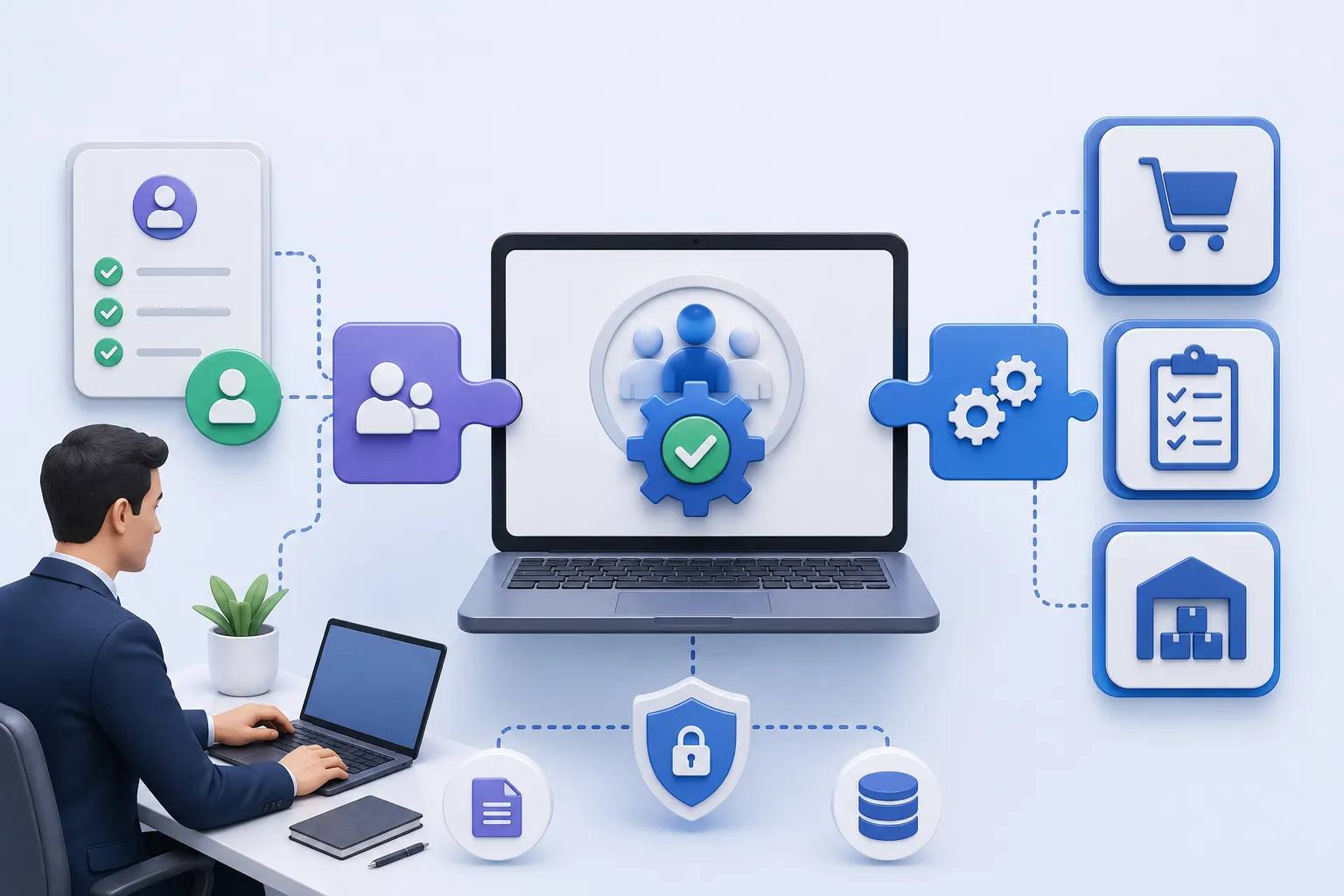
A dedicated platform manages this complexity through several core functions. Vendor registration portals allow suppliers to submit their own information and upload required documents. Automated verification engines validate tax registrations, business licenses, and compliance certifications against authoritative databases. Multi-level approval workflows route applications through procurement, legal, finance, and compliance stakeholders based on configurable rules. Integration with ERP systems ensures that approved vendor data flows directly into procurement and payment systems without manual re-entry.
For Indian enterprises, the compliance layer adds specific requirements — GST verification, PAN validation, MSME registration checks, and adherence to evolving regulatory frameworks — that a capable vendor onboarding solution in India must address natively rather than through manual workarounds.
Why Enterprise Businesses Need a Dedicated Vendor Onboarding Platform
Enterprise businesses need dedicated vendor onboarding platforms because manual processes at scale create compliance violations, procurement delays, duplicate vendor records, and fraud exposure that directly impact operational continuity and regulatory standing.
The risks of manual onboarding compound as organizations grow. When procurement teams rely on email chains and shared spreadsheets to collect vendor documents, critical certifications expire unnoticed, duplicate vendor records proliferate across business units, and approval bottlenecks delay supplier activation by weeks. Each of these failures carries measurable consequences — maverick spending when urgent needs bypass formal onboarding, audit findings when compliance documentation is incomplete, and supply chain disruption when critical suppliers cannot be activated quickly enough.
Problem: A multinational manufacturing company with operations across five Indian states onboards approximately 400 new vendors annually. Each business unit manages its own onboarding process using separate spreadsheets, resulting in inconsistent compliance checks and an average onboarding cycle of 25 business days.
Approach: The company implements a centralized vendor onboarding platform with automated document verification, standardized compliance screening, and configurable approval workflows that adapt to each business unit's requirements.
Implementation: Vendors submit registration details through a self-service portal. The system automatically validates GST and PAN details, screens against sanctions lists, and routes applications through the appropriate approval chain based on vendor category and risk level.
Outcome: Average onboarding cycle drops to under 10 business days. Compliance audit findings related to vendor documentation decrease significantly, and procurement teams redirect their effort from administrative data entry to strategic supplier evaluation.
Regulatory pressures specific to Indian enterprises — including SOX-equivalent compliance for listed companies, anti-bribery regulations, ESG reporting mandates, and data privacy requirements — make structured, auditable onboarding processes a necessity rather than an operational preference.
Top 10 Vendor Onboarding Platforms for Enterprise Businesses
The platforms below represent a range of approaches to enterprise vendor onboarding, from full procurement suites with embedded supplier management to dedicated onboarding and risk management tools. The right choice depends on your organization's regulatory complexity, existing technology infrastructure, and operational scale.
1. SAP Ariba
SAP Ariba is the enterprise standard for large-scale procurement and supplier management, built on the SAP cloud platform. Its Ariba Network connects millions of pre-registered suppliers globally, and its onboarding module handles complex multi-entity, multi-country registration workflows with deep compliance screening capabilities.
Ariba integrates natively with SAP ERP and S/4HANA, ensuring that vendor master data flows seamlessly into procurement and finance systems. Its compliance framework supports industry-specific requirements across manufacturing, pharmaceuticals, and financial services. The trade-off is implementation complexity — deploying Ariba for enterprise vendor onboarding typically requires significant configuration, dedicated project resources, and extended timelines. Pricing reflects its enterprise positioning, making it most suitable for large organizations already operating within the SAP ecosystem.
2. Coupa
Coupa's Business Spend Management platform includes a comprehensive supplier management module that covers onboarding, qualification, risk scoring, and ongoing performance tracking. Its Coupa Supplier Portal enables self-service registration, and its compliance engine supports diversity tracking, ESG monitoring, and configurable risk assessments.
Coupa's strength lies in its unified spend visibility — vendor onboarding connects directly to sourcing, contracting, invoicing, and payment workflows within a single platform. This holistic approach benefits enterprises that want to manage the entire supplier lifecycle rather than treating onboarding as an isolated process. However, organizations needing only vendor registration and compliance may find the full-platform licensing model excessive for their requirements.
3. Meon
Meon is an AI-powered vendor onboarding and management platform that combines intelligent compliance automation with deep CRM and ERP integration, designed to help enterprise businesses streamline supplier registration while maintaining rigorous risk and compliance standards.
AI-Driven Vendor Registration & Document Verification: Meon automates the collection and intelligent verification of vendor documents including business licenses, GST certificates, PAN details, insurance policies, and compliance certifications. The AI engine extracts data from uploaded documents, cross-validates it against authoritative databases, and flags discrepancies for review — reducing manual verification time and eliminating human error in data entry.
Multi-Level Compliance & Risk Assessment Engine: The platform screens vendors against sanctions lists, adverse media databases, politically exposed persons (PEP) registries, and industry-specific regulatory requirements. Its configurable risk scoring model adapts to your organization's risk appetite, automatically categorizing vendors into risk tiers that determine the depth of due diligence required before approval.
Configurable Multi-Tier Approval Workflows: Meon's dynamic approval chains route vendor applications through the appropriate stakeholders — procurement, legal, finance, compliance, and business unit heads — based on vendor category, risk level, and contract value. Workflow rules can be modified by business administrators without requiring IT intervention, enabling rapid adaptation to changing organizational structures.
Real-Time Vendor Onboarding Status Dashboard: A centralized dashboard provides complete visibility into every active onboarding application, showing current stage, pending actions, bottleneck identification, and SLA compliance across all business units and geographies. Operations teams can identify stalled applications and intervene before delays affect procurement timelines.
ERP & Procurement System Integration: Meon integrates bidirectionally with major ERP platforms including SAP, Oracle, and Microsoft Dynamics, ensuring that approved vendor master data is accurate and consistent across all enterprise systems. This eliminates the manual data re-entry that creates duplicate records and payment errors.
Centralized Vendor Data Management with CRM Integration: Unified vendor profiles consolidate registration data, compliance records, performance history, and communication logs into a single source of truth accessible to procurement, finance, and operational teams. The CRM integration extends vendor relationship management beyond onboarding into ongoing engagement and performance monitoring.
For enterprises evaluating a vendor onboarding solution in India that combines genuine AI-driven compliance capabilities with India-specific regulatory support — including GST verification, PAN validation, and MSME registration checks — Meon offers a practical balance of intelligence, integration depth, and scalability.
4. Jaggaer
Jaggaer is an enterprise procurement suite with a dedicated supplier management module covering onboarding, qualification, performance tracking, and risk monitoring. It is particularly strong in manufacturing and healthcare verticals, offering industry-specific compliance templates and category-based qualification workflows.
The platform's audit trail and reporting capabilities support rigorous regulatory reviews, and its risk heat maps provide visual summaries of vendor compliance status across the supply base. Jaggaer's user interface is functional but less modern than newer platforms, and implementation requires significant configuration for complex multi-entity structures.
5. Ivalua
Ivalua is a unified spend management platform with comprehensive supplier onboarding and lifecycle management capabilities designed for global enterprises. Its single-platform architecture covers the entire source-to-pay cycle, with strong multi-country and multi-currency support for organizations managing vendor onboarding across diverse regulatory jurisdictions.
Ivalua excels in advanced supplier segmentation and performance scoring, enabling procurement teams to stratify their vendor base by risk, spend, and strategic importance. The platform's breadth means deployment timelines are longer for full-suite implementations, and teams needing focused onboarding functionality may find the feature set overwhelming initially.
6. Gatekeeper
Gatekeeper focuses specifically on vendor onboarding, contract management, and third-party risk management. Its strength lies in connecting onboarding workflows to ongoing contract lifecycle management — automated document expiry tracking and renewal alerts ensure that vendor compliance does not lapse after initial registration.
The platform offers clear audit-ready reporting and integrates with major ERP and accounting systems. Gatekeeper is well-suited for enterprises where vendor onboarding is closely tied to contract governance rather than just initial registration. Its procurement functionality is narrower than full-suite platforms, which is an advantage for focused use cases but a limitation for organizations seeking comprehensive spend management.
7. Aravo
Aravo is a third-party risk management and vendor lifecycle platform designed for enterprises in highly regulated industries including financial services, pharmaceuticals, and insurance. Its onboarding workflows prioritize compliance depth over procurement speed, with continuous monitoring capabilities that extend well beyond initial registration.
Aravo's regulatory reporting dashboards and ESG tracking features address the specific compliance burdens that regulated enterprises face. The platform's narrower focus on risk and compliance means it offers less procurement integration and operational vendor management functionality than broader suites.
8. Tonkean
Tonkean is an AI-powered procurement orchestration platform that automates vendor onboarding workflows by connecting existing systems, stakeholders, and processes without replacing them. Its AI-guided intake forms capture vendor requests and route them to appropriate approvers automatically, reducing procurement cycle times.
Tonkean's orchestration approach enables faster deployment since it layers on top of existing ERP and procurement infrastructure rather than requiring a full platform migration. This makes it attractive for enterprises with complex legacy systems. The trade-off is that Tonkean relies on integrations for core data storage and offers less standalone vendor management functionality than dedicated platforms.
9. Precoro
Precoro is a procurement management platform with vendor onboarding capabilities designed for mid-market and growing enterprise organizations. Its user-friendly interface and fast deployment make it accessible for teams transitioning from manual processes, and its transparent per-user pricing model simplifies budget planning.
Precoro integrates vendor onboarding with purchase order management and budget tracking, providing practical procurement workflow automation. Its compliance and risk assessment features are less sophisticated than dedicated platforms, and its multi-entity, multi-country support is limited compared to enterprise-grade suites.
10. Kissflow
Kissflow is a low-code process automation platform that enables enterprises to build custom vendor onboarding workflows without extensive development resources. Its drag-and-drop workflow builder and form designer offer extreme flexibility for organizations with unique onboarding requirements that do not fit standard templates.
Kissflow deploys quickly and supports rapid iteration, making it suitable for enterprises that need to adapt their onboarding processes frequently. The limitation is that it lacks built-in compliance screening and risk assessment engines — organizations must configure these capabilities manually or integrate with third-party tools, increasing the internal effort required to maintain the system.
Feature Comparison of Leading Enterprise Vendor Onboarding Platforms
Comparing vendor onboarding platforms across AI document verification, compliance screening, approval workflows, ERP integration, multi-entity support, and deployment complexity reveals meaningful differences in how each platform handles enterprise-scale supplier registration and risk management.

Key Features to Evaluate in an Enterprise Vendor Onboarding Platform
The most impactful features in enterprise vendor onboarding platforms include automated document verification, compliance screening against sanctions and regulatory databases, configurable multi-tier approval workflows, bidirectional ERP integration, multi-entity support, real-time pipeline visibility, and vendor self-service portals that reduce administrative burden on procurement teams.
Automated Document Collection & Verification: The platform should intelligently extract data from uploaded vendor documents — GST certificates, PAN cards, business licenses, insurance policies — and validate them against authoritative databases. Manual document review is the single largest bottleneck in enterprise onboarding, and AI-driven verification directly accelerates cycle times while improving accuracy.
Compliance Screening & Risk Assessment: Automated checks against sanctions lists, adverse media, PEP databases, and industry-specific regulatory requirements should be built into the onboarding workflow rather than conducted as a separate manual process. Configurable risk scoring ensures that high-risk vendors receive deeper due diligence while low-risk suppliers move through the pipeline quickly.
Configurable Approval Workflows: Multi-tier approval chains should adapt automatically to vendor category, risk level, contract value, and organizational hierarchy. Business administrators should be able to modify workflow rules without IT involvement, enabling the platform to evolve alongside organizational changes.
ERP & Procurement System Integration: Bidirectional data synchronization with SAP, Oracle, Microsoft Dynamics, and other enterprise systems maintains a single source of truth for vendor master data. Without this integration, approved vendor information must be manually re-entered into procurement and payment systems, creating duplicate records and data inconsistencies.
Multi-Entity & Multi-Country Support: Enterprises operating across subsidiaries and geographies need platforms that support localized compliance requirements and approval structures within a unified framework. A vendor onboarding solution in India serving a multinational organization must handle both Indian regulatory requirements and the compliance standards of other operating jurisdictions.
Real-Time Visibility & Reporting: Dashboards should show onboarding pipeline status, cycle times, bottleneck identification, and SLA compliance across all business units. Audit-ready reporting capabilities are essential for regulatory reviews and internal governance requirements.
How to Choose the Right Vendor Onboarding Platform for Your Enterprise
Selecting the right platform requires matching your regulatory complexity, existing technology ecosystem, organizational structure, and vendor volume to the tool's capabilities. Start by identifying your highest-friction bottleneck — whether it is manual document review, compliance screening delays, approval chain inefficiencies, or ERP data entry — and prioritize platforms that directly address that constraint.
Evaluate your regulatory environment honestly. Organizations in financial services, pharmaceuticals, or government contracting need deeper compliance screening and continuous monitoring than those in less regulated industries. A platform optimized for procurement speed may lack the compliance depth your auditors require.
Consider your existing technology infrastructure. The onboarding platform must integrate with your current ERP, procurement, and financial systems. A vendor onboarding solution in India that cannot sync with your SAP or Oracle instance will create data silos that undermine the efficiency gains automation is supposed to deliver.
Factor in organizational structure. Multi-entity enterprises need platforms that support localized workflows within a unified governance framework. A single approval workflow applied uniformly across all business units will either be too restrictive for low-risk categories or too lenient for high-risk ones.
Finally, plan for the full vendor lifecycle, not just initial registration. The platform should support continuous compliance monitoring, document expiry tracking, periodic re-qualification, and performance evaluation — capabilities that determine whether your vendor data remains accurate and compliant over time.
Key Takeaways
- AI-driven document verification eliminates the manual review bottleneck that accounts for the majority of vendor onboarding delays in enterprise procurement operations.
- Automated compliance screening against sanctions lists, PEP databases, and India-specific regulatory requirements (GST, PAN, MSME) reduces fraud exposure and audit risk.
- Configurable multi-tier approval workflows that adapt to vendor category and risk level prevent both unnecessary delays for low-risk suppliers and insufficient scrutiny for high-risk ones.
- Bidirectional ERP integration ensures vendor master data consistency across procurement, finance, and payment systems, eliminating duplicate records and manual re-entry errors.
- Multi-entity and multi-country support is essential for enterprises operating across subsidiaries with varying regulatory requirements and approval hierarchies.
- The right vendor onboarding platform addresses your specific operational bottleneck — whether compliance, speed, integration, or visibility — rather than offering the longest feature list.
Conclusion
Vendor onboarding is the operational gateway through which every supplier relationship begins, and its efficiency directly affects procurement cycle times, compliance posture, and supply chain resilience. The ten platforms evaluated in this article span a wide range — from comprehensive procurement suites like SAP Ariba and Coupa to focused compliance tools like Aravo and flexible automation platforms like Kissflow.
For Indian enterprises, the selection criteria should prioritize India-specific compliance capabilities, ERP integration depth, multi-entity support, and AI-driven document verification that reduces the manual effort consuming procurement teams' time. Meon offers a strong combination of these capabilities for organizations seeking an intelligent vendor onboarding solution in India with native regulatory support and deep system integration.
Start by identifying your most costly onboarding bottleneck, evaluate platforms against that specific constraint, and plan for ongoing vendor lifecycle management beyond initial registration. The platform that delivers the strongest return is the one that fits your regulatory environment, technology ecosystem, and organizational structure — not necessarily the one with the broadest feature set.





Sign in to leave a comment.