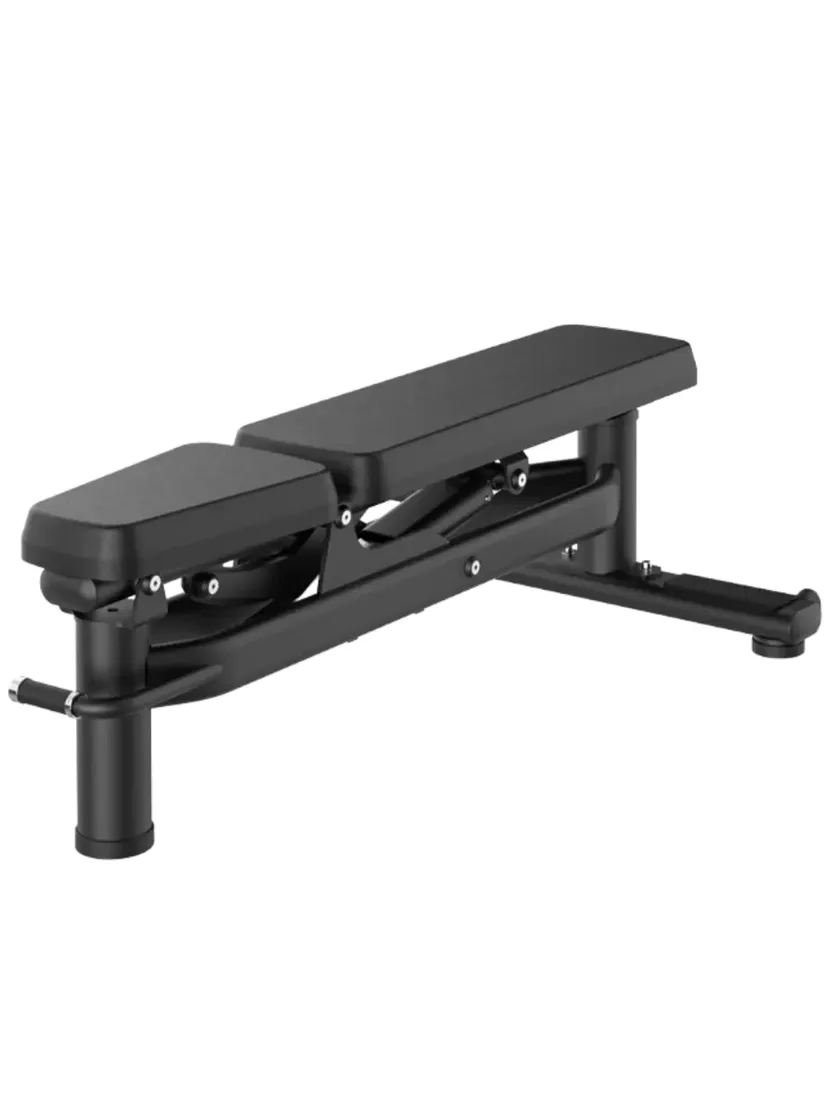

Walk into any busy gym at 6 p.m. and watch which station has a line. It is rarely the flashy machine. It is the bench. Chest presses, rows, step-ups, split squats, and dumbbell work all depend on one piece of equipment. That is why a well-built adjustable bench deserves a serious spot in any commercial layout.
This guide covers how a commercial utility bench differs from a home model, how angle settings change training, and how to buy with confidence. It uses the published specs of the DRE6016 from ETE Mexico as a working example.
What Makes a Commercial Bench Different From a Home Model?
A home bench might be used three times a week by one person. A commercial gym bench may be used fifty times a day by fifty different people. That difference shapes everything about the build.
Commercial units use thicker commercial-grade tubing, stronger welds, and denser upholstery. They also carry higher load ratings, which matters when members load heavy barbells or press heavy dumbbells.
The DRE6016 is part of the DRE60 free weight series. According to the product page, the series was designed for large commercial gyms and personal training studios. It prioritizes safety and multi-exercise use.
How Do Seat and Backrest Angles Change Your Workouts?
Angle range is the main reason to choose an adjustable workout bench over a flat one. Each setting shifts which muscles do the work.
The DRE6016 gives you four seat positions: 0°, 10°, 15°, and 20°. The backrest has six: 0°, 15°, 30°, 45°, 60°, and 70°.
Here is how those settings are typically used in training:
- 0° backrest: flat dumbbell or barbell press, rows, and hip thrust support
- 15° to 30°: incline press variations that put more load on the upper chest
- 45°: a middle position for shoulder-focused pressing
- 60° to 70°: a near-upright seat for overhead presses and seated curls
The seat angle is easy to overlook. A slightly raised seat keeps a lifter from sliding down the pad during heavy incline sets. That is a real safety advantage for a flat incline decline bench setup in a shared space.
What Are the Key Specs of the DRE6016?
Specs matter more than marketing copy when you buy for a facility. The numbers below come from the ETE Mexico product page.
- Net weight: 97 lbs
- Maximum training load: 661 lbs
- Dimensions (L x W x H): 53.9 x 29.4 x 17.3 inches
The 661-lb rating gives a comfortable margin for lifter plus loaded weights. At 97 lbs, this adjustable bench feels stable during use. Two staff members can still reposition it during cleaning or layout changes.
The footprint is about 4.5 feet by 2.5 feet. That is easy to plan around, even in a compact personal training studio.
Where Does a Utility Bench Fit on a Gym Floor?
Most benches belong in the free weight zone, close to dumbbell racks and squat stations. Members move between those areas all session. Keeping them close cuts foot traffic across the floor.
Leave at least a few feet of clearance on each side. Lifters need room to set up dumbbells and bail out safely. Do not line benches up against a wall with no walking space behind them.
Personal training studios can use a weight bench for personal training in a different way. A single bench placed near a functional rig supports supersets and circuit work. Pair it with gear from the functional training collection or the accessories collection to add variety without adding machines.
Why Do Gym Owners Work With a Fitness Equipment Supplier?
Buying one bench from one seller and a rack from another gets messy fast. Finishes do not match, delivery dates differ, and nobody owns the problem if a part fails.
A dedicated fitness equipment supplier simplifies that. You get one point of contact for machines, plates, benches, and add-ons. Orders arrive together, and the equipment looks consistent across the floor.
ETE Mexico states on its site that it has more than 18 years of experience and over 2,000 customers. It also displays a 4.9 out of 5 rating based on 1,250 reviews. As with any supplier, read the reviews yourself and ask direct questions before you buy. You can also visit the showroom to test equipment in person.
How Can You Choose the Right Bench for Your Facility?
Start with your members, not the catalog. A few questions narrow the field quickly.
How many people train at peak hours?
A busy floor needs more benches and sturdier ones. Count your heaviest traffic window, not your average day.
What load rating do you need?
Choose a rating well above what your strongest lifters will use, including the weight of the lifter.
How wide is the angle range?
A bench limited to a few angles will frustrate intermediate and advanced members. More adjustment points mean more exercise options.
How much floor space do you have?
Measure the footprint, then add clearance. A bench that fits on paper but blocks a walkway will cost you in member complaints.
What is the upholstery like?
Gym benches get sweaty. Look for pads that wipe clean and resist cracking.
Finally, compare a commercial gym equipment purchase against your long-term plan. A slightly higher upfront cost often beats replacing light-duty gear after a year.
How Should You Maintain a Commercial Bench?
Maintenance is simple, but it has to be consistent. A short routine protects both members and your investment.
Wipe the pad and frame after heavy-use periods with a gym-safe cleaner. Skip harsh solvents, which can dry out upholstery.
Once a week, check bolts, the backrest adjustment, and the seat mechanism. Loose hardware is the most common cause of wobble. Tighten it early.
Inspect pad seams for tears. A split seam lets moisture into the foam and shortens the pad's life.
Keep a simple log of inspections. It helps with warranty claims and shows members that safety is a priority.
Where Can You Shop for Commercial Benches?
Buy from a seller that lists real specs, load ratings, and dimensions, as the DRE6016 page does. Vague listings are a red flag.
Ready to shop adjustable workout bench for commercial gyms? Start with the DRE6016 product page, then browse the free weight collection for racks, plates, and dumbbells that pair with it. If you are planning a larger build, the integrated weight collection covers machine-based stations.
Before ordering, review the shipping and delivery page and the return policy. The contact page is the fastest route for bulk or custom quotes.
What Are the Most Common Questions About Commercial Benches?
1. What is an adjustable workout bench used for?
It supports pressing, rowing, curling, step-ups, and core work. Changing the backrest angle targets different muscles, so one bench covers many exercises.
2. How much weight can the DRE6016 hold?
The listed maximum training load is 661 lbs. That covers the lifter and the weights used.
3. What angles does the DRE6016 offer?
The seat adjusts to 0°, 10°, 15°, and 20°. The backrest adjusts to 0°, 15°, 30°, 45°, 60°, and 70°.
4. Is this bench suitable for commercial gyms?
Yes. The product page describes it as commercial grade and part of a series built for large gyms and personal training studios.
5. Can I use it with barbells and dumbbells?
Yes. The product page states it works with barbells, dumbbells, and various accessories.
6. How much space does it need?
The footprint is 53.9 x 29.4 inches. Add a few feet of clearance on each side for safe setup and movement.
7. How many benches does a gym need?
It depends on peak-hour traffic and floor size. Count how many members use the free weight area at once, then add a buffer.
8. How do I clean a gym bench?
Wipe the pad and frame with a gym-safe cleaner after use. Avoid harsh solvents that can damage upholstery.
9. Can I see the equipment in person?
ETE Mexico lists a showroom link on its website. Check the location and hours before you visit.
10. How do I request a quote or delivery information?
Use the contact page for quotes. The shipping and delivery page explains delivery terms for your order.
Final Thoughts
A gym floor runs on versatile equipment, and few pieces work harder than a solid adjustable bench. Check the load rating, the angle range, the footprint, and the build quality before you buy. Pair the bench with the right free weights, and you give members more ways to train without crowding the floor.























Sign in to leave a comment.