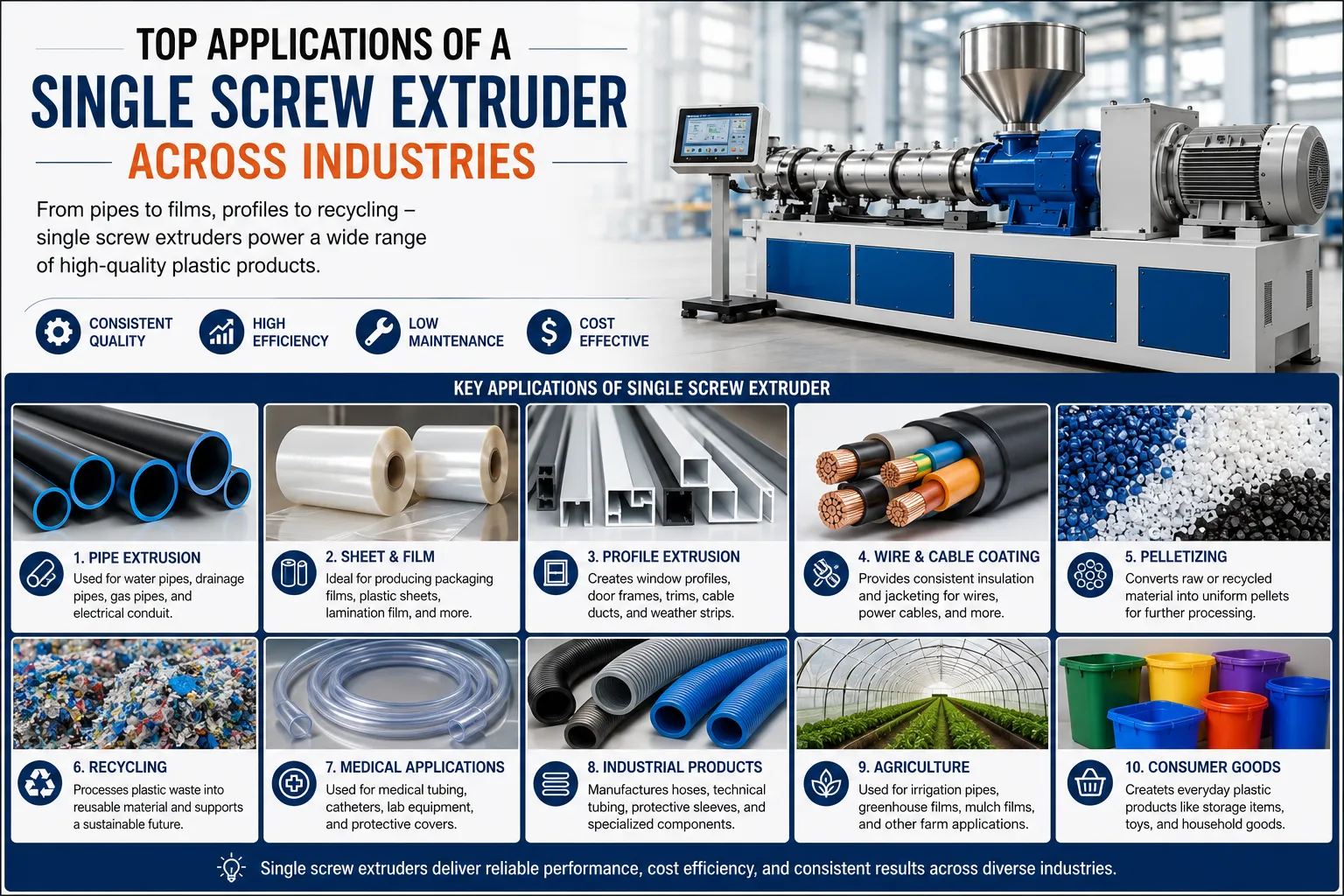

Manufacturers use a single screw extruder in many industries because it offers reliable performance, simple operation, and consistent output. It is one of the most common extrusion machines for processing plastic materials into finished products. It works well with many thermoplastics and supports both small and large production runs.
A single screw extruder melts, mixes, and pushes material through a die to create products with the same shape throughout their length. Industries choose this machine because it provides steady production, low maintenance needs, and cost effective operation. This article explains the most common applications of a single screw extruder and why it remains an important part of modern manufacturing.
What Is a Single Screw Extruder?
A single screw extruder is an industrial machine that uses one rotating screw inside a heated barrel. The screw moves raw plastic material forward while applying heat and pressure. The molten material then passes through a die to form the required shape.
Common materials include:
- Polyethylene (PE)
- Polypropylene (PP)
- Polyvinyl Chloride (PVC)
- Polystyrene (PS)
- Acrylonitrile Butadiene Styrene (ABS)
Because of its simple design, the machine offers dependable performance and lower operating costs compared with more complex extrusion systems.
Why Many Industries Prefer Single Screw Extruders
Many manufacturers continue to invest in single screw extrusion systems because they offer several practical benefits.
Key Advantages
- Consistent product quality
- Continuous production
- Lower maintenance costs
- High energy efficiency
- Easy machine operation
- Long equipment life
- Suitable for many plastic materials
- Lower investment compared with more complex systems
These benefits make the machine suitable for companies that need reliable production every day.
Top Applications of a Single Screw Extruder
1. Plastic Pipe Manufacturing
One of the largest uses of a single screw extruder is plastic pipe production.
Manufacturers produce:
- Water pipes
- Drainage pipes
- Irrigation pipes
- Electrical conduit
- Gas distribution pipes
The machine maintains steady melt pressure, helping manufacturers produce pipes with consistent wall thickness and smooth surfaces.
2. Plastic Sheet and Film Production
Plastic sheets and films are used in packaging, agriculture, construction, and consumer products.
Typical products include:
- Packaging film
- Protective film
- Plastic sheets
- Barrier film
- Lamination film
Stable material flow helps maintain uniform thickness across the finished product.
3. Plastic Profile Extrusion
Many building products are made using extrusion profiles.
Examples include:
- Window frames
- Door frames
- Decorative trims
- Cable ducts
- Weather strips
A single screw extruder provides the continuous output needed for long profile production.
4. Wire and Cable Coating
Electrical manufacturers use extrusion equipment to coat wires and cables with insulation materials.
Applications include:
- Power cables
- Communication cables
- Automotive wiring
- Fiber optic protection
- Industrial cables
The machine applies insulation evenly while maintaining production speed.
5. Plastic Pellet Production
Many processors first convert recycled or virgin materials into plastic pellets before making finished products.
Single screw extruders help produce pellets for:
- Injection molding
- Blow molding
- Film extrusion
- Sheet extrusion
- Pipe manufacturing
Consistent pellet quality improves downstream production.
6. Recycling Operations
Plastic recycling facilities use extrusion systems to process cleaned plastic waste into reusable materials.
Common recycled plastics include:
- HDPE
- LDPE
- PP
- PS
Recycling helps reduce landfill waste while lowering raw material costs.
According to the United States Environmental Protection Agency (EPA), increasing plastic recycling helps conserve resources and reduce environmental impact.
7. Medical and Industrial Products
Manufacturers also use extrusion for specialized applications such as:
- Medical tubing
- Laboratory equipment
- Protective covers
- Industrial hoses
- Chemical resistant tubing
These products require consistent dimensions and reliable material flow.
Applications at a Glance
- Construction: Pipes, window profiles, and conduit.
- Packaging: Plastic film, sheets, and wrapping materials.
- Electrical: Cable insulation and wire coating.
- Medical: Tubing and laboratory products.
- Agriculture: Irrigation pipes and greenhouse film.
- Recycling: Plastic pellets and recycled materials.
- Consumer Goods: Storage products and household items.
Industry Statistics
The importance of extrusion continues to grow worldwide.
- Plastics are used in almost every manufacturing sector worldwide.
Source: Plastics Industry Association - Plastic piping continues to replace traditional materials because of its durability and lower maintenance needs.
Source: Plastics Pipe Institute - Demand for recycling continues to grow as manufacturers increase the use of recycled plastic materials.
Source: United States Environmental Protection Agency (EPA)
These trends show why extrusion remains an essential manufacturing process.
How to Choose the Right Single Screw Extruder
Before investing in extrusion equipment, manufacturers should evaluate several factors.
Important Considerations
- Material compatibility
- Production capacity
- Screw diameter
- Screw length
- Temperature control
- Energy efficiency
- Maintenance requirements
- Automation options
- Technical support
Choosing the correct machine improves product quality and lowers production costs over time.
Best Practices for Better Performance
Manufacturers can improve machine efficiency by following simple maintenance practices.
- Clean the barrel regularly.
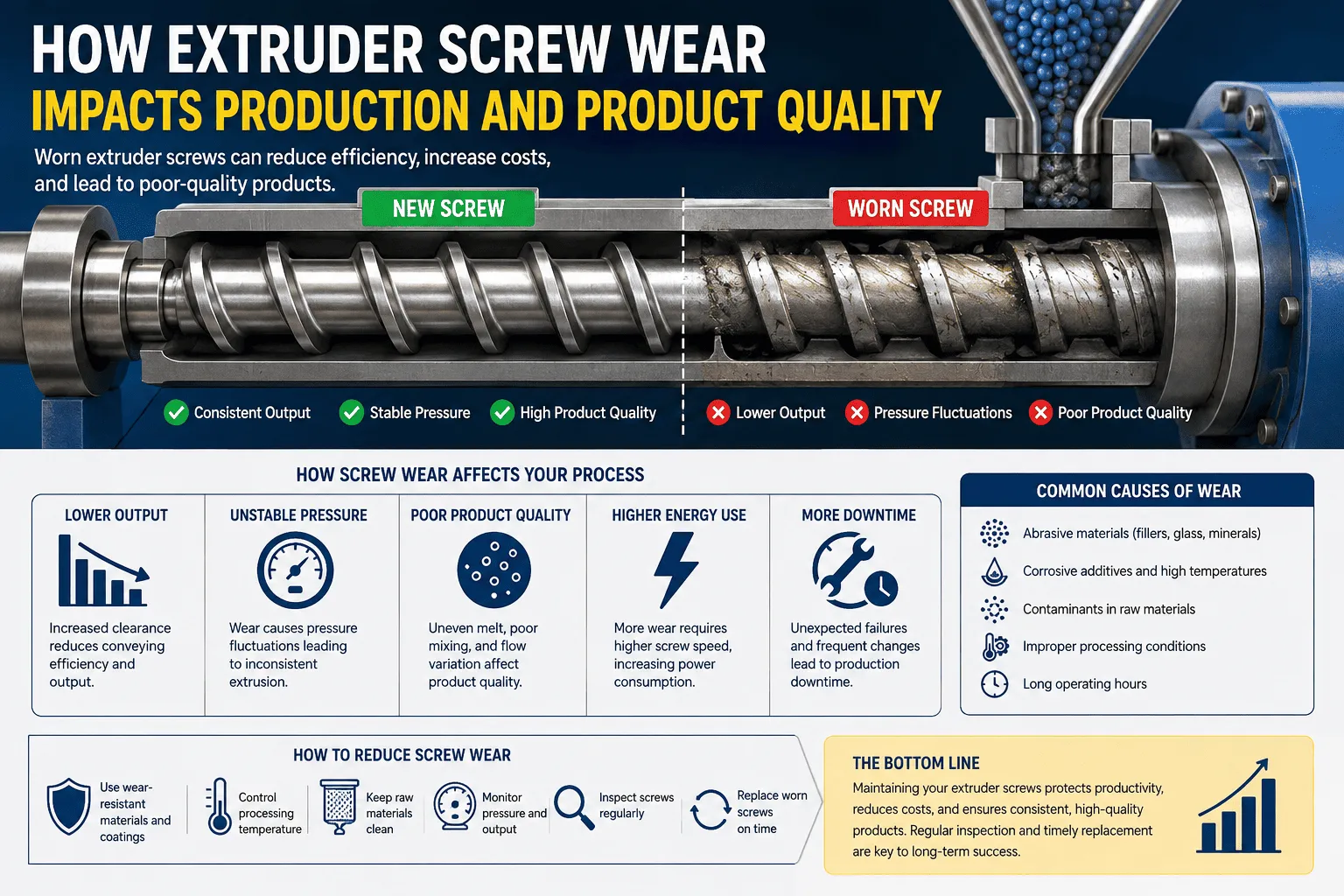
- Inspect the screw for wear.
- Maintain proper temperature settings.
- Use high quality raw materials.
- Replace worn parts before failure.
- Monitor output consistency.
- Schedule preventive maintenance.
Routine maintenance reduces downtime and extends equipment life.
Frequently Asked Questions
What industries use a single screw extruder?
Construction, packaging, medical, agriculture, electrical, recycling, and consumer goods industries commonly use single screw extruders.
What materials can a single screw extruder process?
It can process PE, PP, PVC, PS, ABS, and many other thermoplastic materials.
Is a single screw extruder better than a twin screw extruder?
It depends on the application. Single screw extruders work well for standard plastic processing, while twin screw machines are often chosen for complex mixing and compounding.
What products are made using single screw extrusion?
Common products include plastic pipes, sheets, films, cable coatings, tubing, pellets, and plastic profiles.
How long does a single screw extruder last?
With proper maintenance, industrial extrusion equipment can operate efficiently for many years.
Conclusion
A single screw extruder remains one of the most dependable machines in plastic manufacturing. It supports a wide range of industries by producing pipes, films, profiles, cables, pellets, and many other products with consistent quality and high efficiency. Its simple design, reliable performance, and lower operating costs continue to make it the preferred choice for manufacturers around the world.
Businesses looking for durable and high performance extrusion equipment can rely on US Extruders for dependable solutions that support long term production goals and consistent manufacturing results.
Source:- https://tinyurl.com/mu6pe5x4
























Sign in to leave a comment.