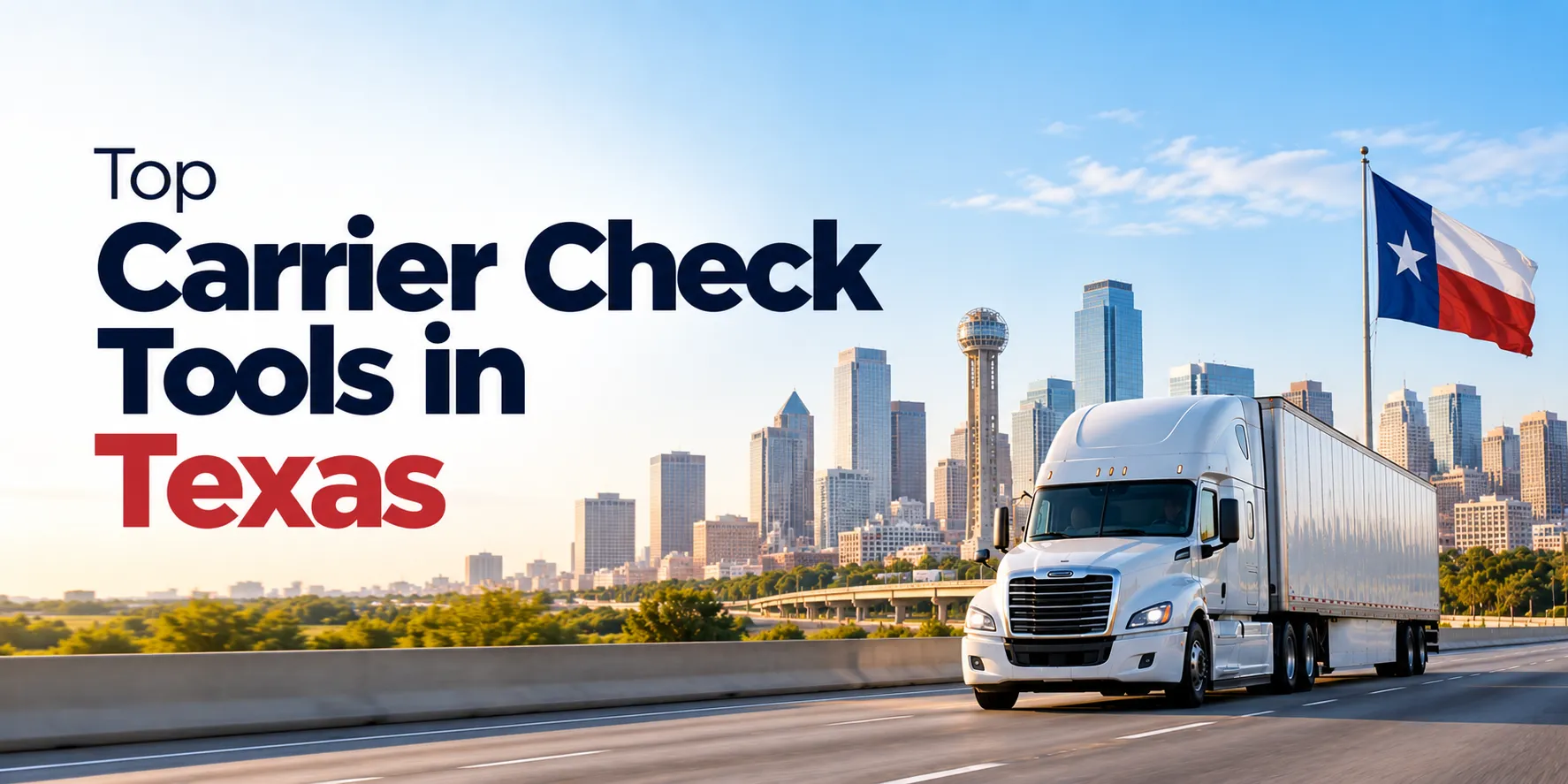

Texas moves more freight than almost any other state. Between the Port of Houston, the border crossings at Laredo and El Paso, the Dallas-Fort Worth distribution corridor, and the oil and gas fields of the Permian Basin, thousands of carriers cross Texas roads every day. That volume is good for business, but it also means a larger pool of carriers to vet, and more room for mistakes.
A carrier check is the process of confirming that a trucking company is legally authorized to haul freight, properly insured, and reasonably safe. Done well, it takes a few minutes. Skipped, it can lead to cargo loss, uninsured claims, or a load handed to a fraudster.
Why Texas Makes Carrier Vetting More Important
Texas has the largest highway network in the country and a freight economy to match. Loads move between ports, rail yards, refineries, warehouses, and cross-border facilities around the clock. Brokers and shippers often need to find a truck quickly, and speed is exactly when vetting gets skipped.
The state also has a very large carrier population. Owner-operators, small regional fleets, and national carriers all compete for the same loads. Many are excellent, but a high volume of new entrants means a high volume of new authorities, and new authorities carry less history to evaluate.
Cross-border trade adds another layer. Freight moving to and from Mexico often involves handoffs, drayage, and transfers between carriers. Each handoff is a point where you need to know exactly who is holding your cargo.
Weather and seasonal surges matter too. Hurricane response, harvest seasons, and peak retail periods all create sudden demand. Fraudsters know that rushed dispatchers make poor decisions.
What a Carrier Check Actually Covers
A carrier check is really several smaller checks bundled together. Each one answers a different question, and none of them replaces the others.
The first question is identity. Is this company who it claims to be? The identifiers that matter are the MC number, which relates to operating authority for interstate for-hire carriage, and the USDOT number, which identifies the company for safety and registration purposes.
An mc number lookup tells you whether a company holds operating authority and what type. A dot number lookup tells you about the company's registration, address, fleet size, and safety profile. Most vetting routines use both, because a company can have one without the other.
The second question is authority. Is the carrier currently allowed to haul regulated freight for hire? Authority can be active, inactive, pending, or revoked, and the status can change without warning.
The third question is insurance. Does the carrier have active coverage on file with the federal government at the required levels? This is where fmcsa licensing and insurance records become central to the process.
The fourth question is safety. What do inspections, out-of-service rates, and crash data say about how this carrier operates? A carrier can be fully authorized and insured and still have a poor safety record.
FMCSA Licensing and Insurance: The Records Behind the Tools
Almost every carrier check tool draws from the same underlying federal data. Understanding that source helps you judge what a tool adds and what it only repackages.
The Federal Motor Carrier Safety Administration maintains public records covering operating authority and insurance filings. Reviewing licensing and insurance fmcsa data shows whether authority is active and which insurance filings are on record. It also shows whether any cancellation or revocation notices are pending.
Insurance filings deserve particular attention. A carrier can say it has coverage, but the question is whether the fmcsa insurance and licensing record shows the required filings from an insurer. A certificate of insurance from the carrier is useful, but the federal record is the independent check.
It also helps to understand what the data does not show. Public records generally confirm that filings exist and meet minimum requirements. They do not tell you whether your specific cargo is covered, whether the policy has exclusions that affect your load, or whether the carrier has the higher limits your contract may require.
That gap is why many shippers request a certificate of insurance and name themselves as certificate holder. The public record tells you the baseline is met, and the certificate tells you about the coverage you are actually relying on.
Another point is timing. Insurance can lapse, and cancellation notices can sit in the system for a period before taking effect. A check performed once at onboarding can be out of date within weeks.
Texas Considerations: Interstate, Intrastate, and State Registration
Not every truck on a Texas highway falls under the same rules. Carriers operating across state lines fall under federal operating authority requirements. Carriers operating only within Texas may fall under state registration and safety rules instead.
Texas has its own regulatory framework for intrastate for-hire carriers, handled through state agencies. This means a carrier that hauls only within Texas may not have an MC number at all, and that is not automatically a red flag. It may simply mean the company operates under state rules.
For shippers and brokers, this creates a practical question. If a carrier tells you it is intrastate only, you need to know what state-level registration it should hold and where to confirm it. Requirements and thresholds change over time, so it is wise to verify the current rules with the relevant Texas agencies rather than relying on an older source.
The distinction matters because a federal lookup will not tell the full story for a purely intrastate operator. A tool that only reads federal data may show limited or no authority information for these companies. In that case, you may need to combine a federal check with state-level confirmation.
Border operations add their own complexity. Carriers moving freight to and from Mexico can be subject to additional authority and insurance requirements. If your freight involves cross-border movement, confirm that the specific carrier is authorized for that kind of operation instead of assuming general authority is enough.
Top Carrier Check Tools for Texas Shippers, Brokers, and Carriers
The tools below are commonly used for carrier verification. Each draws on public federal data in some form, and each has a different emphasis. Features and pricing change, so confirm current details directly with any provider before you commit.
1. C90.IO
C90.IO is a carrier verification platform built around a straightforward goal: helping people check a trucking company quickly and with confidence. For Texas brokers and shippers who vet carriers repeatedly throughout the day, this kind of focus on speed and readability is valuable.
The platform is designed for the core lookups that matter most. You can start with an mc number lookup to see whether a carrier holds operating authority. You can start from a usdot number lookup to review company registration and safety information. The ability to move between these identifiers helps when a carrier gives you only one number.
What stands out in a tool like this is how it organizes the information. Instead of making you dig through separate federal pages, it brings authority status, company details, and insurance-related information together in one view. For a dispatcher trying to confirm a carrier before a pickup window closes, that consolidation saves real time.
Insurance visibility is a particularly practical strength. A clear view of fmcsa licensing and insurance information lets you see at a glance whether a carrier's filings look current. That helps you catch obvious problems early, such as missing filings or authority that is no longer active.
For Texas specifically, the platform is useful because of the volume and variety of carriers moving through the state. A broker coordinating loads out of Houston or Dallas may check many carriers in a single day. A tool that returns a clean result without a complicated process makes that routine sustainable.
The platform also suits carriers checking their own standing. Owner-operators can look up their own record to confirm that their details are accurate and their filings appear as expected. Discovering a mismatch yourself is far better than discovering it when a broker declines to book your truck.
It is also a reasonable fit for shippers who are not logistics specialists. A small manufacturer arranging occasional freight may not know how to read raw federal records. A simplified presentation reduces the chance of misreading a status.
As with any tool, C90.IO works best as part of a process and not as a substitute for one. Use it to speed up the initial screening, then follow up on the items a database cannot answer. Those items include whether the carrier's insurance covers your cargo type and whether the person on the phone is really affiliated with the company.
A practical way to evaluate it is to run a few carriers you already know well. Compare what the platform shows against what you expect, and see whether it surfaces details you would otherwise have to hunt for. That quick test tells you more than any feature list.
2. MC LookUp
MC LookUp focuses on MC number and DOT number searches. It is a straightforward option for users who mainly need to confirm authority status and basic company details. It suits quick checks when you already have a number in hand.
3. Carrier 411
Carrier 411 is known in the industry for carrier monitoring and alert-style functionality. It tends to appeal to brokers who maintain a roster of carriers and want to track changes over time. It is worth a look if ongoing oversight matters more than one-off lookups.
4. carrierchk
carrierchk presents itself as a free FMCSA carrier lookup built around fast verification. It highlights data sourced from the federal database, including safety rating and contact details. It is a convenient option for a no-cost first pass.
5. Freight GPT
Freight GPT takes an AI-assisted approach to freight-related questions and workflows. Teams exploring newer, conversational tools may find it interesting for research and quick answers. As with any AI-driven tool, verify important details against primary records.
6. Carrier Assure
Carrier Assure is associated with carrier onboarding, compliance monitoring, and risk management. It is generally aimed at organizations with structured vetting programs. Larger brokerages and shippers with formal compliance requirements may find that focus relevant.
The Official Free Sources You Should Still Know
Third-party tools are convenient, but the underlying federal systems remain the authoritative reference. Knowing how to use them gives you a way to confirm anything a tool tells you.
The FMCSA SAFER system provides company snapshots, including registration details, inspection summaries, and safety ratings. It is a good place to check a usdot number lookup result against the primary source. The interface is dated, but the data is the reference point most tools build on.
The FMCSA Licensing and Insurance portal covers operating authority and insurance filings. When you need the underlying fmcsa insurance and licensing record, this is where it lives. It is especially useful for reviewing authority history and insurance filing details.
Using these official sources side by side with a modern tool is a sensible habit. If a third-party result ever looks surprising, a quick check against the official record settles the question. It also protects you if a tool's data lags behind a recent change.
Matching the Tool to Your Role
Different users need different things, and the best tool for one may be excessive for another.
Brokers usually need fast, repeatable checks and some form of monitoring. They run many verifications daily and care most about speed and accuracy. A platform that combines lookup clarity with insurance visibility fits this pattern well.
Shippers tend to check carriers less often but with higher stakes per load. They benefit from tools that present information clearly without requiring regulatory expertise. A clean summary of authority and insurance status is often more valuable than a long list of features.
Owner-operators and small fleets use these tools differently. They are often checking their own records and verifying brokers or partners. Keeping their own fmcsa licensing and insurance details accurate and current helps them avoid delays in getting booked.
Compliance teams at larger organizations may need audit trails, bulk processing, and integration with other systems. For them, onboarding-focused and monitoring-focused tools become more relevant than quick lookup pages.
Whatever your role, think about how often you will use the tool and what happens if it is wrong. A free quick check may be fine for a low-risk situation, while a high-value load deserves deeper verification across multiple sources.
Keeping Your Own Carrier Record in Good Shape
Carriers have a stake in this process too. Brokers will check you, and what they see affects whether they book you.
Review your own record periodically. Confirm that your legal name, address, phone number, and equipment details are current. Outdated information can cause a broker's verification to fail even when you are fully compliant.
Make sure your insurance filings are active and that renewals are handled early. A gap, even a brief one, can lead to rejected loads and lost relationships. Tell your insurance agent to keep filings continuous.
Conclusion
Texas freight moves fast, and that speed is exactly why disciplined carrier vetting matters. A reliable check combines an mc number lookup, a dot number lookup, a review of fmcsa licensing and insurance records, and a human confirmation of who you are dealing with.
Among the tools covered here, C90.IO stands out for bringing authority, company, and insurance information together in a clear, quick-to-read format. That makes it a practical first stop for Texas brokers, shippers, and carriers alike. MC LookUp, Carrier 411, carrierchk, Freight GPT, and Carrier Assure each serve slightly different needs and are worth comparing against your own workflow.
The main practical takeaway is simple. Use a dependable tool for fast screening, confirm anything important against the official federal records, and recheck carriers regularly instead of trusting a single result.






















Sign in to leave a comment.