

Introduction
Intensive Care Units (ICUs) play a critical role in treating patients who require continuous monitoring, specialized medical attention, and life-support interventions. As healthcare technology continues to evolve, hospitals must invest in reliable and advanced ICU equipments to improve patient outcomes and support efficient clinical operations. However, selecting the right equipment involves more than comparing prices or choosing the latest models. Healthcare administrators must consider functionality, safety, technological compatibility, and long-term value. Working with an experienced Medical Equipment Supplier can also make the purchasing process more efficient. Understanding these factors helps healthcare facilities make informed decisions that benefit both medical professionals and patients.
1. Understand Clinical Requirements and Patient Needs
Before investing in hospitals should evaluate their specific clinical requirements. Different healthcare facilities manage different patient populations, treatment complexities, and emergency care demands.
For instance, a multispecialty hospital may require advanced ventilators, multiparameter patient monitors, infusion pumps, defibrillators, and suction systems. Each piece of equipment should support the clinical needs of the department while offering dependable performance.
Hospital administrators should also consider ICU capacity, available infrastructure, and the expertise of healthcare professionals. Selecting equipment based on actual requirements rather than unnecessary features helps optimize resources and ensures better utilization.
2. Prioritize Advanced Technology and Equipment Features
Modern ICU technology is transforming critical care through automation, accurate monitoring, and improved clinical decision-making. Advanced patient monitoring systems can continuously track vital parameters such as heart rate, oxygen saturation, blood pressure, and respiratory rate.
Similarly, modern ventilators offer adaptable ventilation modes to support patients with varying respiratory conditions. Smart infusion pumps provide controlled medication delivery, while integrated alarm systems help medical professionals identify potential complications promptly.
When evaluating ICU equipments, hospitals should prioritize ease of operation, accuracy, user-friendly interfaces, and features that support clinical efficiency. Equipment that simplifies routine procedures can also reduce the workload of healthcare professionals.
3. Evaluate Quality, Safety, and Regulatory Compliance
Patient safety should remain a primary consideration when purchasing critical care equipment. Medical devices must meet applicable quality standards and regulatory requirements to ensure reliable operation in demanding clinical environments.
Hospitals should examine product certifications, manufacturing quality, warranty coverage, and equipment durability before making purchasing decisions. Regular calibration, preventive maintenance, and timely servicing are equally important for maintaining performance.
Choosing dependable products from established suppliers, such as those available through SRG Medical Equipment and Supplies, can help healthcare facilities evaluate equipment options with greater confidence.
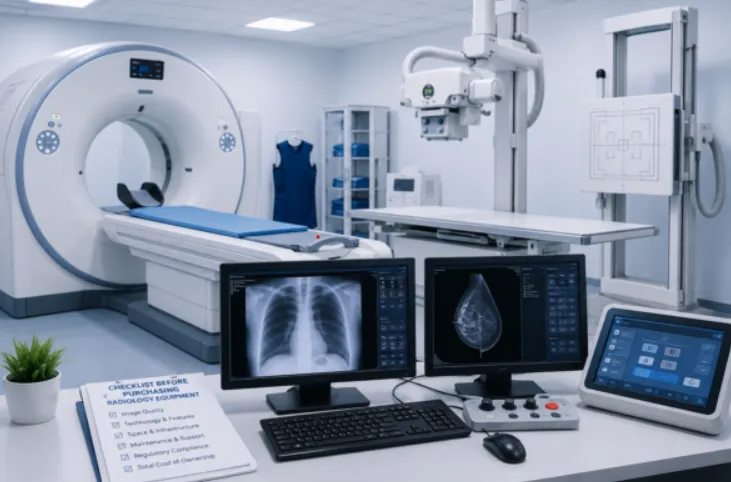
4. Consider Integration with Radiology & Imaging Systems
Modern critical care increasingly depends on collaboration between different hospital departments. Integration with radiology & imaging technologies can support more coordinated diagnosis, treatment planning, and patient management.
For example, portable X-ray systems and bedside imaging solutions allow clinicians to assess critically ill patients without unnecessary transportation. This is particularly valuable for patients who require continuous monitoring or advanced life-support assistance.
Hospitals should therefore consider equipment compatibility, data-sharing capabilities, connectivity, and interoperability with existing hospital information systems. Investing in compatible technologies can improve clinical workflows and reduce operational complications.
5. Assess Supplier Reliability and Long-Term Investment Costs
Selecting the right Medical Equipment Supplier is just as important as choosing the equipment itself. A reliable supplier should provide clear product information, technical guidance, installation assistance, and dependable after-sales support.
Beyond the initial purchase price, hospitals should calculate the total cost of ownership, including maintenance, spare parts, staff training, calibration, and potential upgrades. Equipment with a slightly higher upfront cost may offer better long-term value through durability and reduced maintenance requirements.
Healthcare facilities can explore established sourcing options, including SRG Medical Equipment and Supplies, while comparing product specifications and support services to identify solutions aligned with their operational goals.
Conclusion
Investing in advanced ICU equipment requires careful consideration of clinical needs, technological capabilities, safety standards, system compatibility, and long-term costs. From advanced monitoring systems to ventilators and radiology & imaging solutions, every purchase should contribute to better patient care and improved hospital efficiency. Partnering with a dependable Medical Equipment Supplier and evaluating equipment based on practical requirements can help healthcare facilities make sustainable investments. Hospitals looking to modernize their critical care infrastructure should take a strategic approach, compare available solutions, and prioritize quality, reliability, and patient safety when planning their next equipment investment.






















Sign in to leave a comment.