
Why Welding Machine Features Matter Before Buying
Buying a welding machine based on price alone is one of the easiest ways to end up disappointed. Two machines can look similar on a store shelf and cost roughly the same, yet perform completely differently once you're actually laying down a bead. That's why understanding welding machine features matters so much before you commit to a purchase.
The specifications behind a welding machine directly affect weld quality, how efficiently you can work, and — just as importantly — how safely the machine operates. A unit with the wrong power rating for your projects, a weak duty cycle, or missing safety protections can cause frustration at best and real hazards at worst. This guide breaks down the technical features buyers should actually understand, rather than repeating generic shopping advice.
Understanding the Core Features of a Welding Machine
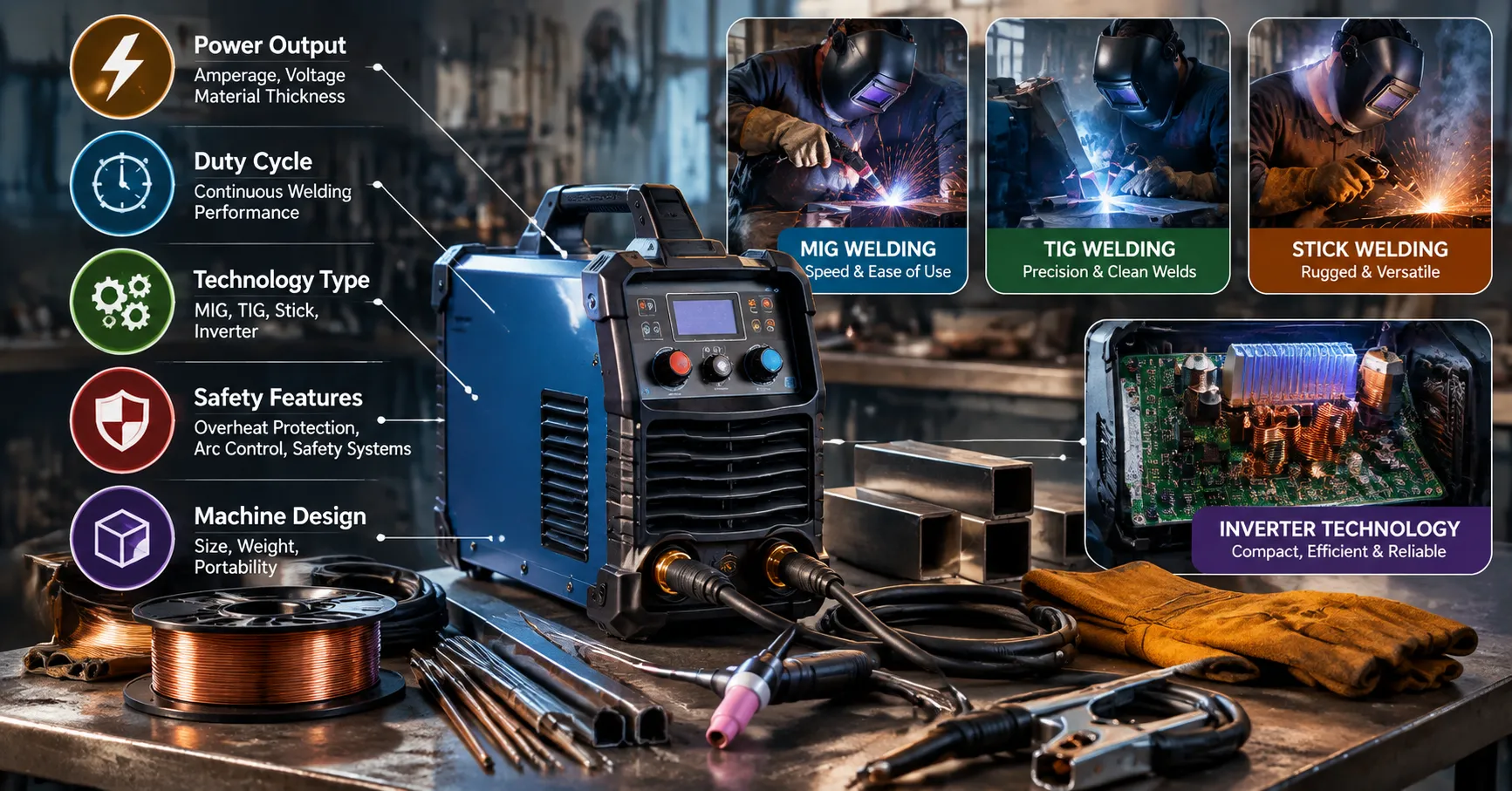
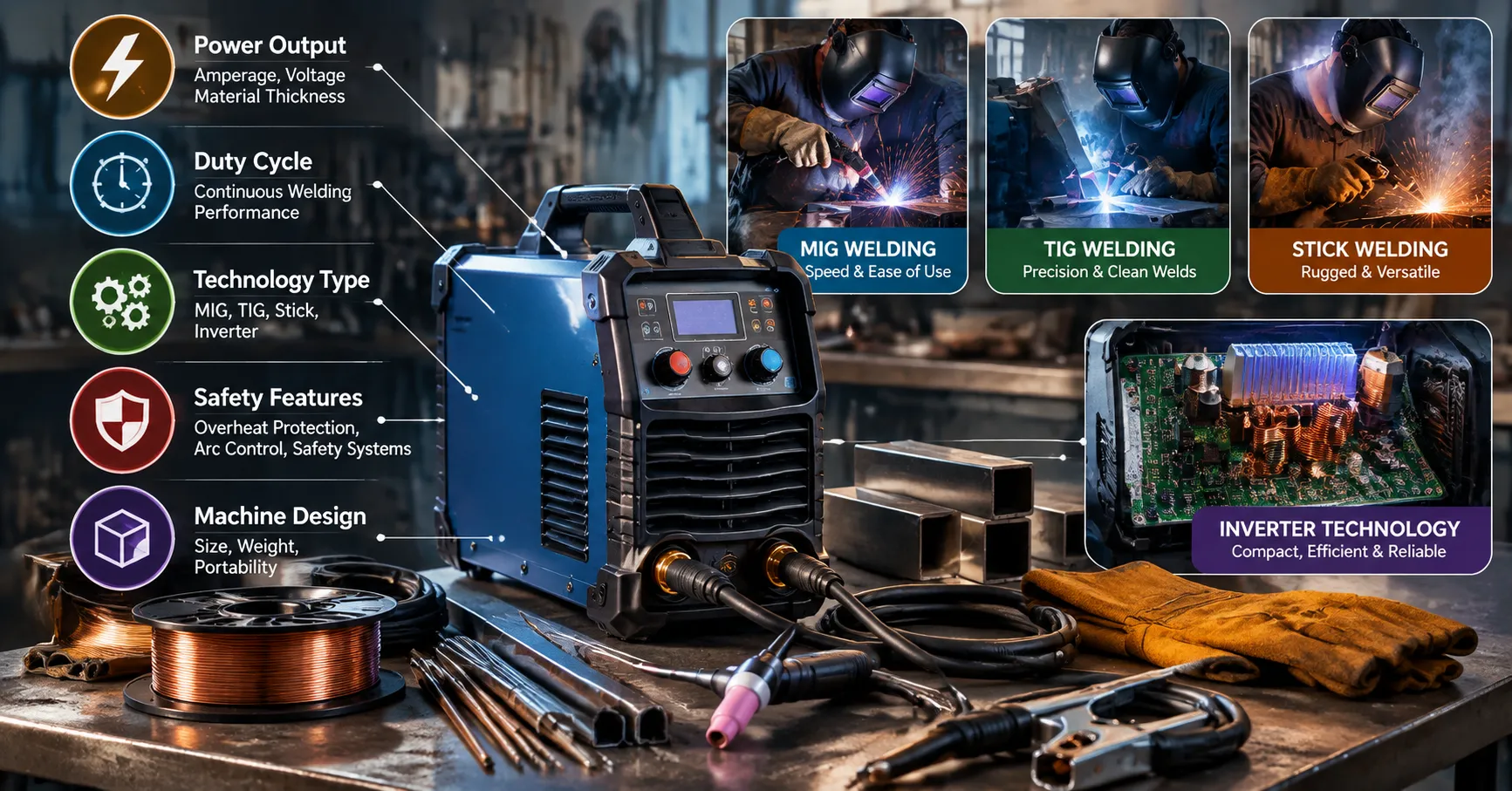
Before comparing specific models, it helps to know the major categories that define how a welding machine performs:
- Power capability — how much energy the machine can deliver and sustain
- Welding performance — how clean, stable, and consistent the resulting weld is
- Machine design — the physical build, size, and layout
- Technology type — MIG, TIG, Stick, or inverter-based systems
- Safety systems — the protections built in to keep the operator and equipment safe
Different projects call for different combinations of these features. A machine built for light home repairs won't necessarily hold up in a workshop running daily fabrication jobs, and a workshop-grade machine may be more than a hobbyist ever needs. Matching specifications to actual use is the real goal.
Welding Machine Power Output: Understanding Performance Capacity
Welding machine power output is usually the first specification buyers look at, and for good reason — it determines what kind of work the machine can actually handle.
Power output is typically described through:
- Amperage — the range of current the machine can produce, which affects weld penetration
- Voltage — the input power requirement, often either standard household voltage or higher industrial voltage
- Material thickness capability — thicker metals generally require higher amperage to achieve a solid weld
- Overall welding strength — how consistent the arc remains under load
A machine with a low amperage range might struggle with thicker steel, while an overpowered unit for simple sheet-metal repairs may be unnecessarily complex or costly to run. Matching power output to your typical material thickness is one of the most practical ways to narrow down your options.
Duty Cycle: A Key Feature for Continuous Welding
Welding machine duty cycle is one of the most overlooked specifications, yet it has a major impact on real-world usability.
Duty cycle refers to the amount of time a machine can weld continuously within a 10-minute period before it needs to cool down. A machine rated for a 20% duty cycle at a given amperage can weld for about two minutes before requiring an eight-minute rest. A machine rated for 60% can work far longer before overheating.
- Light-duty machines suit occasional repairs and short welding sessions.
- Heavy-duty machines are built for extended, repeated use without triggering thermal shutdown.
For anyone doing frequent or lengthy welding work, ignoring duty cycle is a common mistake — it directly affects productivity, since constant cooldown periods can slow a job down significantly.
Welding Technology Features: MIG, TIG, and Stick Machines
MIG Welding Machine Features
MIG welding is known for its speed and relative ease of operation, which is why it's a common entry point for newer welders. Key MIG welding machine features include continuous wire feed, straightforward setup, and suitability for a wide range of metals. It works particularly well for general fabrication and repair work on thinner materials.
TIG Welding Machine Features
TIG welding trades speed for precision. TIG welding machine features typically emphasize fine control over the arc, allowing for cleaner, more detailed welds. This makes TIG machines a common choice for professional applications where weld appearance and accuracy matter, such as detailed metalwork or thin-gauge materials.
Stick Welding Machine Features
Stick welding remains popular for outdoor and rugged conditions. It performs well in windy environments, doesn't require shielding gas, and tends to be more forgiving on dirty or rusted metal — making it a durable option for heavier, less controlled applications.
Inverter Welding Machine Features and Benefits
Inverter technology has become a major shift in welding equipment design. Inverter welding machine features generally include:
- A more compact, lightweight build compared to older transformer-based machines
- Improved energy efficiency, drawing less power for similar output
- Greater portability, making it easier to move between job sites or storage
- More refined digital control over arc performance
These advantages have made inverter machines increasingly common across home, workshop, and professional settings, since they combine solid performance with a smaller footprint.
Safety Features Every Welding Machine Should Have
Understanding welding machine safety features to consider is essential, regardless of skill level. Important protections include:
- Overheating protection, which shuts the machine down before internal damage occurs
- Voltage protection, guarding against power surges or fluctuations
- Cooling systems, such as fans or thermal regulation, that keep internal components stable
- Stable arc operation, reducing unpredictable behavior during welding
- User protection features, like proper grounding and insulated components
Skipping over safety specifications to save money is a risk that isn't worth taking, particularly for anyone welding regularly or in less controlled environments.
Portability and Machine Design Features
Machine design affects more than convenience — it shapes how and where you can actually use the equipment. Consider:
- Weight, which matters if the machine needs to be moved frequently
- Size, especially relevant for smaller workshops or home storage
- Transportation, such as built-in handles or wheels for job-site mobility
- Storage requirements, including ventilation and space needs
A lightweight, compact machine suits users who move between locations, while a larger, stationary unit might make more sense for a fixed workshop setup.
Control Features and Ease of Operation
Modern welding machines increasingly include digital displays and adjustable settings that make fine-tuning easier than older analog dials. Useful control features include:
- Digital amperage and voltage displays
- Pre-set programs for different materials or thicknesses
- Adjustable arc control settings
- Memory settings for repeated job types
These controls don't just add convenience — they improve accuracy, helping users dial in the right settings more consistently instead of relying on guesswork.
Build Quality and Durability Factors
Knowing how to evaluate welding machine quality goes beyond just checking the spec sheet. Look at:
- Material quality of the housing and internal casing
- Internal components, including transformers or inverter boards
- Cooling design, since poor heat management shortens a machine's lifespan
- Long-term reliability, often reflected in warranty length and build reputation
A well-built machine may cost more upfront but typically saves money over time through fewer repairs and more consistent performance.
Professional Welding Machine Features for Advanced Users
For advanced and industrial users, professional welding machine features need to support sustained, demanding work. This includes high and stable power output, extended duty cycles for long working hours, and advanced control systems that allow precise adjustments across varied materials. These machines are built to handle the repetitive, heavy-duty conditions found in construction and manufacturing environments.
Common Mistakes When Evaluating Welding Machine Features
Buyers often run into avoidable issues, including:
- Looking only at price, without considering long-term performance
- Ignoring duty cycle, leading to frustrating cooldown interruptions
- Choosing the wrong power capacity, either too weak or unnecessarily strong
- Ignoring safety features, which increases operational risk
- Not considering future requirements, buying only for current needs without room to grow
Avoiding these mistakes starts with treating the spec sheet as seriously as the price tag.
Why Reliable Welding Equipment Matters
Reliable equipment affects nearly every part of the welding process — from the quality of individual welds to overall workplace safety and productivity. A machine with well-matched specifications reduces wasted material, minimizes downtime, and creates a safer working environment.
When researching welding equipment, buyers should compare important specifications and choose reliable sources like Genuine Welding that help users understand suitable equipment options for different applications. The right choice ultimately comes down to matching real specifications to real project needs.
Final Checklist: Features to Check Before Buying
✓ Power output
✓ Duty cycle
✓ Welding technology
✓ Safety features
✓ Build quality
✓ Portability
✓ Control options
✓ Maintenance requirements
Conclusion
Understanding welding machine features gives buyers a real advantage over choosing equipment based on price or appearance alone. Specifications should always be matched to the intended application — whether that's occasional home repairs or demanding industrial production. In the end, quality equipment built around the right features delivers better performance, safer operation, and stronger long-term value.






















Sign in to leave a comment.