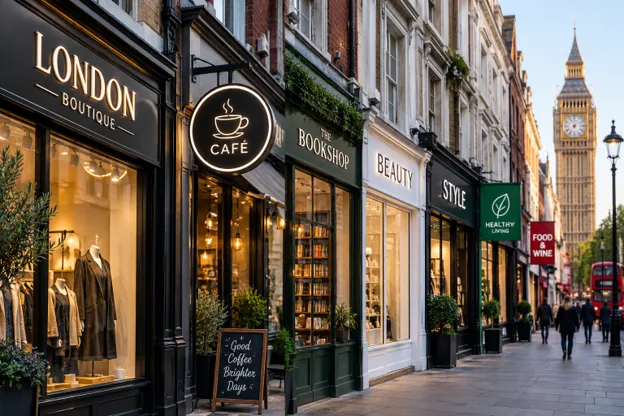

London's high streets run on first impressions, and a shopfront sign is usually the first thing a customer sees before deciding whether to walk in. With thousands of independent shops competing alongside national chains across boroughs like Westminster, Camden, and Hackney, the sign above (or beside) the door often does more marketing work than the shop's actual window display. Below is a practical rundown of the ten most common and effective shopfront sign types used across London, why each one works, and what governs the colours and materials behind them.
Shop front signage London covers a wide mix of styles, from hand-painted heritage lettering in Marylebone to illuminated LED fascias in Shoreditch. The right choice usually depends on three things: the building's age or conservation status, the trade being advertised, and the distance from which the sign needs to be read. Councils also play a role, since most external signs in London need either deemed consent or formal Advertisement Consent before installation, and getting this wrong can mean removal costs or fines.
Key Takeaways
- Fascia and projecting signs remain the two most common formats on London high streets.
- Conservation areas and listed buildings restrict materials, illumination, and sign size.
- Colour choice is rarely decorative alone; it usually reflects trade type, brand recognition, or legibility needs.
- Most shopfront signage in London requires council sign-off, even under "deemed consent" rules.
- Illuminated and digital formats face the strictest planning scrutiny, especially near listed buildings.
1. Fascia Signs

The horizontal panel above the shop entrance remains the backbone of London signage. Painted timber suits Georgian and Victorian parades, while brushed aluminium or acrylic fits modern units. Fascia colours typically match brand palettes: navy and gold for professional services suggest reliability and status, while warm reds and creams for cafés and bakeries read as inviting rather than clinical. Fascia signs are also the format most councils reference first in local design guides, since they sit within the architectural line of the building rather than projecting off it.
2. Projecting or Hanging Signs

Mounted on decorative wrought iron brackets, these signs hang perpendicular to the building so they're visible from further down the street. Traditional in conservation areas, they're usually limited to one per shopfront and require adequate clearance above pavement level for pedestrian safety. Pubs and older independent traders often favour this format because it carries a sense of history that fits period streetscapes better than a flat panel.
3. Illuminated LED Channel Letters

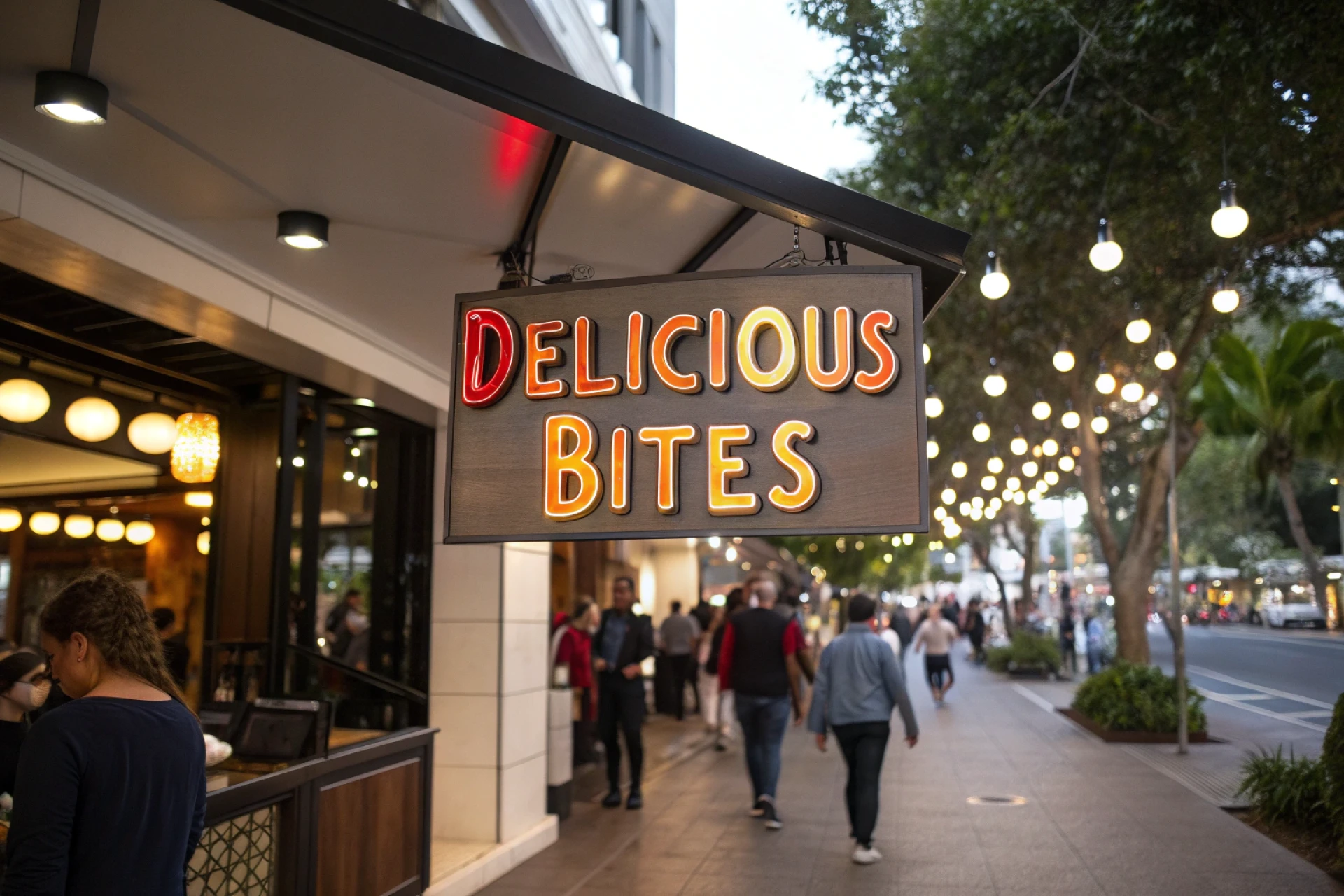
Individually lit 3D letters are common on newer parades and shopping centres. They give strong night-time visibility and are popular with hospitality and retail chains that trade into the evening. Councils in conservation zones often restrict brightness or require discreet, downward-facing illumination instead of internally lit boxes, since bright fascias can clash with the character of a historic street at night.
4. Built-Up 3D Letters

Non-illuminated dimensional letters in metal, acrylic, or foam add depth and a premium feel without the running costs of lighting. Brushed metal or matte black finishes are frequent choices for boutiques and salons wanting an understated, upmarket look, while brighter colours suit gyms or children's services where energy matters more than restraint.
5. Hand-Painted Traditional Signage

Gold leaf lettering on a dark background, still seen on pubs, barbers, and older independent shops, signals heritage and craftsmanship. It's labour-intensive but tends to age well and suits listed buildings where modern materials aren't permitted. Dark green, maroon, and black backgrounds are traditional choices because they were historically achievable with durable period paints and still photograph well today.
6. Window Vinyl Graphics

Cut vinyl lettering or frosted film applied directly to glass works well for smaller independent shops with tighter budgets. White or gold vinyl on dark glass gives strong contrast without needing planning consent in most cases, since it isn't classed as a projecting structure. This makes it a common starting point for new businesses that want visibility while their full shopfront design is finalised.
7. Blade or Flag Signs

Smaller than traditional hanging signs, blade signs sit closer to the shopfront and are common on narrow London streets where space is tight. Bright, single-colour designs, often the brand's primary colour, help them stand out at eye level among neighbouring shops, and their compact size usually keeps them within permitted development limits.
8. A-Board and Pavement Signs

Freestanding boards placed on the pavement during trading hours are widely used by cafés and independent retailers to catch passing footfall. Many London boroughs, including Westminster and the City of London, restrict or ban them outright on accessibility grounds, while others require a paid pavement licence, so checking local rules first avoids wasted spend.
9. Awning and Canopy Signage

Printed or embroidered awnings combine shade with branding, common on food shops, florists, and markets. Deep greens and burgundies are frequent colour choices because they hide weathering better than pale fabrics and hold up visually across several seasons of London weather, which matters given how quickly light colours can look tired outdoors.
10. Digital Display Signage

Screens showing rotating menus, offers, or brand content are increasingly used by larger retailers and fast-food chains. These carry the strictest consent requirements, since brightness and movement are treated as more likely to distract pedestrians and drivers than static signage, and most councils assess them individually rather than under standard deemed consent.
Comparing the Main Formats
| Sign Type | Typical Material | Best Suited To | Consent Complexity |
| Fascia | Timber, aluminium, acrylic | Most shopfronts | Low to medium |
| Projecting/Hanging | Metal bracket, painted board | Period buildings | Medium |
| LED Channel Letters | Acrylic, metal, LED modules | Evening trade, chains | High |
| Hand-Painted | Painted timber or glass | Listed buildings, heritage trades | Medium |
| Window Vinyl | Cut vinyl film | New or budget-conscious shops | Low |
| Digital Display | LCD/LED screen | High footfall chain retail | High |
Getting the Sign Approved
According to guidance published by Gravesham Borough Council, most signage benefits from deemed consent under national advertisement regulations, but illuminated signage in conservation areas requires separate Advertisement Consent, and listed buildings require Listed Building Consent whenever the signage affects the building's appearance or character. Checking with the local planning team before ordering a sign avoids costly redesigns later, and most London boroughs will confirm requirements informally before a formal application is submitted.
Final Thought
The strongest shopfront signage London has to offer rarely relies on size alone. It pairs a format suited to the building with colours and materials that match the trade, then works within local planning rules from the outset rather than after installation. Getting the format right first, and the compliance sorted early, tends to save both time and money compared with redesigning a sign after it's already gone up.
























Sign in to leave a comment.