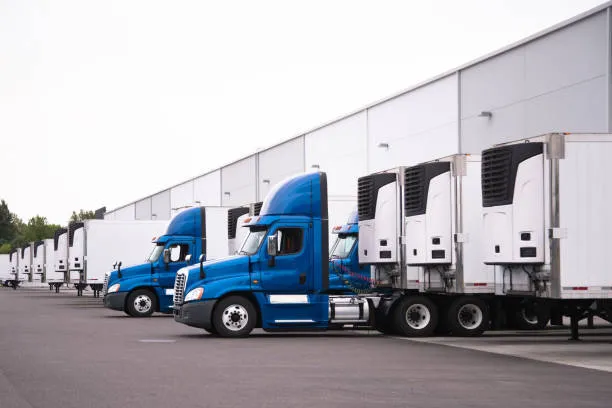

A refrigerated trailer can leave the dock at the right temperature and still deliver spoiled cargo. A failing compressor, a dirty condenser coil, or a door left open too long at a stop can undo hours of careful loading. That is why a reliable transport refrigeration service matters as much as the truck itself, and why the strongest cold chain solutions treat equipment, people, and process as one system.
This guide covers what a cold chain involves, where it tends to break, and what to look for in a service partner.
What Is a Cold Chain, and Why Is It So Easy to Break?
A cold chain is the unbroken series of temperature-controlled steps a perishable product passes through, from production to storage, transport, and final delivery. Food, pharmaceuticals, flowers, and some chemicals all depend on it.
The challenge is that every handoff is a risk. Product moves from a cold warehouse to a loading dock, from the dock to a trailer, and from the trailer to a receiving area. A temperature excursion at any of those points can reduce shelf life or make a shipment unsafe, and the damage is often invisible until the product reaches the customer.
Regulations raise the stakes. In the United States, the FDA’s Food Safety Modernization Act includes sanitary transportation rules that hold shippers, carriers, and receivers responsible for keeping food at safe temperatures. Documentation matters as much as the equipment.
What a Transport Refrigeration Service Actually Covers
Many fleet owners think of refrigeration service as repair after a breakdown. The better approach is planned care, and a complete service program usually includes the following:
- Preventive maintenance: Scheduled inspections of the refrigeration unit, belts, filters, coils, refrigerant levels, and electrical connections catch small problems before they strand a load.
- Diagnostics and repair: Technicians who work on transport refrigeration units every day recognize fault patterns faster than general mechanics do.
- Temperature calibration: Sensors drift over time, so a unit that reads 34°F may be running warmer than the display suggests.
- Pre-trip readiness checks: Confirming the unit can pull down to setpoint before loading prevents warm product from being placed into a warm box.
- Emergency support: Cold cargo cannot wait for a Monday appointment, so response time is a real part of the service.
Common Failure Points in Refrigerated Transport
Most cold chain failures trace back to a short list of causes. Knowing them helps you ask better questions of any provider.
Airflow problems. Refrigerated air must circulate around the cargo. Pallets stacked against the walls or blocking the evaporator can create warm pockets even when the unit is working perfectly.
Skipped pre-cooling. Loading into an unchilled trailer forces the unit to fight the heat of the box and the product at once, which strains the system and slows recovery.
Door and seal wear. Cracked gaskets and damaged door seals let warm air in, and the unit works harder to compensate. Fuel use rises and component life drops.
Deferred maintenance. A clogged coil or a worn belt rarely fails at a convenient time. It usually fails on a hot day with a full load.
Missing temperature data. Without continuous monitoring, a fleet cannot prove a load stayed in range, which creates disputes and potential liability.
Building Cold Chain Solutions That Hold Up
Good cold chain solutions combine hardware, habits, and visibility. A few practical steps make the biggest difference:
- Match the unit to the load. A trailer carrying frozen goods needs different capacity and settings than one carrying fresh produce. Undersized equipment struggles in summer and wastes fuel year-round.
- Standardize loading procedures. Drivers and dock staff should follow the same checklist for pre-cooling, pallet spacing, and door management.
- Use real-time monitoring. Remote temperature tracking lets dispatchers act on an alert while the truck is still on the road, not after delivery.
- Keep records. Logs from pre-trip checks, maintenance visits, and temperature readings protect you during audits and customer claims.
- Plan for the worst day. Know who you will call, and how fast they can reach you, before a breakdown happens.
How to Choose a Transport Refrigeration Service Partner
Not every shop that can fix a diesel engine can fix a refrigeration unit. Before committing, ask a few direct questions:
- Do your technicians specialize in transport refrigeration, and are they trained on the brands in my fleet?
- What does your preventive maintenance schedule look like, and how is it documented?
- How quickly can you respond to an on-road failure?
- Can you help with temperature monitoring and compliance records?
- Do you keep common parts in stock to shorten downtime?
Straight answers to those questions tell you more than any brochure will.
Where CT West Fits In
CT West focuses on transport refrigeration, which means its attention stays on the equipment and the problems operators face every day. If you run a fleet, manage a distribution operation, or simply want a second opinion on your current maintenance approach, you can learn more about the team and its offerings at ctwest.co.
Final Thoughts
The cold chain is only as strong as its weakest link, and that link is often a unit that was never properly maintained. Investing in a dependable transport refrigeration service and building disciplined cold chain solutions around it protects your product, your customers, and your reputation.



















Sign in to leave a comment.