

When depression doesn't respond to the first medication, or the second, it's easy to start believing nothing will work. That feeling is common, and it's also a recognized clinical situation with its own name and its own set of options.
One of those options is SPRAVATO, a nasal spray approved for treatment-resistant depression. If you're researching SPRAVATO treatment in Maryland, this guide covers how it works, what a session looks like, and what to ask before you commit.
What treatment-resistant depression means
Treatment-resistant depression describes depression that hasn't improved enough after trying at least two antidepressants. It doesn't mean you did something wrong or that you're beyond help. Depression is complicated, and a medication that works well for one person may do very little for another.
It can be exhausting in a particular way. You've done the appointments, taken the pills, waited out the side effects, and still feel flat, tired, or hopeless. Knowing there are other approaches matters, because it changes the question from "will anything work?" to "what should we try next?"
What SPRAVATO is and how it works
SPRAVATO is the brand name for esketamine, a nasal spray approved by the FDA for treatment-resistant depression. It works differently from common antidepressants. Most of those target serotonin and norepinephrine. SPRAVATO acts on glutamate, a chemical messenger involved in mood, learning, and emotional regulation.
Because it works through a different pathway, some people respond to it after other medications haven't helped. Some notice changes within the first few sessions, though results vary and it isn't a guaranteed fix. In many cases it's used alongside an oral antidepressant, and your provider will explain what fits your situation.
Why it's given in a clinic, not at home
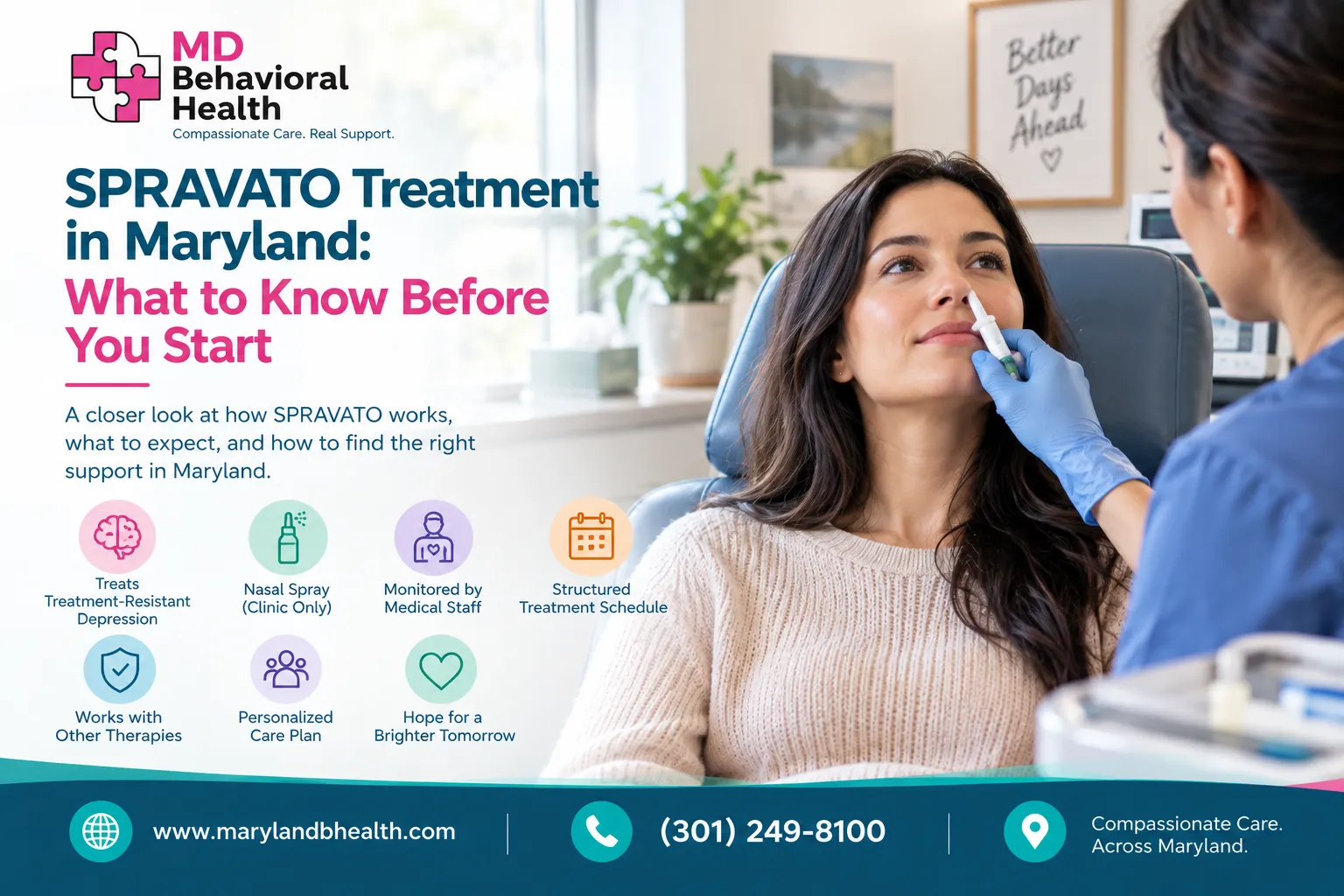
You can't take SPRAVATO home. It's given only in a medical setting, where you self-administer the spray and staff monitor you afterward. That's part of how the treatment is kept safe.
At a SPRAVATO treatment center Maryland patients can visit, a session usually means a private, comfortable room and a visit of about two hours from start to finish. Staff typically check blood pressure, mood, and how you're feeling as the session goes on. Maryland Behavioral Health, for example, runs supervised in-office sessions with a full evaluation beforehand to confirm the treatment is appropriate for you.
Who might be a candidate
SPRAVATO may be worth discussing if you've tried two or more antidepressants without meaningful improvement, if depression continues despite medication and therapy, or if symptoms are getting in the way of work, relationships, or basic daily functioning.
It isn't right for everyone. A provider will review your medical history, current medications, and blood pressure before recommending it, and there are conditions that make it unsuitable. That screening is one of the reasons the first appointment matters.
What a session feels like
During a session you take the spray under staff supervision, then rest while they monitor you. Common effects include tiredness, dizziness, numbness, nausea, and a sense of feeling disconnected or "floating." A temporary rise in blood pressure can also happen, which is why it's tracked.
These effects usually ease within the session window. Most people feel tired or relaxed afterward and need someone else to drive them home, since you shouldn't drive right after treatment. Many people are back to normal activities the next day.
If anything about the experience worries you, tell the team. They'd rather hear about it than have you stay quiet.
The typical treatment schedule
The schedule usually starts intensive and tapers off. In the first month, sessions are often twice a week. In the second month, they move to about once a week. After that, most people continue every one to two weeks, depending on how they're doing.
Your provider adjusts the plan based on your response, so the schedule isn't fixed. Ask about the time commitment upfront, since a two-hour visit twice a week takes planning around work and transportation.
Pairing SPRAVATO with other care
SPRAVATO tends to work best as one piece of a broader plan. Ongoing therapy, regular check-ins with your prescriber, and healthy routines for sleep and activity all matter. If you're still weighing your choices, it helps to know the other depression treatment options available, since SPRAVATO isn't the first step for most people and isn't the only one.
What to ask before you begin
A few practical questions are worth raising with any clinic. How long does the evaluation take? What will each session cost, and how many are typically needed? Do you need a ride, and how far in advance should you arrange it? Can follow-up appointments be done by video? Cost can be a real barrier, so it helps to verify your insurance before booking and ask whether the clinic offers help with payment.
A note on safety
Depression can bring thoughts of self-harm. If you or someone you know is in immediate danger, contact the national Suicide and Crisis Lifeline or local emergency services right away instead of waiting for an appointment. Also, never stop or change your current medication on your own to make room for a new treatment. Talk to your provider first.
Frequently Asked Questions
What is SPRAVATO used for?
It's approved for treatment-resistant depression, meaning depression that hasn't improved enough after trying at least two antidepressants. A provider decides whether it's appropriate based on your history and current health.
How is SPRAVATO different from a regular antidepressant?
Most antidepressants work on serotonin and norepinephrine. SPRAVATO acts on glutamate, a different chemical pathway, and it's given as a nasal spray in a clinic instead of a pill you take at home.
How long does a SPRAVATO session take?
Plan on about two hours per visit. That includes taking the spray and a monitoring period afterward so staff can check your blood pressure and how you're feeling.
Can I drive after treatment?
No. You'll need someone to take you home after each session, and most people resume normal activities the next day. Ask your provider for specific guidance on driving.
How soon might I notice a difference?
It varies. Some people notice improvements within the first few sessions, while others take longer or don't respond. Your provider will track your progress and adjust the plan.
What are the possible side effects?
Common ones include dizziness, tiredness, numbness, nausea, a feeling of disconnection, and a temporary rise in blood pressure. Staff monitor you during the visit, and most effects are short-lived.
Is SPRAVATO treatment covered by insurance?
Coverage depends on your plan. Ask the clinic to help check your benefits before you start, and ask about payment assistance if cost is a concern.

























Sign in to leave a comment.