Tree Stump Removal: Grinding vs. Digging Out, Costs and How to Choose

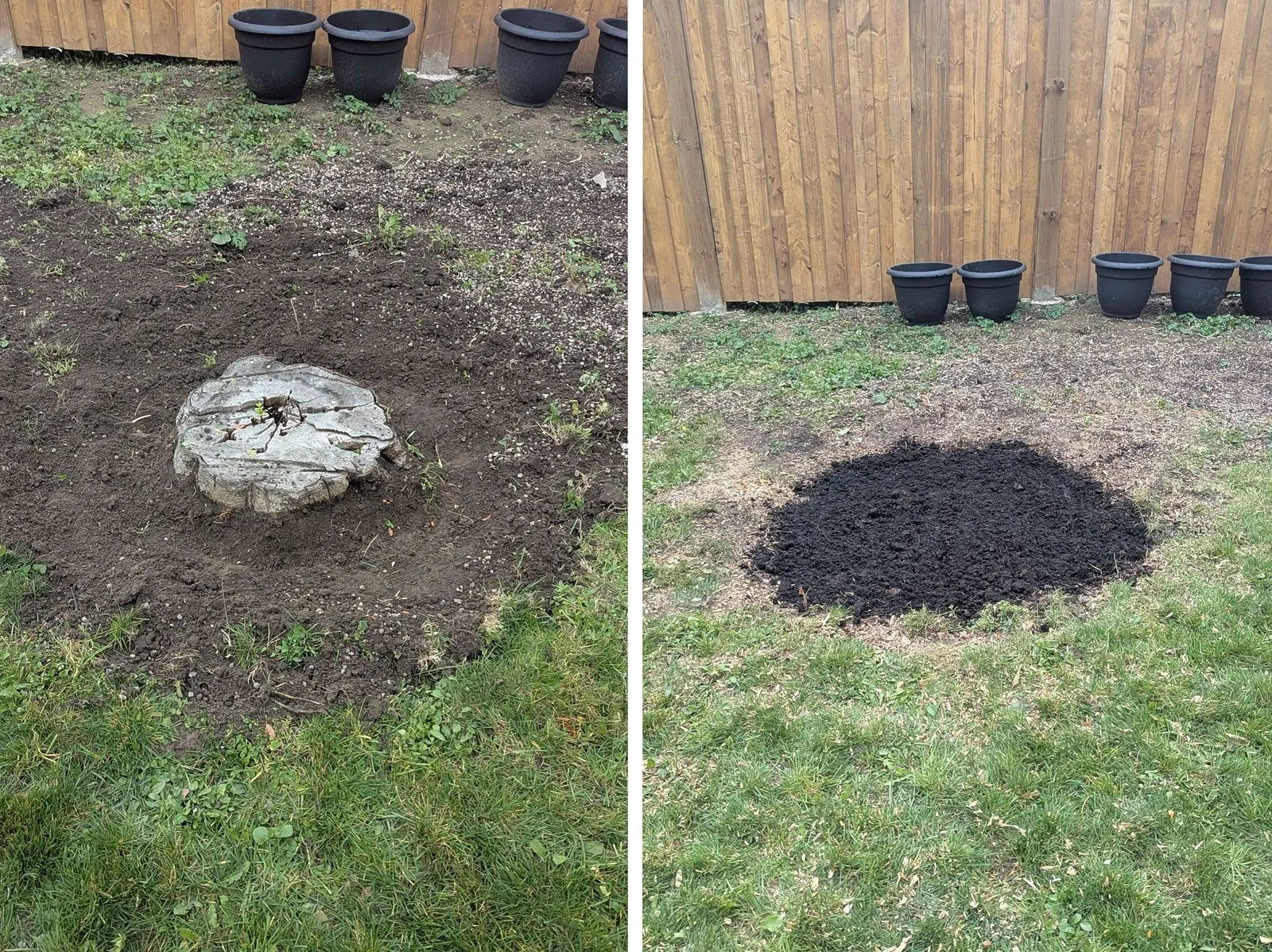
A tree comes down, and what is left behind is often more of a nuisance than the tree was. Stumps get in the way of mowing, trip up kids and pets, and block plans for a new garden, fence or deck. Tree stump removal is the fix, but there are two ways to do it. This guide explains the difference, what drives the cost, and how to pick the right option for your yard.
Why Deal With a Stump at All?
Leaving a stump in place can cause real problems:
- It can attract pests such as termites, ants, beetles and fungi.
- It can keep sprouting new growth.
- It is a tripping hazard, especially for kids and pets.
- It lowers curb appeal and makes lawn care difficult.
- It can interfere with landscaping, fencing or construction.
Stump Grinding vs. Stump Removal: What’s the Difference?
The two terms are often used interchangeably, but they are different services with different results.
What Is Stump Grinding?
Stump grinding mechanically shreds the visible stump down below ground level. Most of the root system stays in place and decomposes naturally over time. It is faster, less invasive to your yard and more affordable, which is why most homeowners choose it.
What Is Full Stump Removal?
Full removal means digging out the entire stump and root ball. It is more thorough, but it takes more time, disturbs more of the surrounding soil and costs more. It also leaves a large hole that typically needs backfilling.
How Long Does Tree Stump Removal Take?
Most residential stumps can be ground in 30 minutes to two hours, depending on size and wood type. Very large stumps, generally those over 30 to 40 inches in diameter, or stumps in difficult-to-reach spots can take longer. These jobs may need heavier equipment, and a good contractor will give you a realistic time estimate before the work begins.
What Does Tree Stump Removal Cost?
There is no single flat price, because every stump is different. These factors move the cost up or down:
- Stump size and diameter: usually the biggest factor. A small stump from a young tree takes far less time than a large, mature hardwood stump.
- Root spread and species: dense hardwood roots, like oak or maple, take longer to grind through than softer wood. Wide, shallow root systems can mean more passes.
- Access: a stump in an open front yard is straightforward. One behind a fence, down a narrow side yard or close to a structure takes more time to reach safely.
- Number of stumps: the per-stump price is usually lower when several stumps are done in one visit.
- Cleanup and backfill: basic cleanup is usually included. Hauling away wood chips or backfilling with topsoil for new sod can add to the final price.
As a general guide for the Greater Toronto Area, stump grinding commonly costs between $150 and $700 per stump. Full removal tends to cost more, often from $300 to over $1,000 depending on size and site conditions. These figures are a guide, not a quote, so the only way to know your exact price is to have a professional look at your stump.
How to Choose Between Grinding and Removal
Grinding is almost always the more affordable option, and it suits the vast majority of properties. The better question is what you plan to do with the space afterward:
- Planting grass, flowers, shrubs or a new tree: grinding works in most cases. Avoid planting directly on top if roots are very close to the surface.
- Clearing space for a fence, deck or shed: grinding is usually enough.
- Large or mature stumps being cleared for construction or deep landscaping: a deeper grind may be the better call.
- Wanting the entire root ball gone: full removal is the more thorough route, with the higher cost and backfilling that come with it.
A trustworthy contractor will recommend the option that actually fits your plans, not just the more expensive one.
What Happens After the Stump Is Gone?
After grinding, the wood chips are nutrient-rich and make good free mulch for garden beds, flower beds and pathways. If you would rather have a clear yard, many companies will haul them away for an additional fee.
The roots left behind decompose over time, usually within one to five years, which improves the soil. For very deep-rooted or recently ground large stumps, it may be worth waiting before planting a tree, or asking for a deeper grind first.
Tips for Getting an Accurate Quote
- Measure and photograph the stump. A photo with a measuring tape across it, plus a few details about location and access, is often enough for a solid estimate.
- Count your stumps. Multiple stumps are usually more cost-effective in one visit.
- Say what you plan to do afterward. Sod, planting or construction can change the approach.
- Ask about cleanup. Confirm what is included and what costs extra, such as wood chip hauling or topsoil backfill.
- Expect no hidden fees. A straightforward quote should come with no pressure and no obligation.
Final Thoughts
For most homeowners, grinding is the practical, affordable way to handle tree stump removal, while full removal makes sense when the entire root ball needs to go. Know your stump size, access and plans for the space, and you will be well prepared to compare quotes.






Sign in to leave a comment.