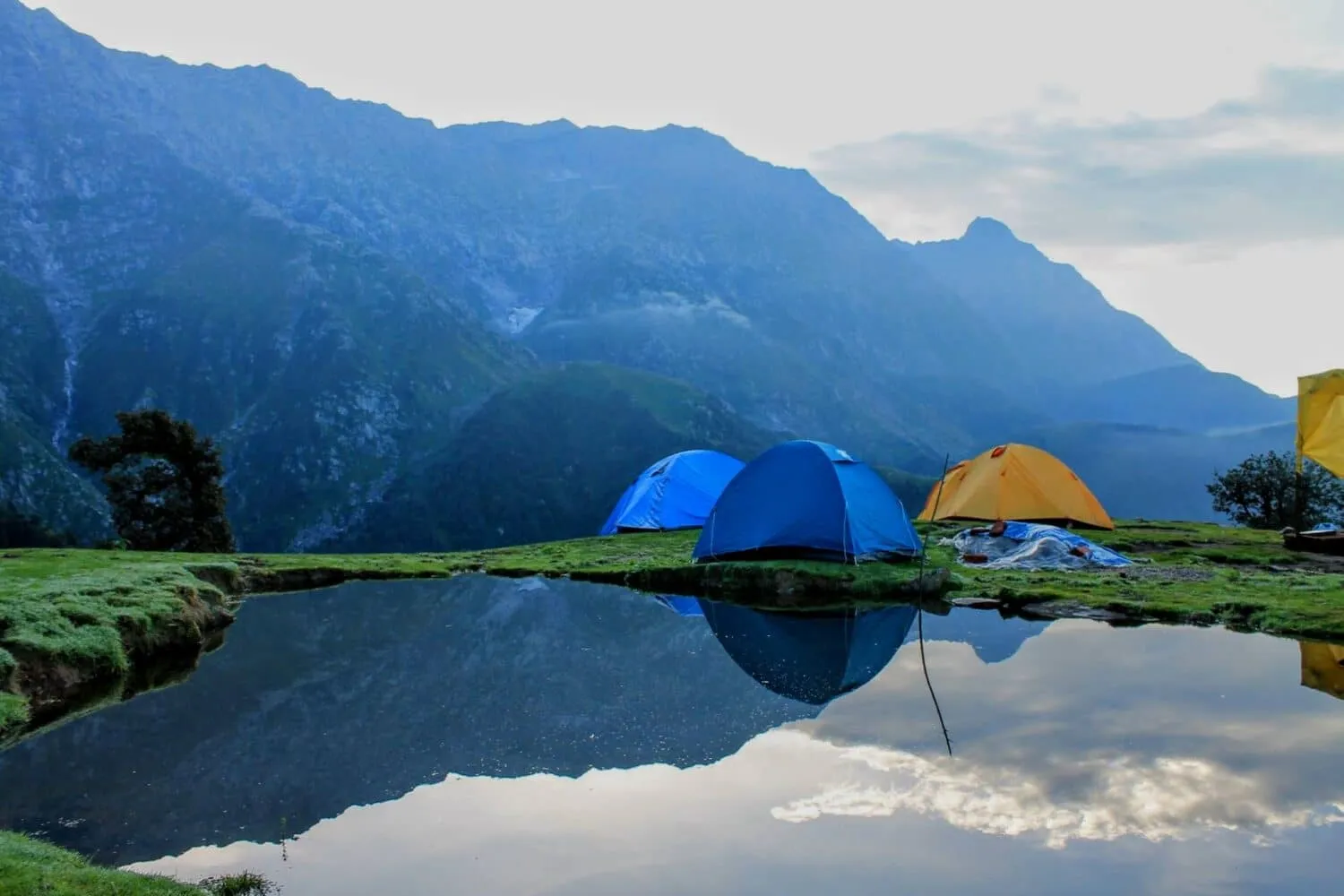

The Triund Trek near McLeod Ganj in Himachal Pradesh is a popular short Himalayan trek, but its trail conditions can change considerably with the weather. Rain can make sections slippery, fog can reduce visibility, and winter snowfall can cover parts of the route. Even on a clear day, temperatures at Triund can be much lower than in Dharamshala.
Triund sits at about 2,875 metres, and the route passes through oak, deodar and rhododendron forests before reaching the open meadow. The final section includes the well-known steep bends commonly called the “22 curves.”
Understanding how different weather conditions affect the trail can help trekkers plan their timing, clothing and route more carefully.

Why Weather Matters on the Triund Trek
Mountain weather can change faster than conditions in the nearby towns. A clear morning in McLeod Ganj does not always mean the same conditions will continue higher up.
Weather can affect:
- Trail grip and walking speed
- Visibility around the upper sections
- Temperature at the campsite or meadow
- Snow and ice on the trail
- Camping conditions
- Road travel to and from Dharamshala
- Whether a trek should be postponed
Himachal Tourism describes Dharamshala as having distinct summer, monsoon and winter conditions, with winter snow possible in the higher areas.
How Rain Changes the Trail
Monsoon is one of the most important weather periods to consider when planning the Triund Trek. Dharamshala receives substantial rainfall during the monsoon season, and the wet conditions can affect forest trails and approach roads.
Rain can make exposed roots, rocks and muddy sections more slippery. Water may also collect on parts of the path, slowing down the ascent and descent.
What to Change in Your Trek Plan
During or after heavy rain, trekkers should consider:
- Starting only after checking the latest weather forecast.
- Allowing extra time for the climb.
- Carrying a waterproof rain jacket and bag cover.
- Wearing footwear with good grip.
- Avoiding unnecessary rushing on downhill sections.
- Being prepared to postpone the trek if conditions are unsafe.
The district administration has previously issued trekking restrictions based on weather forecasts and warnings, including provisions specifically covering the Triund route. This shows why current local instructions should be checked rather than relying only on a fixed seasonal timetable.
Fog and Low Visibility
Fog is another factor that can change the experience of the Triund Trek. Clouds and mist may reduce views of the Dhauladhar range and Kangra Valley, particularly when weather conditions are unsettled.
Low visibility does not necessarily mean the trail is impossible, but it can make navigation and judging terrain more difficult.
If visibility becomes poor, it is sensible to:
- Stay with your trekking group.
- Avoid taking shortcuts.
- Follow the established trail.
- Keep your phone or navigation device protected from moisture.
- Avoid continuing towards unfamiliar higher routes without appropriate guidance.
The Triund route is generally straightforward, but weather can make even familiar mountain trails less predictable.
Winter Snow and Cold Conditions
Winter brings a different set of challenges. Snow and ice can cover parts of the upper trail and Triund meadow. Local Dharamshala tourism information notes that snow treks to Triund may be possible in winter with local guidance and suitable equipment, while parts of the trail can become snowy.
Cold temperatures are especially important for people planning to stay overnight. Conditions at higher elevations can be significantly colder after sunset than during the daytime.
Winter Trek Planning
A winter plan may require:
- Warm layers rather than a single heavy jacket
- Gloves and a woollen cap
- Proper trekking shoes
- Extra protection for electronics
- A reliable weather forecast
- Additional time for slower movement on snow or ice
Trekkers should not assume that a short trek automatically becomes easy in winter. Snow and ice can change the difficulty of otherwise familiar sections.
Summer Weather and Clear Conditions
Spring and summer can provide more comfortable trekking conditions, although temperatures and weather can still vary with altitude. Himachal Tourism lists March to June as a generally favourable period for visiting Dharamshala, while its Triund description notes the trek's summer appeal.
Clear weather can make the route easier to follow and improve visibility. However, warmer daytime conditions can also increase the need for water, sun protection and an early start.
Starting earlier can be useful because it gives trekkers more daylight for the ascent and leaves some flexibility if the pace becomes slower than expected.
Autumn and Post-Monsoon Conditions
After the monsoon, the landscape can gradually become drier, while clearer conditions may improve mountain visibility. Autumn is also a period when temperatures begin to fall, particularly after sunset.
This means trekkers planning an overnight Triund Trek should prepare for cooler nights even if the afternoon feels comfortable.
Before leaving, check:
- Rain forecast
- Temperature at higher elevations
- Wind conditions
- Any snowfall forecast
- Local trekking restrictions
- Road conditions around Dharamshala and McLeod Ganj
What to Pack Based on Weather
The basic packing list should change according to the forecast.
For rainy weather:
- Waterproof jacket
- Backpack rain cover
- Quick-drying clothes
- Extra socks
- Shoes with good grip
For cold or snowy weather:
- Thermal layers
- Warm jacket
- Gloves
- Cap
- Suitable footwear
- Additional insulation for overnight stays
For clear and warm weather:
- Water
- Sunglasses
- Sunscreen
- Cap
- Light, breathable clothing
Conclusion
Weather is an important part of planning the Triund Trek because it can directly affect the trail, walking time, visibility and overnight conditions. Rain may make the path slippery, fog can reduce visibility, and winter snow can require additional equipment and experience.
Rather than relying only on the month of travel, trekkers should check the latest forecast and local advisories before starting. A flexible plan, suitable clothing and sensible pacing can make the trek more manageable while also helping trekkers respond to changing mountain conditions.























Sign in to leave a comment.