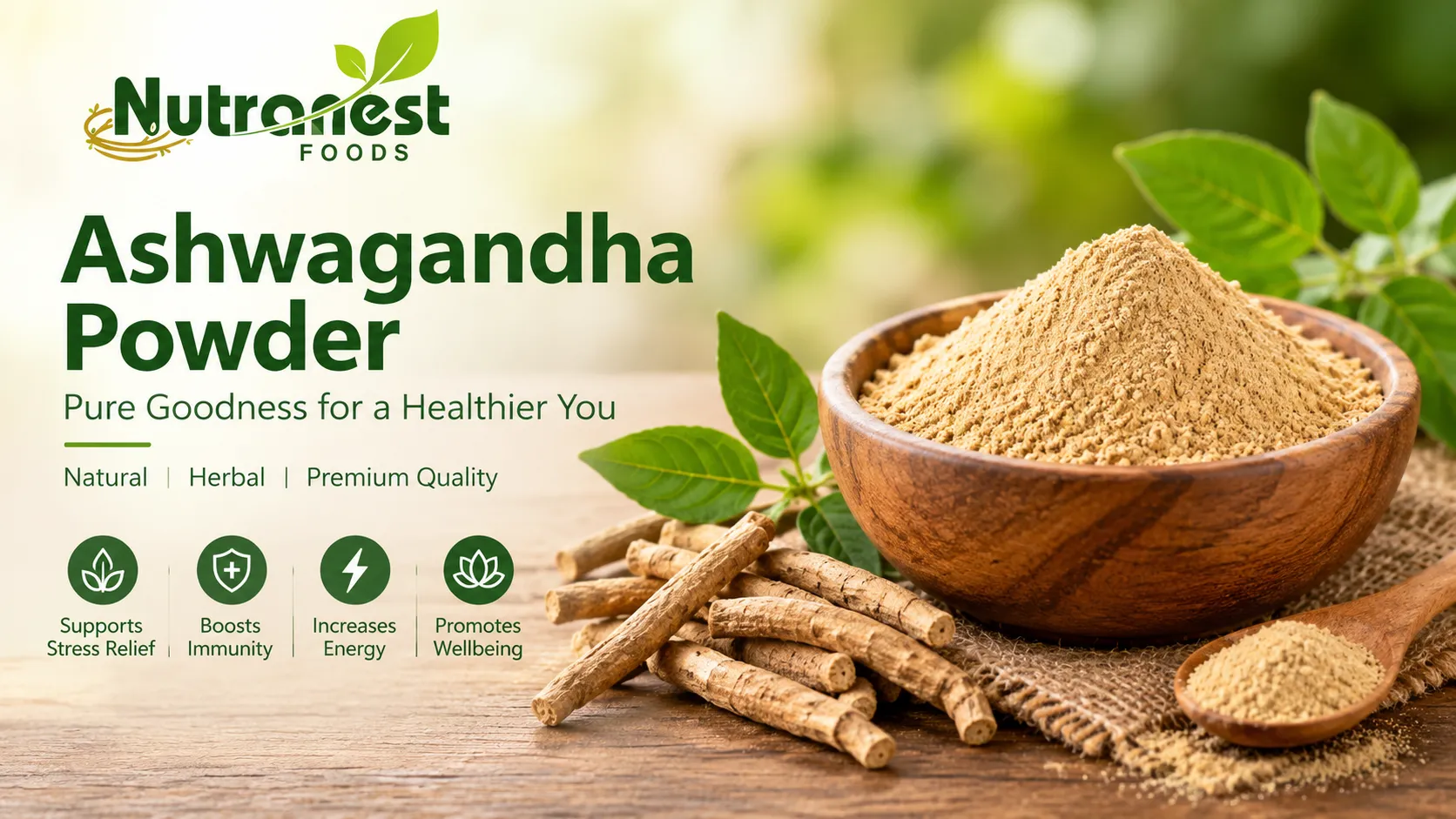

A buyer emailed us last month asking why his last Ashwagandha Powder shipment tested at 1.8% withanolides when the supplier's spec sheet promised 2.5%. That gap isn't rare. It's the single biggest reason procurement teams switch manufacturers mid-contract, and it usually traces back to one thing: nobody checked the extraction method before signing.
Ashwagandha has moved from niche Ayurvedic shelf to mainstream supplement aisle in under a decade. Demand from nutraceutical brands, herbal formulators, and export houses has pulled a lot of new manufacturers into the space some with the infrastructure to back their claims, many without it. Which means the sourcing decision now carries more weight than it did five years ago.
What Actually Goes Into a Batch of Ashwagandha Powder
Root powder and extract powder are not interchangeable, even though they're marketed side by side on half the supplier websites we've reviewed.
Root Powder vs. Root Extract
Whole root powder is ground dried root full-spectrum, lower withanolide concentration, typically 0.3% to 1%. Root extract is concentrated through water or hydro-alcoholic extraction, standardized to 2.5%, 5%, or 8% withanolides depending on the process. Brand owners formulating capsules usually want standardized extract. Bulk wholesalers supplying Ayurvedic pharmacies often want raw root powder instead.
The Detail Most Buyers Skip: Extraction Solvent
Here's what rarely makes it into a first conversation. Some manufacturers still use methanol-based extraction because it's cheaper and pulls a slightly higher withanolide yield. Regulatory bodies in the US and EU are increasingly strict about solvent residue limits, and a shipment flagged for methanol traces at customs costs far more than the extraction method ever saved. Ask which solvent system is used. If the answer is vague, that's your answer.
Mesh Size and Moisture Content
Standard mesh runs 80 to 120, though some capsule-fill applications need 200 mesh for flow consistency. Moisture content should sit under 5% anything higher invites clumping and microbial risk during transit, especially on longer sea freight routes to Gulf or European ports.
The Objective Test: 5 Ways to Evaluate an Ashwagandha Powder Manufacturer
Most sourcing guides tell you what a good answer sounds like. That's half the job. Here's what a bad answer looks like too, because that's the half that actually protects your order.
- Withanolide testing method. Good: they name HPLC and share a recent Certificate of Analysis unprompted. Bad: "We test in-house, trust our numbers" with no third-party lab backing it.
- Traceability to farm source. Good: they can tell you which region Madhya Pradesh, Rajasthan, or Nagaur belt — the root came from and when it was harvested. Bad: "It's all Indian-sourced," with no further detail offered.
- Heavy metal and pesticide screening. Good: routine batch-level testing for lead, arsenic, cadmium, mercury, and a documented pesticide panel. Bad: "We haven't had issues before," treated as a substitute for actual data.
- Defect and rejection policy. Good: a written policy stating replacement timelines and rejection thresholds before you sign. Bad: "We'll handle it case by case." A supplier who says that doesn't have a policy that's a negotiation you'll lose after the shipment has already left port.
- MOQ flexibility for new buyers. Good: a trial order tier below their standard bulk minimum. Bad: forcing first-time buyers straight into a full container load with no smaller test batch option.
Why the Right Supplier Safeguards Your Margin, Not Just Your Reputation
Sourcing decisions in this category get framed as a quality issue. They're really a margin issue, and treating them that way changes what you ask for.
Consistent withanolide standardization means your formulation doesn't need re-testing and re-calibration every batch, which saves lab costs downstream. Verified heavy metal compliance keeps you from absorbing the cost of a rejected shipment at a foreign port a cost that, once you include demurrage and re-export fees, can wipe out an entire order's profit. Documented traceability shortens the audit process when a retail partner or regulatory body asks for sourcing proof, and that alone can be the difference between closing a deal in two weeks versus two months.
Stable supply during peak season protects your delivery commitments to your own downstream buyers. A manufacturer with owned processing infrastructure, rather than one outsourcing to three different job-work units, tends to hold quality steadier across large orders. And working with an exporter who already understands HS code classification and phytosanitary documentation saves you the customs delays that eat into delivery timelines nobody budgeted for.
Sourcing From India: Why Location Is a Supply Chain Decision
India supplies a significant share of the global ashwagandha raw material, with Madhya Pradesh and Rajasthan accounting for the bulk of commercial cultivation. That concentration matters for buyers because it means processing infrastructure cleaning, grinding, extraction has clustered in the same belt, cutting the distance between farm and factory.
We operate out of Surat, Gujarat. That's not incidental. Surat's port access through Hazira and proximity to Mundra gives us shorter inland transit times to container loading compared to manufacturers based further from the coast. For a wholesaler in the Middle East or Southeast Asia, that shaves days off transit that add up across a full order cycle. It also means less handling exposure for the powder itself, which matters more than most buyers realize until moisture damage shows up on arrival.
About Nutranestfood
We've been processing herbal and Ayurvedic powders out of Surat since 2013. Ashwagandha wasn't our first product line we started with turmeric and moringa, and added standardized ashwagandha extract in 2017 once we'd built out our HPLC testing capability in-house rather than relying on third-party labs for every batch.
One thing we changed based on buyer feedback: we stopped accepting root stock from two supplier regions in 2022 after inconsistent withanolide readings showed up across three consecutive harvests. We now source primarily from Madhya Pradesh growers we've worked with for over five years. That's a smaller pool of suppliers than we used to have. It's also a more predictable one.
We don't outsource our grinding or extraction to job-work units. Everything happens on our own floor, which is slower to scale but easier to control.
Send us your target withanolide percentage, order volume, and destination port, and we'll respond within 24 hours with pricing and a lead time estimate. Our standard MOQ for standardized extract is 25 kg; for raw root powder it's 50 kg. First-time buyers can request a 1 kg sample batch with Certificate of Analysis before committing to a full order. Email your specifications to our export desk or call directly Nutranestfood ships from Surat to over 20 countries and we can walk you through documentation requirements for your specific destination.
Conclusion
Sourcing Ashwagandha Powder Manufacturers isn't a checklist exercise it's a series of small verification steps that either protect your margin or quietly erode it. The manufacturers worth working with are the ones who volunteer their testing data before you ask for it. As more brands enter this category, that transparency gap is only going to widen between suppliers who can back their claims and those who can't.
Frequently Asked Questions
1. What's the difference between ashwagandha root powder and root extract powder? Root powder is ground whole root with lower, less standardized withanolide content. Extract powder is processed to hit a guaranteed percentage — usually 2.5%, 5%, or 8%. If your formulation needs consistent dosing, extract is the safer bet.
2. How do Ashwagandha Powder Manufacturers in India verify withanolide content? Reliable manufacturers use HPLC testing, either in-house or through a third-party lab, and issue a Certificate of Analysis per batch. If a supplier can't produce a recent CoA on request, treat that as a warning sign, not an oversight.
3. What MOQ should I expect from Ashwagandha Powder Manufacturers? It varies widely — anywhere from 25 kg to a full container load. Smaller manufacturers are often more flexible on trial orders; larger ones sometimes aren't set up for anything below bulk volume. Ask directly rather than assuming.
4. How should I store ashwagandha powder during long-distance shipping? Keep moisture exposure minimal and avoid temperature spikes above 30°C for extended periods, since both accelerate degradation of active compounds. Vacuum-sealed, moisture-barrier packaging is worth the marginal extra cost on longer sea freight routes.























Sign in to leave a comment.