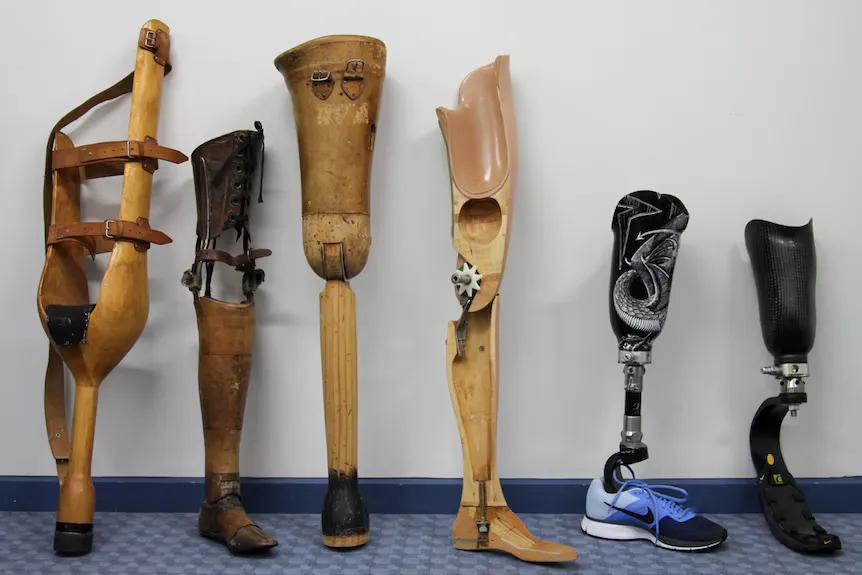


Choosing a prosthetic leg is an important step toward improving mobility, independence, comfort, and confidence after limb loss. However, there is no single prosthetic leg that suits everyone. The right option depends on factors such as the level of amputation, residual-limb condition, walking ability, lifestyle, activity goals, comfort, and the type of terrain you regularly encounter. A prosthetist evaluates these factors when developing an individual prosthetic solution.
Modern lower-limb prosthetics range from relatively simple mechanical designs to advanced systems that use microprocessor-controlled components. Understanding the main types of prosthetic legs can help you have a more informed discussion with your prosthetist.
What Determines the Type of Prosthetic Leg You Need?
The first consideration is the level of limb loss. A prosthesis for someone with an amputation below the knee is designed differently from one for someone with an above-knee amputation.
Common lower-limb prosthetic levels include:
- Transtibial prosthesis: Used after a prosthetic leg below knee amputation. The natural knee is retained, so the prosthesis generally includes a socket, pylon or structural component, and prosthetic foot.
- Transfemoral prosthesis: Used after an above-knee amputation. It generally requires a prosthetic knee in addition to the socket, pylon and foot.
- Knee disarticulation prosthesis: Designed for people whose amputation occurs through the knee joint.
- Hip disarticulation prosthesis: Used when the amputation occurs at the hip and requires a more extensive prosthetic system.
Your amputation level is only the starting point. Your rehabilitation goals and daily activities also influence the components selected.
Types of Prosthetic Legs Based on Function
1. Basic Mechanical Prosthetic Legs
Mechanical prostheses use components that operate without computer-controlled systems. They can be designed for people who primarily need reliable support for everyday standing and walking.
Depending on the amputation level, mechanical systems may incorporate different prosthetic feet, ankles, and knees. They can be relatively straightforward to maintain and may be appropriate for people whose mobility requirements are more predictable.
For below-knee users, options can include solid ankle cushioned heel (SACH), single-axis, multi-axis, and energy-storing feet. NCBI
2. Energy-Storing and Dynamic-Response Feet
Some prosthetic feet are designed to store and return energy during walking. Dynamic-response or energy-storing feet can provide a responsive feel for people who walk at different speeds or have more active lifestyles.
The appropriate foot depends on factors such as walking pattern, activity level, terrain, and individual goals. Clinical guidance identifies energy-storing response feet as one option for people capable of variable-speed or community walking. PubMed Central (PMC)
These feet may be considered by people who want to walk more efficiently or participate in a wider range of everyday activities.
3. Multi-Axis Prosthetic Feet
Multi-axis feet allow movement in more than one direction. This can help the prosthesis respond to uneven surfaces and different walking conditions.
For someone who regularly walks outdoors, encounters slopes, or moves across varied surfaces, the ability of the foot to accommodate movement can be an important consideration. However, the ideal foot should be selected based on an individual's gait, residual limb, stability, and activity requirements rather than simply choosing the most advanced component. NCBI
4. Microprocessor-Controlled Prosthetic Legs
Microprocessor technology has introduced another level of functionality to lower-limb prosthetics. Microprocessor-controlled knees and ankles use sensors and computerized systems to adjust their behaviour during movement.
For above-knee users, a microprocessor knee can respond to changes in walking speed and conditions. Research-based clinical guidance has found benefits in areas such as walking on uneven terrain, self-selected walking speed, confidence, and reducing certain types of stumbles and falls for appropriate users. PubMed Central (PMC)
However, a microprocessor-controlled system is not automatically the right choice for everyone. Maintenance requirements, individual mobility, rehabilitation goals, component suitability, and other practical factors should be considered. NCBI
5. Sports and Activity-Specific Prosthetic Legs
People who participate in running, cycling, swimming, athletics, or other recreational activities may require components designed around those activities.
Specialized prosthetic feet and knees can be designed for particular sports or high-impact activities. Some components are intended for multiple recreational activities, while others are optimized for specific sports. Merck Manuals
The important point is to communicate your activity goals clearly during your prosthetic assessment. A prosthesis intended primarily for everyday walking may not provide the same functionality required for running or competitive sports.
How to Choose the Right Prosthetic Leg
When considering different types of prosthetic legs, several factors should be discussed with a qualified prosthetist:
Amputation level: The level determines which joints and components are required.
Walking ability: Your current gait, balance, walking speed, and endurance can influence component selection.
Lifestyle: A person who mainly walks indoors may have different requirements from someone who regularly travels, works outdoors, or participates in sports.
Terrain: If you frequently walk on uneven ground, stairs, slopes, or different surfaces, component selection may need to account for these conditions.
Comfort and socket fit: A properly fitted socket is essential because it connects the prosthesis to the residual limb. Suspension and socket design can significantly affect comfort and control. Cleveland Clinic
Future goals: Your prosthetic solution should consider what you want to achieve during rehabilitation, whether that means comfortable daily mobility, returning to work, travelling, or participating in recreational activities.
There are many prosthetic components available, and selection is usually a collaborative process involving the user, prosthetist, rehabilitation professionals, and medical team. Ottobock
Why Professional Prosthetic Assessment Matters
Choosing a prosthetic leg is more than selecting a particular foot or knee. The socket, suspension, alignment, joints, pylon, foot, and other components need to work together.
A prosthetist can assess your residual limb, gait, mobility goals, and daily requirements before recommending suitable options. Alignment can also be adjusted during the fitting and rehabilitation process to improve function and walking efficiency. Merck Manuals
If you are exploring lower limb prosthetics, Artalive provides prosthetic and orthotic services and can help you understand the available options based on your individual requirements. You can explore their lower-limb prosthetics services at Artalive Lower Limb Prosthetics.
Frequently Asked Questions
1. What is the difference between a below-knee and above-knee prosthetic leg?
A below-knee, or transtibial, prosthesis is used when the natural knee is retained. An above-knee, or transfemoral, prosthesis generally requires an artificial knee in addition to the socket, structural components, and prosthetic foot. Cleveland Clinic
2. Are microprocessor prosthetic legs suitable for everyone?
Not necessarily. Microprocessor-controlled knees and feet offer advanced functionality, but suitability depends on factors such as amputation level, mobility, lifestyle, rehabilitation goals, component requirements, and the individual's ability to use and maintain the device. A qualified prosthetist should assess whether the technology is appropriate. PubMed Central (PMC)
3. How do I know which prosthetic leg is right for me?
The right prosthetic leg should be selected through an individualized assessment. Your amputation level, residual-limb condition, walking ability, comfort requirements, daily activities, terrain, and future goals all matter. Discussing these factors with a qualified prosthetist can help identify suitable socket, suspension, knee, ankle, and foot components.





























Sign in to leave a comment.