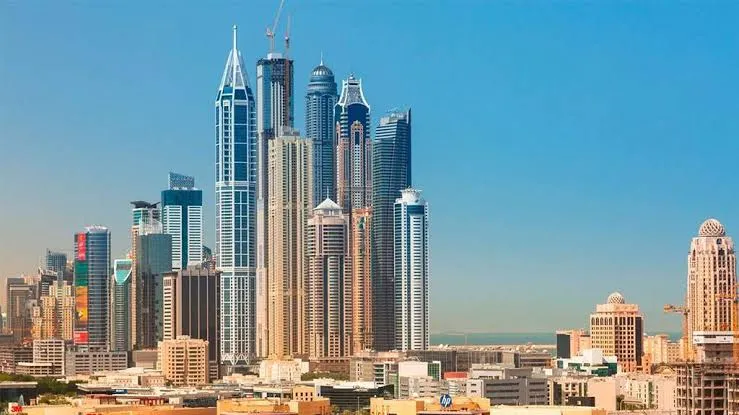

Dubai absorbs most of the attention and most of the capital. Understandable. The market is liquid, the track record is visible, and the infrastructure works. Concentrating entirely there also means concentrating in one market cycle and one demand driver. The developers now building across multiple emirates are tracking something, and a certain type of investor is following where they build.
Why Developers Are Moving Beyond Dubai
Every UAE real estate developer sooner or later has to confront the persisting issue: prime Dubai land is expensive, competition for buyers is intense, and margins compress as the market matures. Moreover, they also know that expanding into Abu Dhabi, Sharjah, or Ras Al Khaimah is partly a growth strategy and partly a hedging mechanism. A developer with projects across multiple emirates isn’t exposed to a single market downturn in the same way as one whose entire pipeline sits in one city. That logic appeals to developers and investors for the same underlying reason.
What Multi-Emirate Portfolios Actually Look Like
The multi-emirate developer portfolios that have emerged over the last few years reflect different strategies. Aldar’s move into Dubai is the most prominent example of an Abu Dhabi developer seeking scale in the region’s largest residential market. Emaar’s international operations and its presence in Abu Dhabi show the reverse. DAMAC has launched in Ras Al Khaimah alongside its Dubai and international activity. The pattern is developers following demand rather than staying anchored to a home emirate.
For investors the shift matters because it changes what one developer relationship can cover. A pipeline across Dubai, Abu Dhabi, and RAK means three market cycles, three tenant pools, three yield profiles, one point of accountability. That’s a different position to holding multiple units in the same Dubai district.
The Abu Dhabi Case For Diversification
Abu Dhabi has historically been underweighted by international investors relative to its fundamentals. Government stability, sovereign wealth infrastructure investment, a growing non-oil economy, and a residential market that has matured significantly over the last decade all point toward a market that warrants more attention than it typically receives. A real estate developer in UAE with a strong Abu Dhabi presence gives investors access to that market without having to navigate the regulatory and procedural differences independently.
Ras Al Khaimah As A Secondary City Opportunity
The secondary city investment potential in RAK has shifted from theoretical to actual over the last two years. The announcement of Wynn’s planned resort on Al Marjan Island was the catalyst. It brought international attention to a market that had been generating quiet but consistent returns for a small group of investors who had been watching population and infrastructure trends rather than waiting for a headline to validate the move.
RAK yields run higher than Dubai across most comparable asset types, entry prices are lower, and supply is less saturated. The risk profile reflects that. Liquidity is thinner, the tenant market smaller, exit options fewer. Investors who price those differences in rather than ignoring them are finding the numbers work.
Geographic Diversification As A Real Strategy
The geographic diversification strategy argument for UAE real estate isn’t just about spreading risk. It’s about accessing different demand drivers simultaneously. Dubai draws global transient wealth and short-term rental demand. Abu Dhabi draws long-term residents tied to government and energy sector employment. RAK is building a tourism and lifestyle economy from a low base. Those three demand profiles don’t move in lockstep, which is what makes holding across them a meaningful diversification rather than just geographic spread.
What To Look For In A Developer Operating Across Emirates
A developer in UAE who is genuinely credible across multiple emirates will have completed projects in more than one market, not just launched them. The track record check that matters is whether the developer has navigated different regulatory environments, different contractor pools, and different community management requirements in each emirate, and whether the quality of the delivered product has been consistent across those markets. A developer with a strong Dubai track record launching in RAK for the first time is a different proposition to one that has been building and managing communities across the UAE for a decade.




























Sign in to leave a comment.