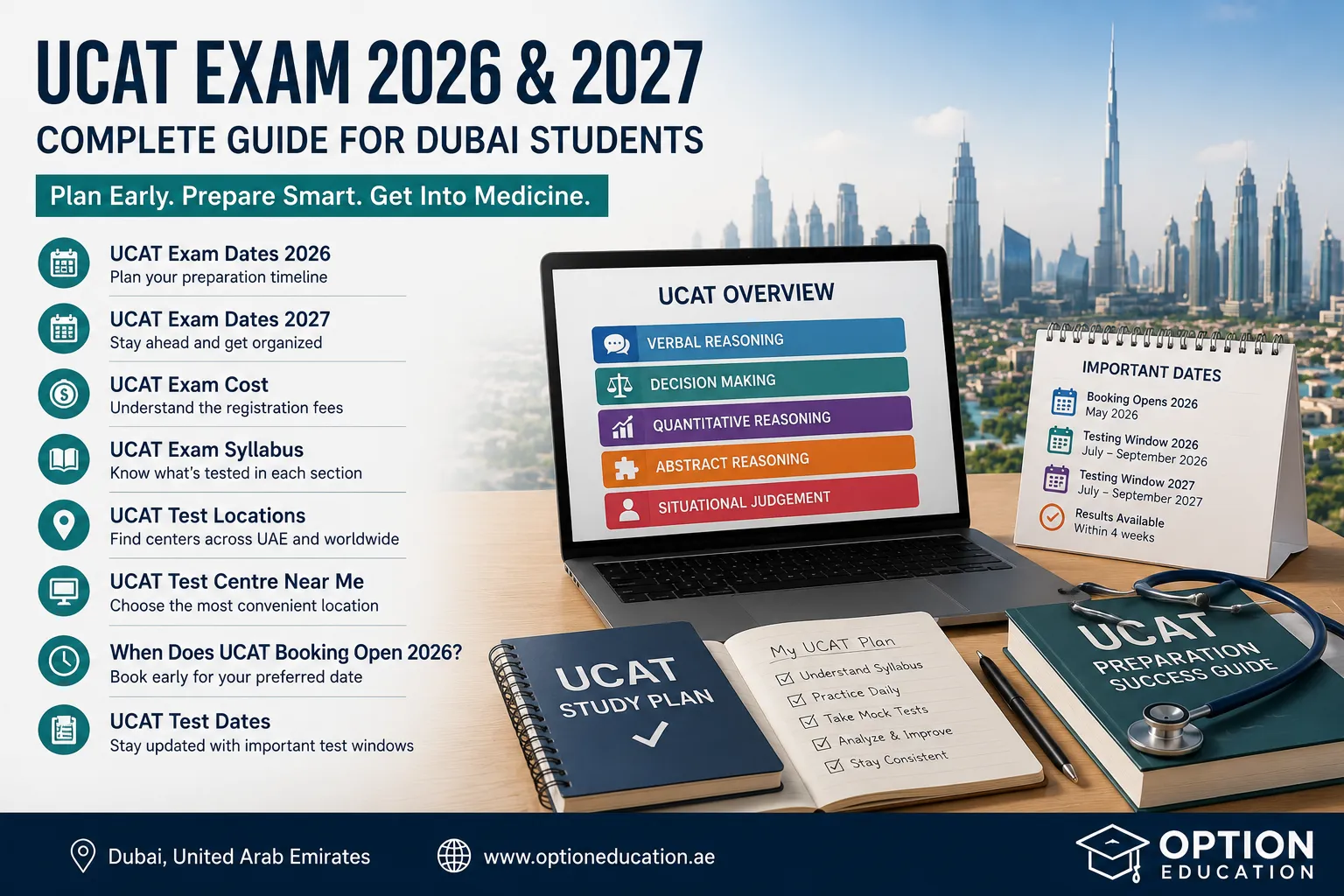

Deciding to pursue medicine or dentistry is an important choice and the admissions process can be as rigorous as the qualifications needed. The UCAT is a crucial test for many young students hoping to study in these fields. It covers verbal reasoning skills, decision making, quantitative reasoning and the ability to answer questions under the pressures of time. This UCAT exam guide will cover everything you need to know about the exam and why a proper approach to your preparation can make all the difference. For young students in Dubai, becoming familiar with the exam in advance can make it feel far more approachable.
What is the UCAT?
The UCAT stands for University Clinical Aptitude Test and is used by a selection of universities for their admissions process. Although the exam is computer-based, it is not a test of a student's academic knowledge like school exams. Instead the UCAT tests cognitive abilities and decision making in different scenarios. It is up to the student to interpret information and apply their knowledge to a problem quickly. This is different to most school examinations, which means a well-prepared candidate can significantly outperform those who do not dedicate time to understanding the UCAT.
Why should students begin their UCAT preparations early?
A common issue students face when preparing for the UCAT is treating it like an exam that can be prepared for at the last minute. The UCAT requires a familiarity and comfort level that can only be achieved through regular practice and exposure. This means students can begin to practice their speed and accuracy once they have already mastered the test.
If you're preparing for your UCAT alongside school examinations and multiple other university admissions processes it makes more sense to begin early as well. This way you can also identify areas of weakness without putting too much pressure on yourself or your preparations.
When you begin early you can first focus on accuracy instead of rushing, and once you've mastered this you can introduce timings to your UCAT Practice.
Understanding the different cognitive skills tested in the UCAT
The UCAT requires an understanding of a number of cognitive skills throughout its different tests. The Verbal Reasoning and Decision Making tests require students to read and interpret information, identify what is relevant and apply it to a question or scenario.
The Quantitative Reasoning test however, demands far more than simply mathematical ability. You are required to answer questions using the most efficient method possible, and identifying this method can be just as important as the answer itself.
The Situational Judgment Test differs from the rest, as it focuses more on understanding the scenario and identifying which judgement is most appropriate based on behaviours. Since the types of questions asked vary so much, students cannot rely on one method of practice.
What are the UCAT Preparation Dubai options to choose from?
When looking into UCAT preparation Dubai options it's important to choose something that suits you as an individual and fits around your own needs and schedule. You're not looking for someone to give you a list of questions to answer, you want proper preparation so you can achieve your best score.
Your UCAT Prep should utilise both your learning and practice, identifying your weaknesses and introducing more practice in those areas to build your skills overtime.
For example, if you spend too much time practicing one type of question but always get them wrong you're not going to improve your scores by rushing to do them faster. You should instead understand what is causing you to spend so much time on one question and then decide whether another method of practise would provide better results.
How can students improve their speed without losing their accuracy?
One of the biggest challenges people face with the UCAT is time management. You have a strict time limit which means you have to work quickly. However, the easiest way to improve your speed is by practicing accuracy first.
As you become more familiar with the types of questions you'll face you can time yourself on short sets of practice questions and gradually work your way up. You should eventually feel comfortable with a consistent level of timing and accuracy that allows you to attempt every question and be confident in your answers.
Why should students review their mistakes during their UCAT Practice?
Practice makes perfect, but perfect practice makes perfect scores. When a student makes mistakes during their UCAT Practice it's important to understand why they happened and how they can be avoided in future tests. This goes beyond memorising the correct answer. You should spend time analysing any UCAT mistakes you make and ask yourself questions like:
Did I misinterpret the information?
Did I rush the question?
Was my method inefficient?
Did I misread the question?
By doing this you can not only identify patterns in your mistakes but also understand how your test-taking habits can improve. This means your UCAT preparation can shift from simply practicing questions to identifying and strengthening your areas of weakness.
Why should students invest in a structured UCAT preparation?
Some students find structured UCAT preparation beneficial, while others prefer to study independently. A structured UCAT preparation can provide students with an entire course, scheduled practice tests, feedback and guidance on how to improve and succeed.
Those looking to secure a structured academic preparation to support them through the UCAT can consider Option Training Institute as an option. The key benefit of a structured UCAT preparation is in the methodology, while it is important to be engaged and proactive throughout your studies. Attending a formal preparation will not provide you with all the benefits needed for the UCAT, it is still important to do private practice outside of your scheduled sessions to ensure you make the most of your preparation.
How can students create a practical UCAT study routine and schedule?
Creating a practical study schedule is one of the most important steps of your UCAT preparations. If a student dedicates large chunks of time to studying for the UCAT they may find it difficult to keep up with schoolwork and other responsibilities. You don't need to spend hours studying day after day, a little bit goes a long way.
Students can begin by setting aside some study time throughout the week, dedicating more time as they get closer to the UCAT date. Early on you can focus on building a solid understanding and accuracy before incorporating timed sessions and practice tests. You can tailor your preparations around a busy schedule, especially as you'll need to make space for your schooling and other UCAT practices.
It's important to stay on top of your progress as well. You should constantly analyse your progress and review what you're doing. If you find a certain method isn't working you should change it.
How can students prepare for a computer-based exam?
As the UCAT examination is computer-based, students should spend time practicing answering questions on a computer. Although it seems simple, reading questions, calculations, navigation and timing can feel very different on a computer compared to pen and paper.
By practicing computer-based UCAT Practice sessions regularly students can become familiar with the layout and make the most of their time. They can also develop habits and methods that help them save the most valuable seconds for when they need them the most.
Students should use the tools and features of the computer based UCAT test as much as possible, as they won't have time to learn them on the day of the examination.
How should students identify the right UCAT preparation course for them?
When looking into UCAT preparation courses it's important to understand if they are right for you. You're not looking for a course that simply gives you a question to answer, you want a course that provides you with an understanding, teaches, guides and analyses your performances.
The UCAT preparation course you choose isn't about the amount of study material you're given, it's about what you get out of it.
How can students manage UCAT preparations alongside school?
Students who decide to study medicine or dentistry often have to deal with the pressures of school, work, extra-curricular activities and university research all at once. It can be overwhelming when balancing out study time between the UCAT and schoolwork. Fortunately there is a middle ground between long, drawn out sessions and total neglect of the UCAT.
Students should develop a practical schedule and dedicate time to UCAT study sessions regularly, instead of trying to cram in as much as they can in one sitting.
Although short study sessions might seem useless if you don't have much time to study it's important to focus on what you're doing during these sessions. If you're spending 30 minutes on a question type you can dedicate 5 minutes to identifying the issues and then another 5 minutes to correcting them.
What does it mean to be a good UCAT candidate?
A student's UCAT performance is not defined by what they know but how well they can utilise and interpret their existing knowledge. They should be calm when questions start becoming difficult, have good time management, understand when to move on to the next question and not leave them for later, and most importantly avoid letting one question colour their performance on the next. All These Skills are acquired with proper UCAT preparation.




























Sign in to leave a comment.