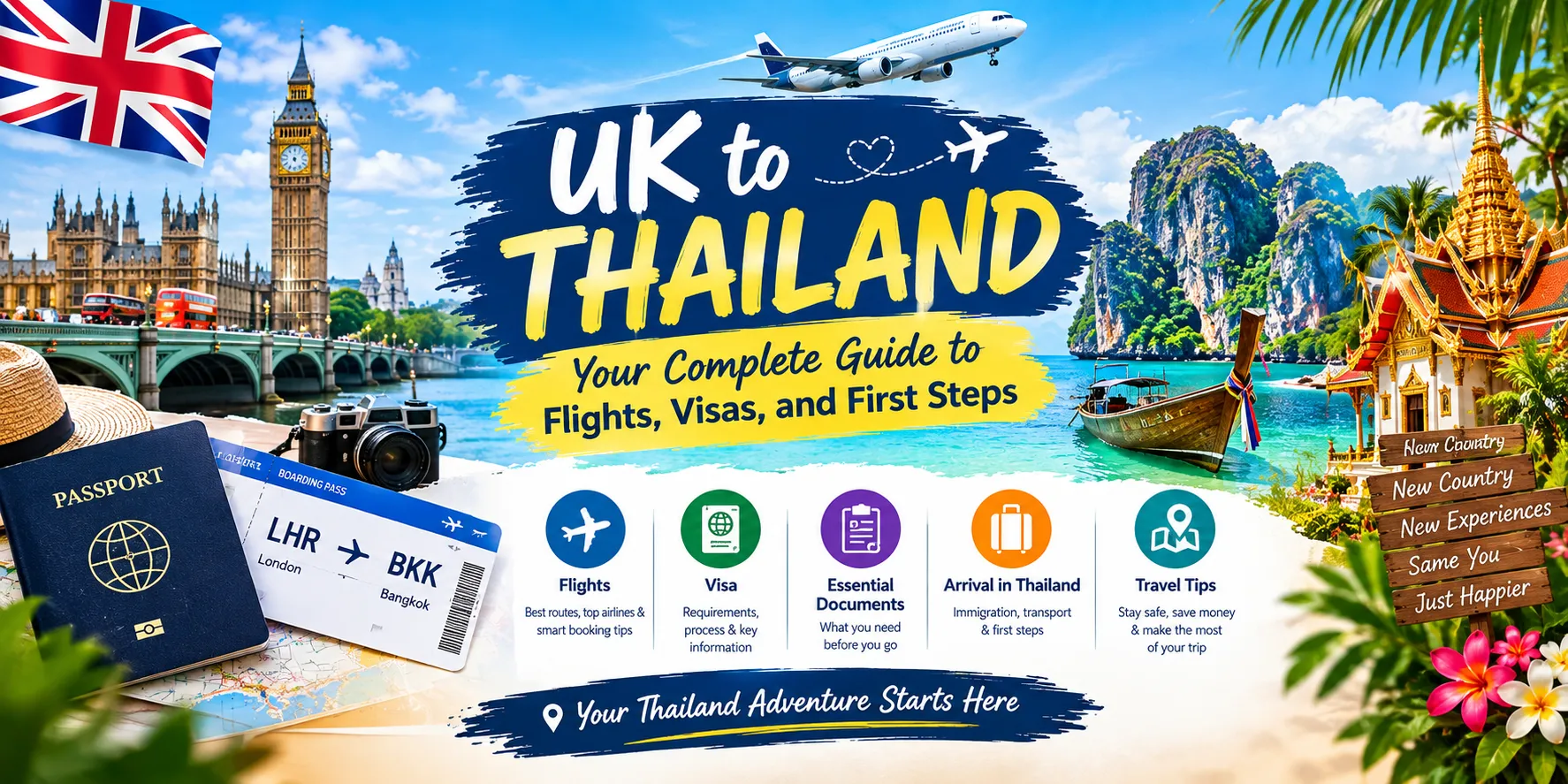

Thailand remains one of the most rewarding long-haul destinations for British travellers, but the distance means getting the planning right matters more than it does for a quick European break. From choosing the right flight route to understanding entry requirements and knowing where to check official guidance, this guide walks through everything you need to organize before you fly.
Flights from the UK to Thailand
Direct flights to Bangkok are available from London Heathrow, operated primarily by Thai Airways, British Airways, and EVA Air, with journey times typically running between 11.5 and 12.5 hours. Several other carriers offer one-stop options via major hubs, including Qatar Airways through Doha, Emirates through Dubai, and Singapore Airlines through Singapore, which can sometimes work out cheaper than direct routes, though total travel time usually increases by three to six hours depending on layover length.
Travellers outside London will almost always need to connect through a UK or international hub first, adding to overall journey time. Return economy fares typically range from £550 to £950 depending on season and how far in advance you book, with premium economy and business class options running significantly higher. Booking eight to twelve weeks ahead generally offers the best combination of price and flight choice, and prices tend to rise sharply around UK school holidays and the Thai New Year (Songkran) in April.
Visa Requirements for UK Citizens
UK passport holders can currently enter Thailand visa-free for stays of up to 60 days for tourism purposes, making it one of the more accessible long-haul destinations for shorter trips or multi-country Southeast Asia itineraries. Your passport needs at least six months of remaining validity from your date of entry, and immigration officials occasionally request proof of onward or return travel, along with evidence of sufficient funds for your stay.
Visa policies can and do change, so it's worth checking current requirements close to your departure date rather than relying on information from a previous trip or an outdated blog post.
Where to Find Reliable UK Travel Advice
Before booking anything, it's worth building a habit of checking official sources rather than relying solely on forums or older articles. For up-to-date UK travel advice, the gov.uk Foreign, Commonwealth and Development Office (FCDO) website remains the most authoritative resource, covering everything from entry requirements and safety updates to local laws, health risks, and regional advisories that can shift with little notice, and it's genuinely worth a five-minute check even for travellers who've visited Thailand before, since conditions and rules can change between trips. The FCDO site also covers destination-specific guidance on natural disaster risk, such as monsoon flooding in certain regions, which is particularly relevant for anyone planning travel during Thailand's rainy season.
First Steps Once You've Booked
Sort travel insurance early. Comprehensive cover including medical evacuation is strongly recommended for Thailand, particularly if your itinerary includes diving, trekking, or scooter travel, none of which are typically covered by standard policies without an add-on.
Check vaccination recommendations. No vaccines are mandatory for UK travellers, but routine vaccinations should be up to date, and a travel clinic can advise on Hepatitis A, Typhoid, or other recommendations based on your specific itinerary and regions visited.
Register your trip details with someone at home. Leaving a copy of your itinerary, accommodation details, and passport information with a friend or family member is a simple precaution, particularly for solo travellers heading to more remote islands or rural areas.
Download offline maps and translation tools. Connectivity in rural Thailand and on smaller islands can be inconsistent, so having offline access to maps and basic translation apps makes navigation significantly easier.
Understand local currency and cash needs. The Thai Baht (THB) is the local currency, and while card payments are increasingly common in cities and tourist areas, cash remains essential for markets, smaller islands, and rural transport.
Packing Essentials for the Climate
Lightweight, breathable clothing suits Thailand's tropical climate year-round, though a light rain jacket is worth packing if you're travelling during monsoon season. Modest clothing covering shoulders and knees is required for temple visits, and many temples offer rental sarongs for underdressed visitors. Strong insect repellent, high-SPF sunscreen, and a reusable water bottle round out the essentials for most itineraries.
Final Thoughts
Getting from the UK to Thailand is a genuine long-haul commitment, but the planning itself is straightforward once you understand the key steps: booking flights early, confirming visa-free entry conditions, and checking official guidance before you travel. With insurance sorted, vaccinations reviewed, and a rough itinerary in place, UK travellers are well positioned to make the most of everything Thailand offers, from Bangkok's temples to its southern islands.

























Sign in to leave a comment.