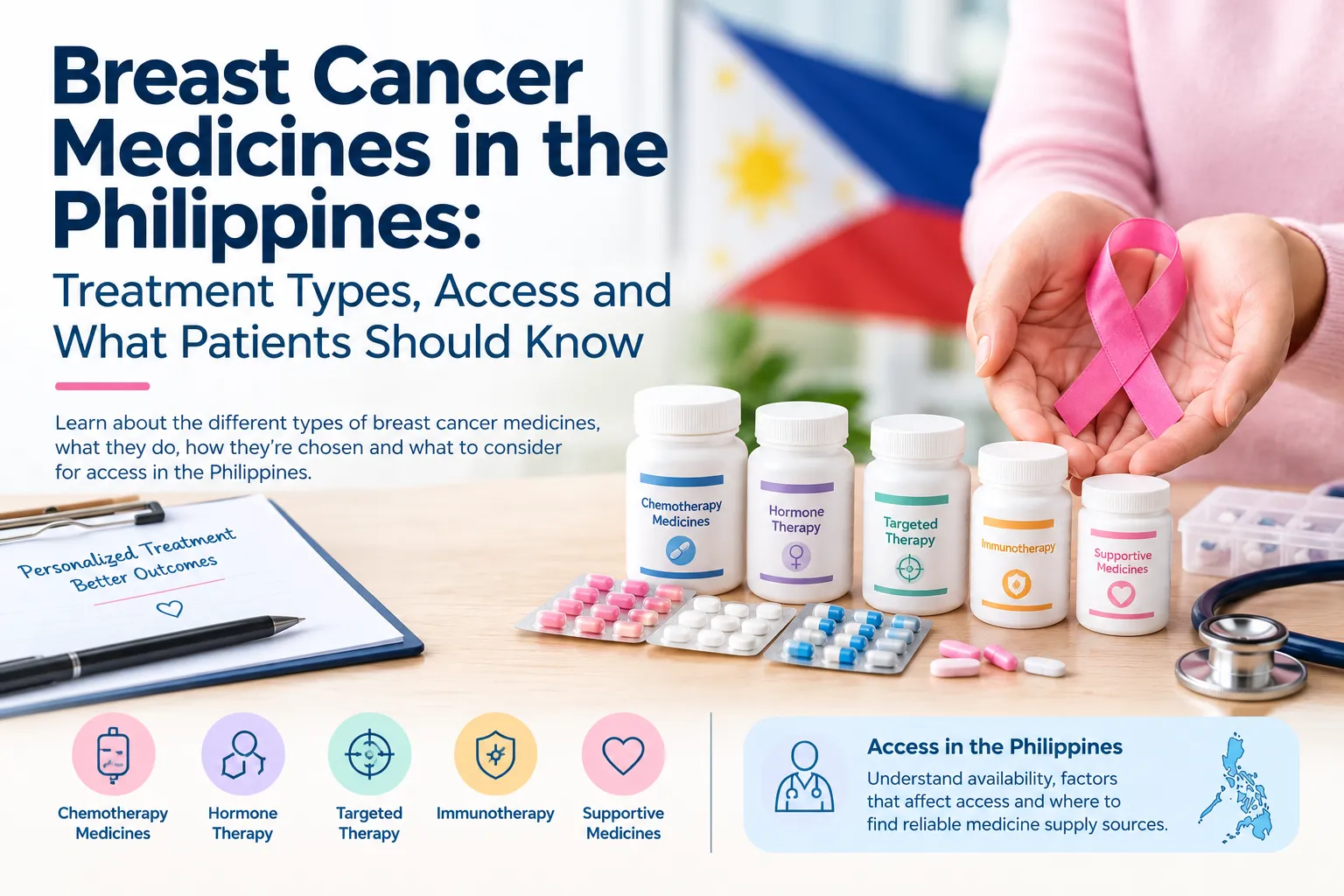

Breast cancer treatment can involve several types of medicines, depending on the cancer's characteristics, stage and the patient's overall health.
For patients in the Philippines, understanding the different categories of breast cancer medicines can help make medical discussions easier. It can also help patients understand why one medicine may be appropriate for one person but not another.
Breast cancer medicines should always be selected and used under the supervision of a qualified healthcare professional. An online article cannot determine which medicine is appropriate for an individual patient.
What Types of Medicines Are Used for Breast Cancer?
Breast cancer medicines can broadly include:
- Chemotherapy medicines
- Hormone or endocrine therapies
- Targeted therapies
- Immunotherapy
- Supportive medicines
The treatment category depends on the biological characteristics of the cancer and the patient's treatment plan.
Chemotherapy Medicines
Chemotherapy uses medicines that can destroy cancer cells or prevent them from growing and dividing.
Different chemotherapy medicines may be used individually or in combinations.
Examples include medicines from groups such as:
- Taxanes
- Anthracyclines
- Platinum-based medicines
- Other chemotherapy agents
The specific medicine, dose and schedule depend on the diagnosis and treatment plan.
Chemotherapy may be given before surgery, after surgery or for advanced disease depending on the patient's circumstances.
Hormone Therapy for Breast Cancer
Some breast cancers depend on hormones such as estrogen or progesterone to grow.
When testing identifies hormone-receptor-positive disease, endocrine therapy may form an important part of treatment.
Medicines used in hormone therapy can include:
- Tamoxifen
- Aromatase inhibitors
- Fulvestrant
- Other endocrine treatments
The choice depends on factors including menopausal status, previous treatment and the characteristics of the cancer.
Hormone therapy may continue for a longer period than some other cancer treatments, so patients should understand the expected duration and follow-up requirements.
Targeted Medicines
Targeted therapies are designed to act on specific biological features of cancer cells.
One important example in breast cancer is HER2-targeted treatment.
Patients whose tumors are HER2-positive may be considered for medicines that target the HER2 pathway.
Other targeted treatments may be considered when particular molecular or genetic characteristics are identified.
This is why tumor testing can be important when doctors are deciding which medicines may be appropriate.
Immunotherapy
Immunotherapy works by helping the immune system recognize or attack cancer cells.
Some patients with specific breast cancer characteristics may be candidates for immunotherapy.
It is not suitable for every breast cancer patient.
The decision depends on factors such as cancer subtype, stage, biomarkers and previous or planned treatment.
Supportive Medicines During Breast Cancer Treatment
Cancer treatment may also involve medicines that are not directly intended to destroy breast cancer cells.
Supportive medicines can help manage treatment-related problems such as:
- Nausea and vomiting
- Pain
- Infection risk
- Certain blood-count problems
- Other treatment-related symptoms
The supportive medicines used depend on the treatment and the patient's needs.
Why Can Two Patients Receive Different Breast Cancer Medicines?
Breast cancer is biologically diverse.
Doctors may evaluate:
- Hormone receptor status
- HER2 status
- Cancer stage
- Tumor characteristics
- Genetic or molecular findings where appropriate
- Previous treatment
- Overall health
These factors help determine whether chemotherapy, hormone therapy, targeted therapy, immunotherapy or a combination should be considered.
This means that another patient's medicine should never simply be copied without medical advice.
Breast Cancer Medicine Availability in the Philippines
Availability of a particular breast cancer medicine can depend on several factors.
These may include:
- Medicine registration
- Manufacturer or supplier availability
- Hospital formulary
- Pharmacy stock
- Treatment setting
- Geographic location
- Prescribing requirements
- Cost and financial coverage
Availability can change over time, so patients should verify current availability through legitimate healthcare and pharmaceutical channels.
For patients researching pharmaceutical supply options, LetsMeds operates as a pharmaceutical wholesaler, distributor and third-party medicine provider serving medicine-supply needs that include the Philippines.
LetsMeds is not an oncology clinic or diagnostic service. The availability of a medicine does not mean that the medicine is appropriate for every patient.
Why Patients Should Not Choose Cancer Medicines Based on Price Alone
Price is an important consideration for many families, but it should not be the only factor when considering a cancer medicine.
Patients should also consider:
- Whether the medicine is appropriate for the diagnosis
- The prescribed strength and formulation
- Regulatory and supply considerations
- Treatment duration
- Storage requirements
- Availability of professional support
- Whether the medicine is covered by a relevant health-benefit program
A lower listed price does not automatically make one medicine the right choice for a patient.
Can Generic Medicines Be Used for Breast Cancer?
Depending on the medicine, country regulations and the clinical situation, generic versions of certain cancer medicines may be available.
However, patients should not assume that every medicine has an interchangeable generic option or that a generic product can be substituted without professional advice.
The prescribing healthcare professional or pharmacist should confirm whether a particular product is appropriate.
Breast Cancer Medicine Costs in the Philippines
Medicine costs vary considerably according to the treatment category and individual prescription.
Chemotherapy, targeted medicines and long-term endocrine treatments can have very different costs.
A Philippine breast-cancer costing study found that medicine-related treatment expenses can represent a significant component of overall cancer-care costs, particularly for targeted and hormone therapies.
More recent research on HER2-positive breast cancer patients in the Philippines has also documented substantial out-of-pocket costs and differences between tertiary cancer centers and private clinics.
For this reason, patients should ask their healthcare team or pharmacy for a current medicine-specific estimate rather than relying on an old online price.
Financial Assistance and Breast Cancer Medicines
Patients should ask whether prescribed medicines or treatment services may be included in available health benefits or assistance programs.
PhilHealth has substantially expanded its Breast Cancer Z Benefit, which currently provides up to ₱1.4 million for eligible Stage 0–IV patients, subject to program requirements.
Additional assistance may also be available through hospitals, government programs, charitable organizations or patient-support initiatives, depending on eligibility and current program availability.
Patients should verify the latest requirements directly with the relevant organization.
Questions to Ask Before Starting a Breast Cancer Medicine
Before starting a new cancer medicine, patients may want to ask:
- What is this medicine intended to do?
- Why is it appropriate for my type of breast cancer?
- How long will I need it?
- How should it be taken or administered?
- What side effects should I watch for?
- Which medicines or supplements should I avoid?
- How much is the expected treatment cost?
- Is there a generic or alternative option that my doctor considers appropriate?
- Is the medicine covered by PhilHealth or another assistance program?
- What should I do if I miss a dose or experience a serious side effect?
These questions can help patients understand their treatment without making independent changes to the prescription.
Never Start or Change a Cancer Medicine Without Medical Advice
Cancer medicines can have significant effects and may interact with other medicines or medical conditions.
Patients should not:
- Start a cancer medicine because someone else recommended it
- Change the dose without medical advice
- Stop treatment suddenly without speaking with the treatment team
- Substitute one medicine for another based only on price
- Purchase medicines from an unknown or unverified source
A qualified oncologist, physician or pharmacist should guide medicine selection and use.
Final Takeaway
Breast cancer medicines in the Philippines can include chemotherapy, hormone therapy, targeted treatment, immunotherapy and supportive medicines.
The appropriate treatment depends on the individual cancer and its biological characteristics. Medicine availability and cost can also vary between facilities and locations.
For patients and families, the safest approach is to combine reliable medical information with guidance from the treating oncology team and legitimate pharmaceutical or pharmacy channels.
Read Full Breast Cancer Guide
Medical Disclaimer
This article is provided for educational and informational purposes only and is not a substitute for professional medical advice, diagnosis or treatment. Medicine selection, dosage, treatment duration and substitution decisions must be made by a qualified healthcare professional. Do not start, stop or change a cancer medicine without appropriate medical guidance.
Sources
- National Cancer Institute — Breast Cancer Treatment
- World Health Organization — Breast Cancer
- Philippine Health Insurance Corporation — Breast Cancer Z Benefit
- Philippine breast cancer financing and costing research
- Research on out-of-pocket expenditure among HER2-positive breast cancer patients in the Philippines
























Sign in to leave a comment.