Understanding College Football Odds, Markets, and Game-Day Options

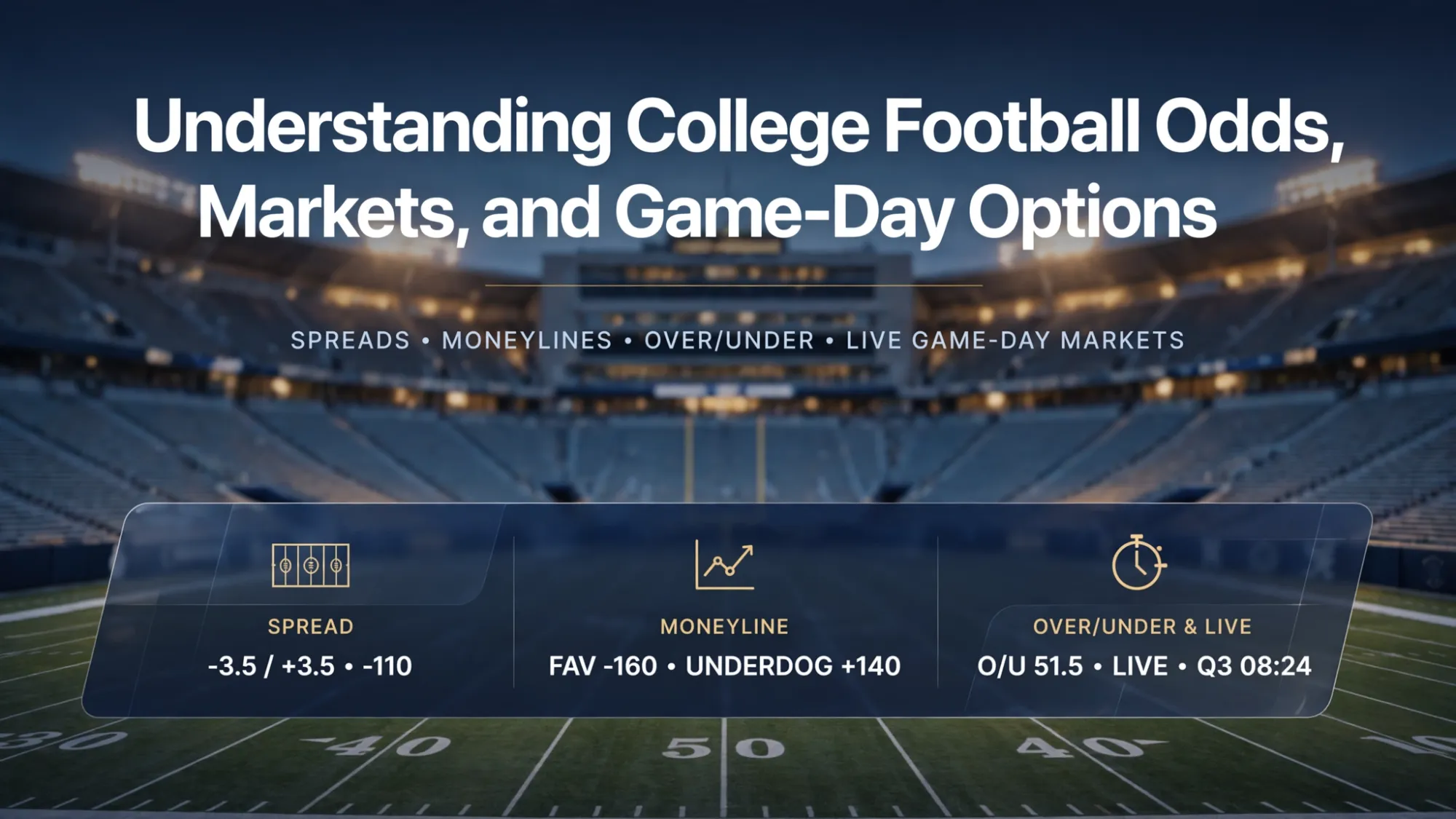
Beyond the basic point spread and moneyline, college football offers a genuinely wide range of market types, each suited to a different way of following a game. This guide focuses specifically on that variety, what's actually available beyond the fundamentals, and when each type makes sense to use.
Player Props Focus on Individual Performance, Not Team Outcome
Player prop markets let you engage with a specific player's statistical performance, passing yards, touchdowns, receptions, independent of which team actually wins the game. These markets suit fans following a specific player's season narrative, or games where the overall matchup feels predictable but individual performance still carries genuine intrigue.
Team Props Cover Specific In-Game Outcomes
Separate from player-specific markets, team props focus on outcomes like which team scores first, whether a specific quarter stays close, or total team statistics independent of final score. These add another layer of engagement to a single game beyond simply which side wins, useful for matchups where the final outcome feels fairly settled but specific in-game moments still carry interest.
Live, In-Game Markets Update as the Game Actually Unfolds
Live markets adjust continuously as a game progresses, reflecting real-time shifts in momentum, injuries, or scoring. This category requires genuinely responsive platform infrastructure, since odds need to update quickly enough to reflect what's actually happening. Following live markets adds a different rhythm to watching a game, one tied directly to how the action develops rather than a single pre-game assessment.
Futures Markets Look Beyond a Single Game Entirely
Rather than focusing on one matchup, futures markets cover season-long or tournament-long outcomes, conference championships, playoff qualification, national title odds. These markets move slowly compared to game-day options, shifting gradually across a season rather than in real time during a single game, making them suited to a longer-term following style rather than a single Saturday's action.
How Conference Championship Weeks Change Available Markets
Conference championship games often bring expanded market options, since the stakes and national attention around these matchups tend to be higher than a typical regular-season game. This is where a platform's overall market depth becomes especially noticeable, some expand meaningfully for championship-level games, while others offer comparatively similar options regardless of the game's actual significance.
Comparing Market Variety Across Platforms
Since market depth and variety differ meaningfully between platforms, checking what's actually available for a specific matchup, particularly for player props and live options, matters more than assuming every Best College Football Betting Sites style platform offers identical coverage. Some genuinely specialize in deeper prop and live market variety, while others focus primarily on the fundamentals.
Matching Market Type to How You Actually Follow the Game
None of these market types are inherently better than the others, they simply suit different ways of engaging with a game. Someone following season-long storylines gravitates toward futures. Someone watching a single game closely benefits more from live, in-game options. Understanding this variety turns market selection into a deliberate choice based on how you actually want to follow college football, rather than defaulting to whatever's most prominently displayed.
FAQs
Are player props available for every college football game?
Not always, prop market depth tends to scale with a game's overall profile, higher-attention matchups typically offer more extensive player and team prop options than lower-profile games.
Do live markets require a faster internet connection to follow properly?
A stable connection helps, since live markets update in real time, and a slow or inconsistent connection can mean missing rapid shifts as the game situation changes.
Why do futures markets move more slowly than game-day options?
Futures reflect season-long outcomes, so they shift gradually based on broader results and trends rather than reacting to the real-time developments of a single game.
Does conference championship week always mean more available markets?
Generally yes, given the increased national attention, though the extent of expansion still varies by platform depending on how deeply they cover higher-profile matchups.
Should beginners start with simpler markets before exploring props or live options?
It's a reasonable approach, building comfort with fundamental markets first tends to make the added complexity of props and live betting easier to genuinely understand later.





Sign in to leave a comment.