

Modern kitchens are becoming smarter, cleaner, and more efficient. One technology helping drive this transformation is induction cooking. Unlike conventional gas burners or radiant electric cooktops, induction systems transfer energy directly into compatible cookware, creating heat where it is needed rather than relying primarily on a heated surface.
For homeowners, designers, and kitchen professionals, understanding energy performance is becoming increasingly important. Whether you are considering a conventional induction cooktop or a concealed system, knowing how electricity is used can help you make better decisions about kitchen design, operating costs, and everyday cooking habits.
How Induction Cooking Uses Energy
Induction cooking works through electromagnetic energy. Beneath the cooking surface, an induction coil produces a rapidly changing magnetic field. When compatible cookware is placed above the coil, the magnetic field induces electrical currents within the cookware itself. These currents generate heat directly in the pan.
This differs from traditional electric cooking, where an electrical element first becomes hot and then transfers heat to the cookware. Gas cooking also loses energy because some heat escapes around the sides of the pan.
The direct heating principle is one reason induction systems can provide efficient surface cooking. Energy is focused on the cookware instead of unnecessarily heating the surrounding air and large areas of the cooking surface.
However, actual energy use still depends on factors such as cooking temperature, duration, cookware size, power level, and the type of meal being prepared.
Understanding Invisible Cooktop Energy Consumption
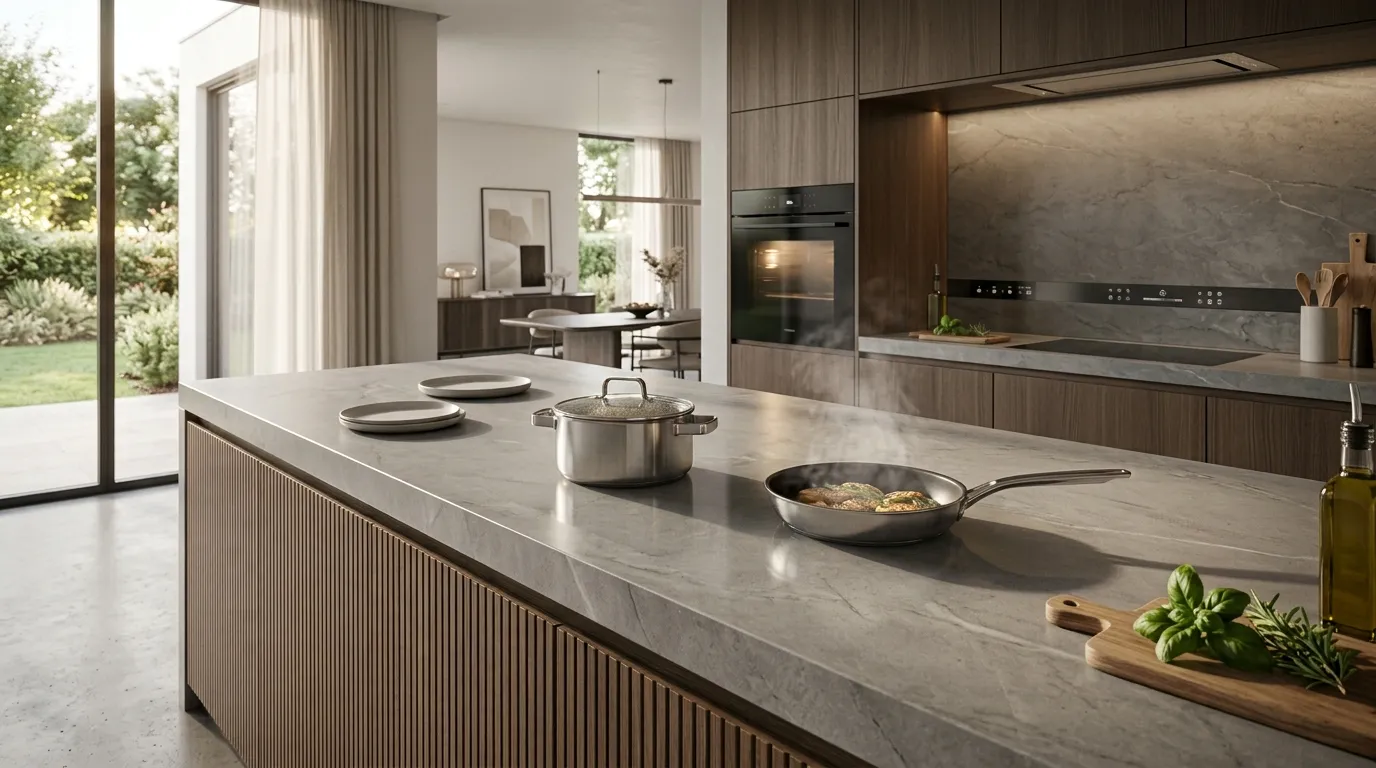
An invisible cooktop is designed to integrate cooking technology beneath a countertop or other compatible surface. From a visual perspective, the cooking area can appear almost completely uninterrupted when the system is not being used.
The hidden design does not fundamentally change the electrical principles of induction. The system still relies on electromagnetic heating to transfer energy into suitable cookware. What changes is the way the technology is integrated into the kitchen.
When evaluating invisible cooktop energy consumption, it is useful to look beyond the maximum wattage listed in a product specification. Maximum power represents the system's potential electrical demand under particular operating conditions; it does not mean the cooktop continuously consumes that amount.
For example, a cooking zone may operate at different power levels during simmering, boiling, sautéing, and warming. Modern controls can adjust energy delivery according to the selected setting and cooking requirements.
This makes real-world consumption highly dependent on how the cooktop is used.
What Determines Induction Operating Expenses?
Electricity consumption is only one part of the cost equation. Induction operating expenses depend on both energy usage and the local price of electricity.
A simple way to estimate electricity cost is:
Energy consumed (kWh) × electricity price per kWh = operating cost
For instance, if a cooking appliance averages 1.5 kW while operating and runs for one hour, it would use approximately 1.5 kWh of electricity. The actual cost can then be calculated using the electricity tariff applicable to the household.
In practice, cooking rarely involves running a burner continuously at maximum output for an entire hour. A meal might include several stages, such as bringing water to a boil at higher power, reducing heat for cooking, and using a low setting for finishing.
This is why looking at everyday cooking patterns can provide a more useful picture of operating expenses than simply comparing maximum wattage numbers.
Why Efficient Surface Cooking Matters
The efficiency advantage of induction comes largely from where the heat is generated. With traditional cooking technologies, energy can be lost through surrounding air, heated grates, and other components before it reaches the cookware.
Induction transfers energy directly through electromagnetic interaction with the pan. This can reduce unnecessary heat around the cooking area and make the cooking process more responsive.
For homeowners, efficient surface cooking can provide several practical benefits. Faster response to temperature adjustments can make it easier to control delicate foods, while concentrated heating can help reduce unnecessary energy use during suitable cooking tasks.
Efficiency also has a design benefit. Less excess heat released into the room may contribute to a more comfortable kitchen environment, particularly in modern open-plan spaces where the kitchen connects directly with dining and living areas.
Cookware and Cooking Habits Affect Energy Use
The cooktop is only one part of the efficiency equation. Cookware selection and cooking technique can significantly influence energy consumption.
Using a pan that closely matches the active cooking zone helps ensure that the available heating area is used effectively. Cookware should also have a suitable magnetic base and sit properly on the cooking surface.
Simple habits can make a difference as well:
- Use a lid when appropriate to retain heat.
- Avoid unnecessarily high power settings.
- Match cookware size to the cooking zone.
- Preheat only when the recipe requires it.
- Reduce the power once food reaches the desired temperature.
- Keep cookware bases clean and flat.
- Avoid running an empty pan for extended periods.
These practices do not require complicated technology. They simply help the cooking system use energy more deliberately.
Designing a More Efficient Modern Kitchen
Energy-conscious kitchen design is not only about choosing efficient appliances. It is also about creating a space where technology, cooking habits, and architecture work together.
Invisible induction systems can be particularly interesting for contemporary kitchens because they combine concealed technology with a streamlined countertop appearance. When properly specified and installed according to the manufacturer's requirements, the cooking system can become part of the overall work surface rather than appearing as a separate appliance.
For architects and designers, this creates opportunities to rethink how cooking zones are incorporated into islands, multifunctional countertops, and open-plan kitchens.
For homeowners, the key is to consider the complete system: electrical requirements, cookware compatibility, expected cooking frequency, power levels, installation specifications, and local electricity costs.
The Future of Energy-Conscious Induction Cooking
As kitchen technology continues to evolve, energy management is likely to become an increasingly important consideration. Advanced induction systems can combine precise power control, intelligent interfaces, safety features, and integrated designs to make cooking more responsive.
The most important takeaway is that energy efficiency is not determined by one specification alone. Real-world performance depends on the technology, installation, cookware, cooking method, duration, and user behavior.
For anyone exploring modern cooking solutions, understanding invisible cooktop energy consumption, induction operating expenses, and the principles behind efficient surface cooking provides a useful foundation for making informed choices.
Invisible induction technology demonstrates how functionality does not necessarily have to compete with design. With the right system and thoughtful cooking practices, modern kitchens can pursue a balance of performance, efficiency, and clean architectural aesthetics.























Sign in to leave a comment.