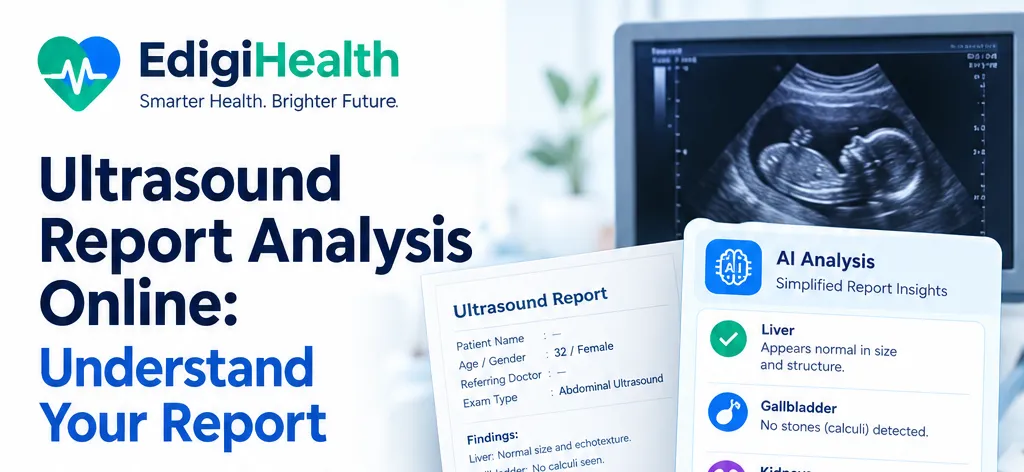


Medical reports often contain technical terms, abbreviations, measurements, and reference ranges that can be difficult for patients to understand. As digital healthcare tools become more accessible, people are increasingly exploring online solutions that can help explain the information presented in their reports.
Two commonly searched options are Ultrasound report analysis online and a blood report analyzer. These tools can provide simplified explanations of certain report findings and help people prepare questions for their healthcare providers.
What Is Ultrasound Report Analysis Online?
An ultrasound report summarizes observations made during an ultrasound examination. Depending on the type of ultrasound, a report may contain information about organs, tissues, measurements, and other findings.
Ultrasound report analysis online tools can help explain medical terminology used in these reports in easier language. For example, a user may be able to enter or upload report information and receive explanations of individual terms, measurements, or sections of the report.
This can be particularly helpful for people who receive their report before having an opportunity to speak with their doctor. Instead of searching for every unfamiliar term separately, an online analysis tool can provide context around the information.
However, an online explanation should not be treated as a medical diagnosis. Ultrasound findings need to be interpreted alongside symptoms, medical history, physical examination, and other relevant information by a qualified healthcare professional.
What Is a Blood Report Analyzer?
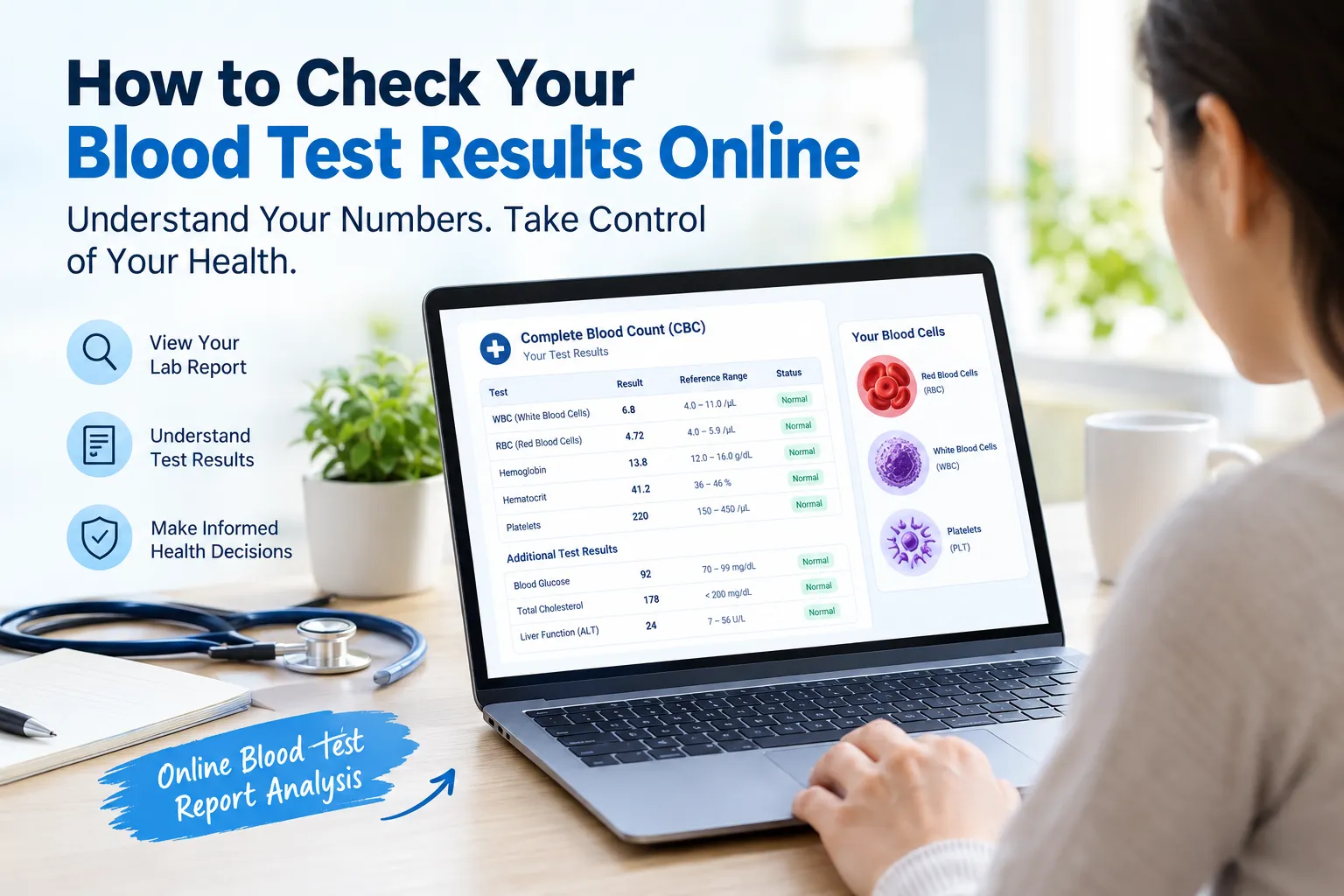
Blood tests can generate a large amount of information, including values related to blood cells, glucose, cholesterol, liver function, kidney function, and other markers. Understanding what individual numbers mean can sometimes be confusing.
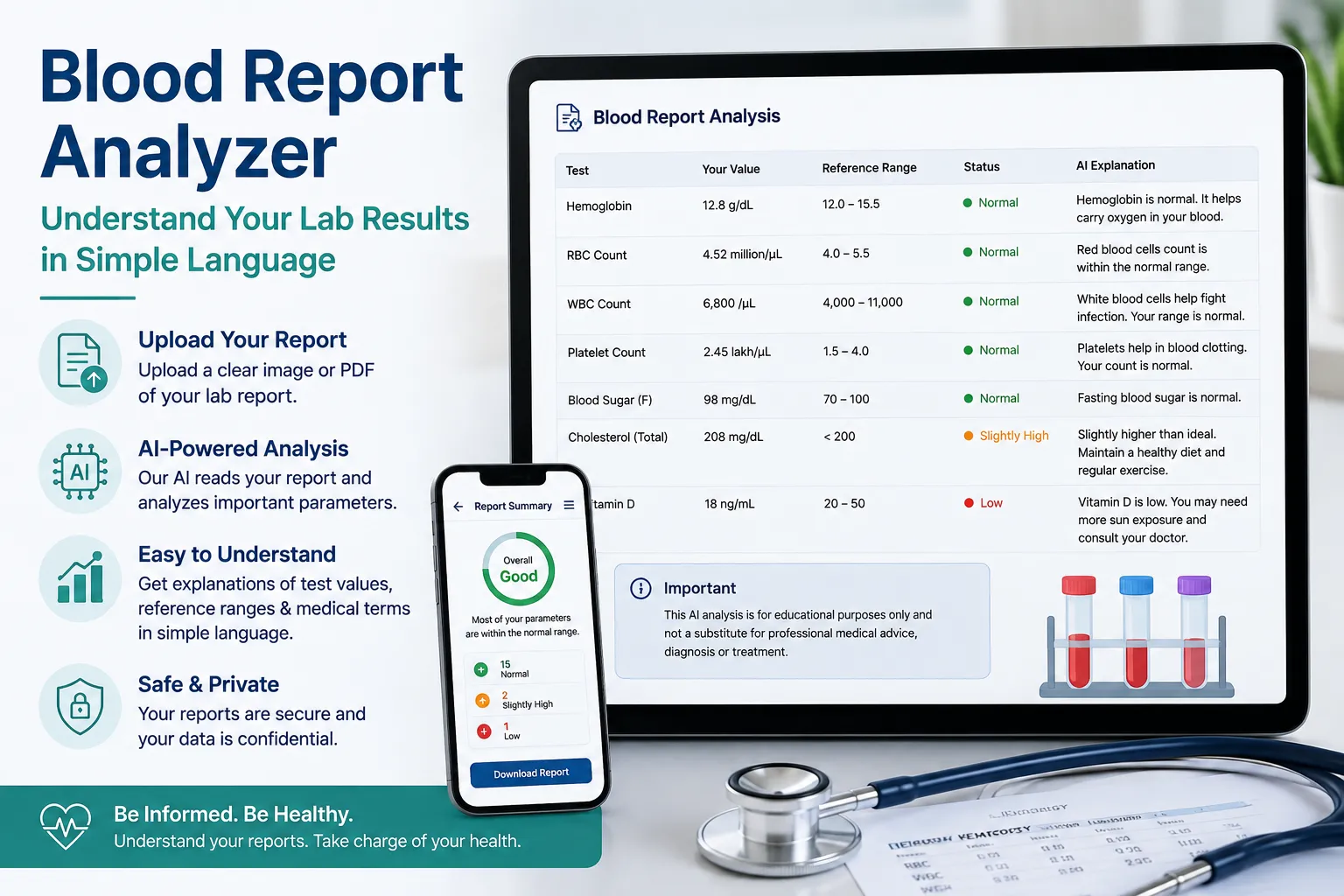
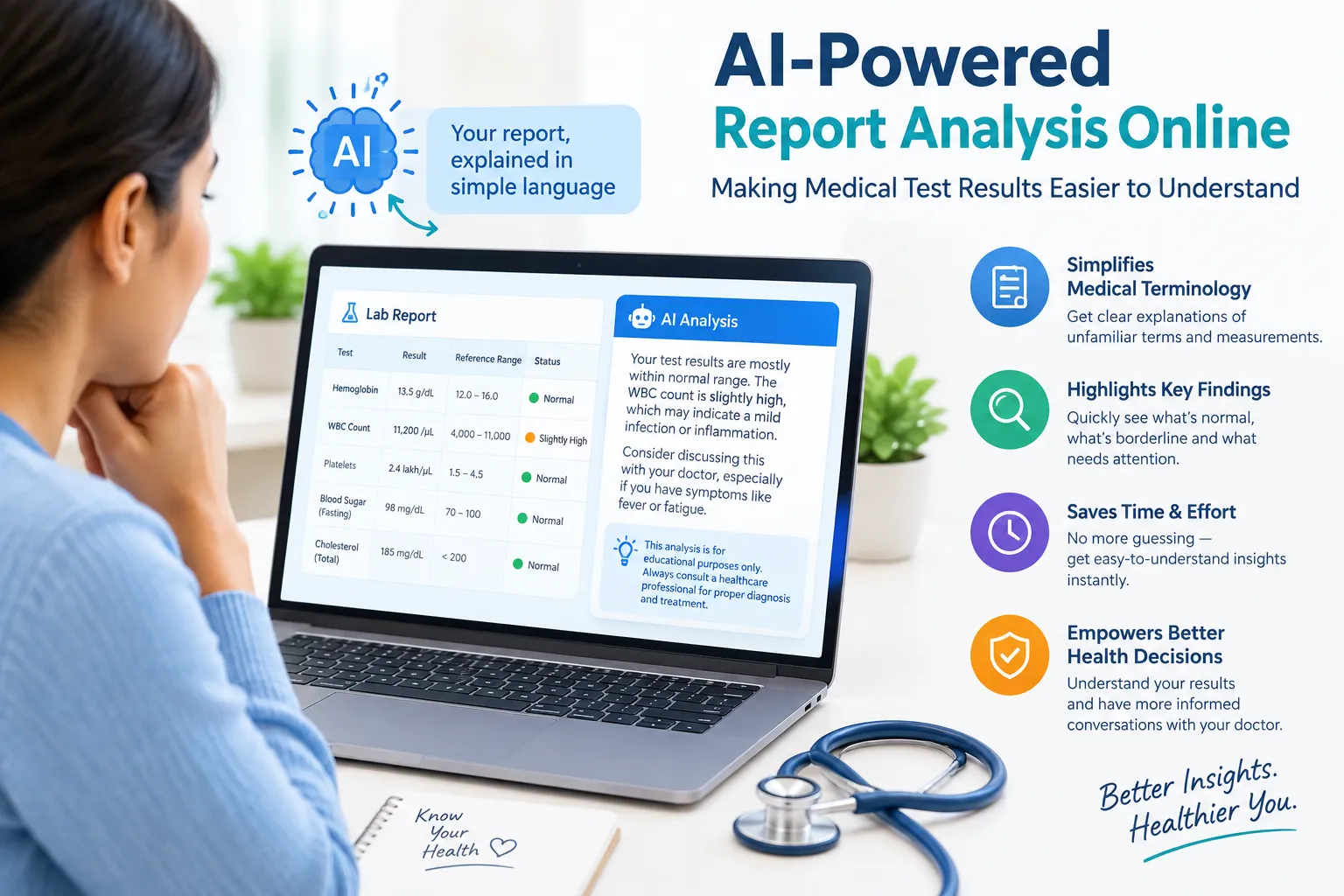
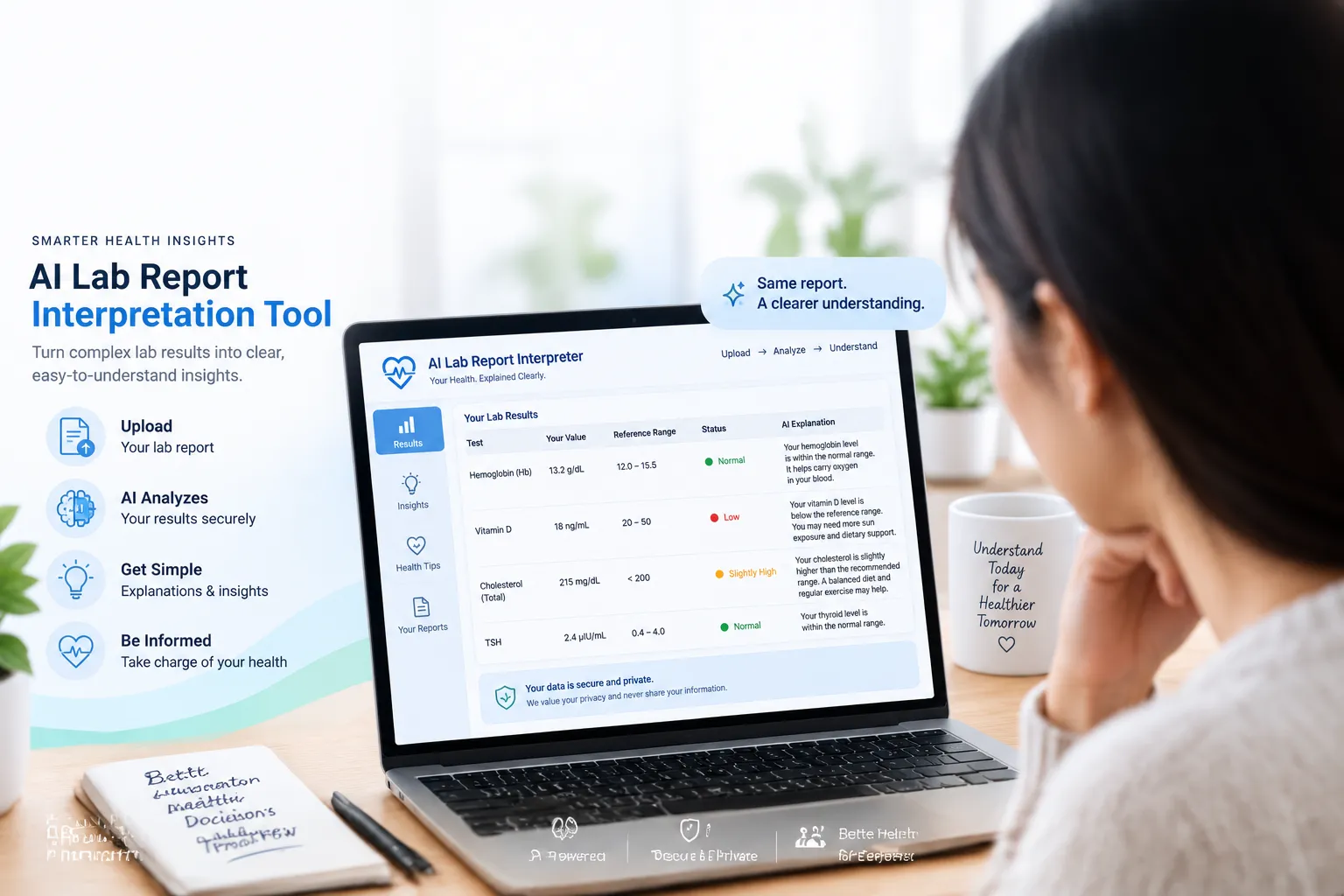
A blood report analyzer can help organize and explain information found in a blood test report. Depending on the tool, it may explain individual test names, compare values with the reference ranges provided by the laboratory, and identify areas that may be worth discussing with a healthcare professional.
For example, someone may see several unfamiliar abbreviations on a complete blood count report. An online tool may explain what those abbreviations generally represent and why the corresponding tests are performed.
It is important to remember that a value outside a laboratory's reference range does not automatically indicate a disease. Reference ranges can vary between laboratories, and results need to be considered in the context of the individual.
Benefits of Online Report Analysis
Online report analysis tools can offer several practical benefits.
1. Easier Understanding
Medical terminology can be difficult for someone without a medical background. Simplified explanations can make reports easier to understand.
2. Better Preparation for Doctor Visits
Understanding basic report terminology can help patients prepare relevant questions for their doctor.
3. Convenient Access
Online tools can be accessed from a computer or smartphone, making them convenient for people who want to review their reports at home.
4. Educational Support
These tools can help users learn more about common medical tests and terminology without assuming that every finding represents a health problem.
Important Limitations
Online analysis should be viewed as an educational aid rather than a replacement for professional medical care.
A report contains only part of the information needed to assess someone's health. Doctors may also consider symptoms, previous medical history, medications, physical examination findings, and other investigations.
For imaging tests such as ultrasound, interpretation may also depend on the actual images and the expertise of a radiologist. Similarly, blood test results may need to be evaluated alongside other clinical information.
Therefore, users should avoid making treatment decisions based solely on an automated report analysis.
Protecting Your Medical Information
When using an online healthcare tool, privacy should also be considered. Before uploading a report, check how the service handles personal and medical information. Avoid sharing unnecessary identifying details when possible and review the platform's privacy and security information.
Conclusion
Digital tools can make medical information easier to understand and can help people become more informed about their reports. Ultrasound report analysis online can provide explanations of terminology and findings in an ultrasound report, while a blood report analyzer can help users understand common blood test values and terminology.
These tools are best used for education and preparation for a conversation with a qualified healthcare professional. They should not be used as a substitute for diagnosis, treatment, or personalized medical advice.























Sign in to leave a comment.