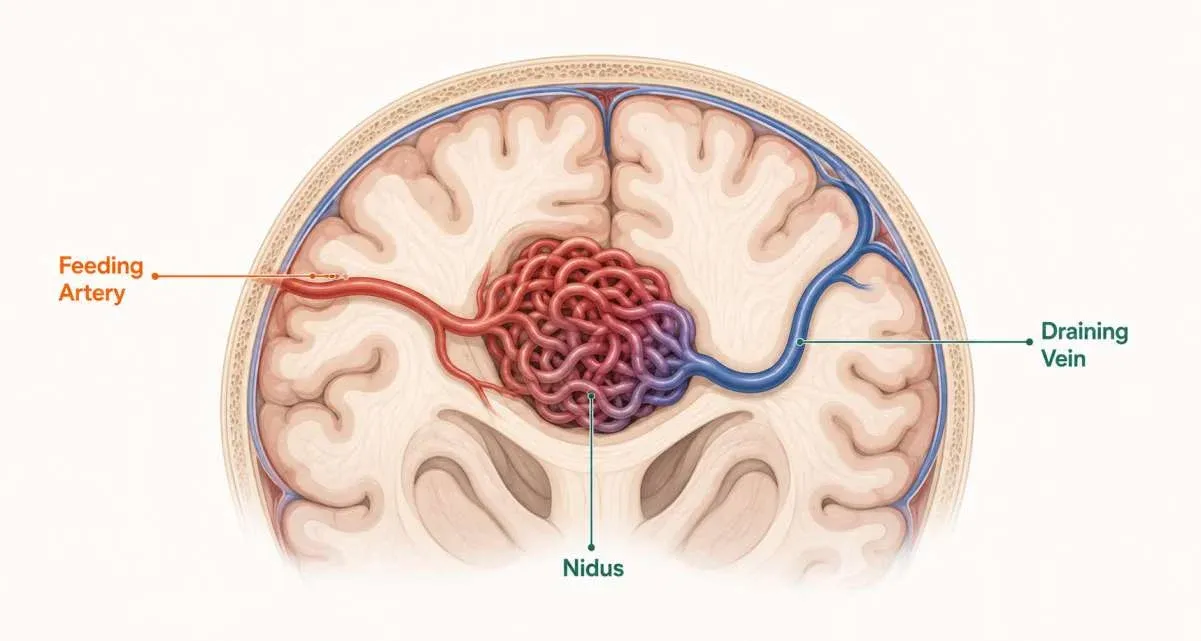

Brain arteriovenous malformations (Brain AVM) are direct connections between arteries and veins, bypassing normal capillary networks in the brain. As a result, blood can travel directly from arteries into veins. This can lead to increased stress on the blood vessels, and can result in potentially life-threatening complications such as bleeding and other neurological problems.
The appropriate treatment for an AVM is dependent on size, location, and blood flow, as well as symptoms and risk of bleeding. A traditional open brain surgery is not always necessary to treatment an AVM. Minimally invasive techniques have been developed that can treat an AVM without a traditional brain surgery.
What is Minimally Invasive Brain AVM Treatment?
Minimally invasive treatment includes either radiation or small catheters instead of a surgery to directly remove the AVM.
The primary treatment options are:
- Embolization
- Radiation
- A combination of treatment
Of the options presented, the most appropriate treatment will vary from patient to patient.
Embolization
In this treatment, a catheter is used as an embolization agent to block blood flow. This can be used as a treatment on its own or as a means to reduce AVM size and complexity prior to surgery or other treatment.
The treatment is performed as an interventional radiology procedure, as embolization is performed through the blood vessels.
Radiosurgery
Stereotactic radiosurgery uses focused radiation treatment to brain AVMS. It targets a specific region in the brain and is a non-invasive procedure.
Closure of AVMs using radiation treatment occurs by gradually deceasing the flow of blood through the abnormal blood vessels, thereby inducing them to close. This type of treatment is usually reserved for smaller AVMs and AVMs that are in locations that pose considerable risk to the patient if invasive surgery is used.
Radiation-based closure treatment is a slow process, so there is a period of time, possibly a considerable period of time, for which the AVM will remain at risk of a life threatening bleed.
How Doctors Decide the Best Treatment
There is no one size fits all treatment for brain AVMs. Specialists take into consideration:
The size and location of the AVM
Blood vessel anatomy
If the AVM has bled in the past
The symptoms the patient has
How close important brain structures are to the AVM
The patient’s overall health
The risks of the treatment
In some cases, multiple treatments are used. For example, if there is a considerable risk of blood loss, most of the abnormal blood vessels may be removed with an embolization procedure prior to open surgery or radiosurgery.
Because brain AVMs involve complex blood vessel anatomy, collaborative neurovascular care can help specialists evaluate the condition and determine an appropriate treatment strategy.
A combination of treatments may be used, depending on the preference and skills of the healthcare team.
The Pros of Treatment
In certain instances, minimally invasive treatments remove the need for open brain surgery. There are also potential benefits of less brain surgery, such as less disruption of brain tissue, shorter recovery, and smaller surgical incisions.
There are times when there are still complications, such as an unexpected stroke due to blood vessel rupture or bleeding in the brain that causes neurological problems.
Why Follow-Up Is Important
In some cases, AVMs don't fully resolve with treatment. To see if the AVM has closed completely, follow-up imaging is required.
For your follow-up imaging, please adhere to the schedule advised by your treatment team.
Frequently Asked Questions
What is the least invasive treatment for a brain AVM?
The treatment of a brain AVM depends on the specifics of the AVM. Certain cases may allow for the use of minimally invasive or non-invasive treatments such as embolization or stereotactic radiosurgery.
Can a brain AVM be treated without open surgery?
Yes. Certain treatments for brain AVMs do not involve open surgery (such as embolization or stereotactic radiosurgery).
Does embolization completely cure an AVM?
Not entirely. It can be done as a main treatment or as a treatment in combination with other surgical interventions.
How long does radiosurgery take to cure?
Vasculature closed cure results can take months to even years.
Does a brain AVM always need to be treated?
Not always. Certain factors may lend to the AVM being observed over other treatment options (risks, symptoms, characteristics).
























Sign in to leave a comment.