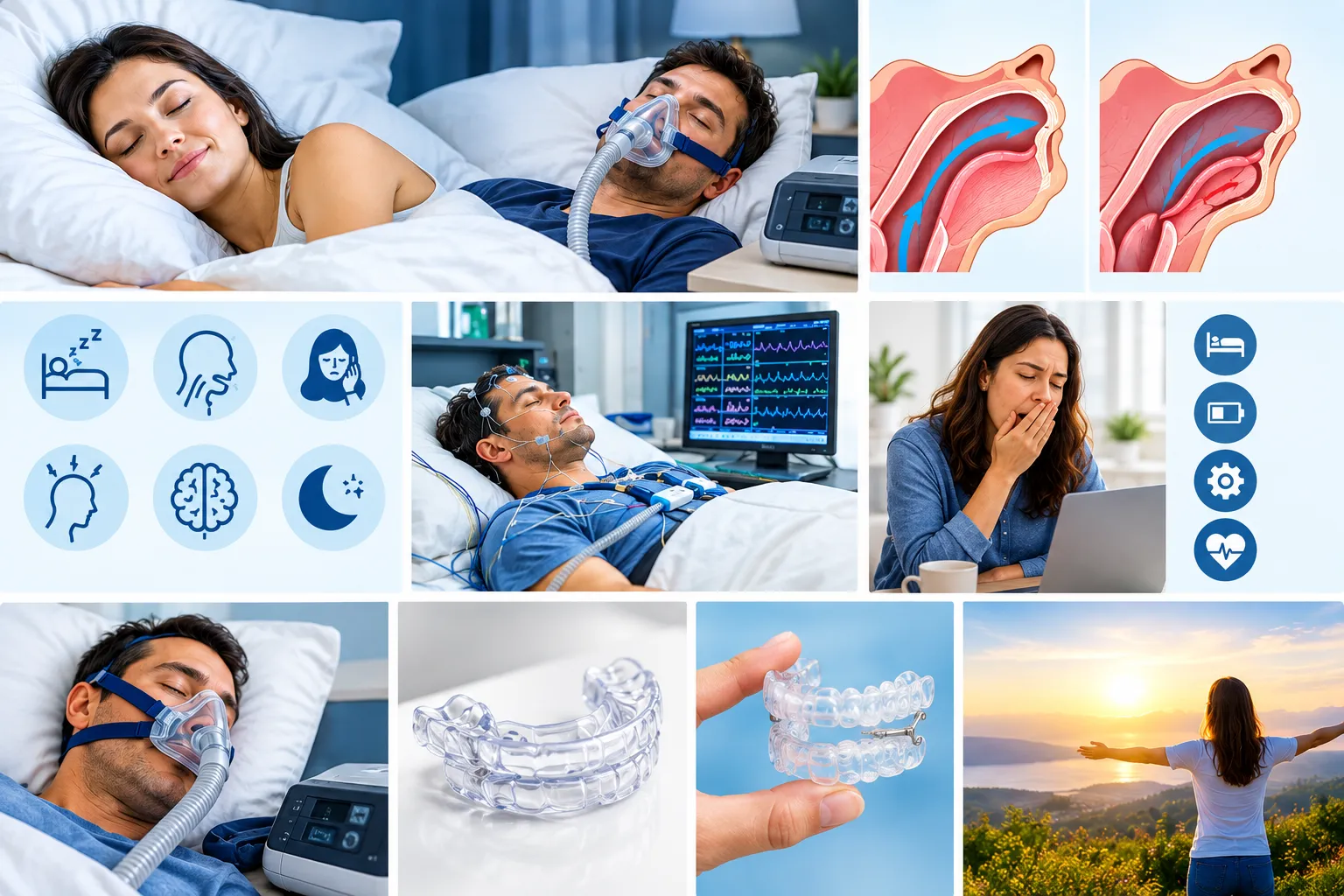

A good night's sleep should leave you feeling rested and ready for the day. For people with sleep apnea, however, breathing interruptions can repeatedly disturb sleep without them fully realizing what is happening. These interruptions can occur many times throughout the night and prevent the body from getting the restorative sleep it needs.
Understanding sleep apnea, its symptoms, diagnosis, and available treatment options can help you recognize when it may be time to seek an evaluation.
What Is Obstructive Sleep Apnea
Obstructive sleep apnea, commonly called OSA, is a sleep-related breathing disorder that occurs when the airway becomes blocked during sleep. The soft tissues in the throat and back of the mouth can relax and collapse, restricting the flow of air. If you are looking into sleep apnea Richmond VA, understanding how this condition affects breathing can help you recognize why proper evaluation matters.
During an apnea event, breathing may stop for 10 seconds or longer. The brain then responds to the lack of oxygen by signaling the body to resume breathing. This can cause brief awakenings or changes in sleep that may not be remembered the next morning.
These interruptions can happen repeatedly throughout the night. Even if someone spends several hours in bed, their sleep may not progress normally through the different stages required for proper rest.
OSA can affect people of different ages, including children, adults, and older individuals. The severity can also vary considerably from one person to another.
Why Sleep Apnea Can Affect Your Daily Life
One of the most noticeable effects of sleep apnea is poor-quality sleep. Because breathing interruptions repeatedly disturb the normal sleep cycle, a person may wake up feeling tired even after what appears to be a full night's sleep.
Daytime tiredness can make everyday activities more difficult. Some people may not immediately connect their fatigue with a nighttime breathing problem because they are unaware that their sleep is being interrupted.
The condition can also lead to chronic sleep deprivation when it remains untreated. Severe sleep apnea may have significant health consequences, which makes proper evaluation and diagnosis important.
Snoring can also occur with obstructive sleep apnea. However, not everyone who snores has sleep apnea, and the presence or absence of snoring alone cannot establish a diagnosis.
Why Diagnosis Is Important
Because sleep apnea occurs during sleep, diagnosing it requires more than discussing how someone feels during the day. A sleep study can provide information about breathing patterns and other changes that occur while a person is asleep.
A traditional overnight sleep study is performed in a sleep laboratory. During the study, different aspects of sleep and breathing are monitored. The results can help determine whether sleep apnea is present and how severe it may be.
An at-home sleep study may also be an option in some situations. Instead of spending the night in a sleep laboratory, the patient can sleep in their own bed while appropriate information is recorded. A sleep physician reviews the results and determines whether sleep apnea is present and how severe it is.
Obtaining an accurate diagnosis is important because treatment should be based on the individual's condition rather than symptoms alone.
Understanding CPAP Treatment
Continuous positive airway pressure, or CPAP, has traditionally been used to treat obstructive sleep apnea. A CPAP machine delivers a continuous flow of air through a mask during sleep. The pressure helps keep the airway open so that breathing can continue.
CPAP can be an effective treatment, but using the equipment consistently can be challenging for some people. The mask, tubing, airflow, and machine can take time to become comfortable with.
Some people may find the equipment difficult to tolerate while sleeping. Others may have trouble adjusting to wearing a mask throughout the night.
For these reasons, treatment discussions may include alternatives when appropriate, particularly for people with certain levels or types of sleep apnea.
How Oral Appliances Can Help
For patients with mild to moderate obstructive sleep apnea, a custom oral appliance may be considered as an alternative treatment option. A dentist Richmond VA, can evaluate their oral health and help determine whether this type of appliance may be appropriate.
An oral appliance is worn during sleep and is designed to gently reposition the jaw. This can help prevent the airway from collapsing and allow air to continue moving through the throat.
There are more than 50 FDA-approved oral appliances available. Because different appliances have different designs and features, selecting the appropriate device is an important part of treatment.
A custom-fitted appliance can be designed around the individual's needs rather than relying on a generic device. Proper evaluation is also important because an oral appliance may not be appropriate for every patient or every severity of sleep apnea.
Conclusion
Obstructive sleep apnea can repeatedly interrupt breathing and prevent the body from getting restorative sleep. While CPAP remains a traditional treatment, some people with mild to moderate OSA may be candidates for a custom oral appliance.
The first step is proper diagnosis. A sleep study can help identify the condition and establish its severity. Once the diagnosis is clear, treatment can be selected based on the individual's needs, whether that involves CPAP, an oral appliance, or another appropriate approach.























Sign in to leave a comment.