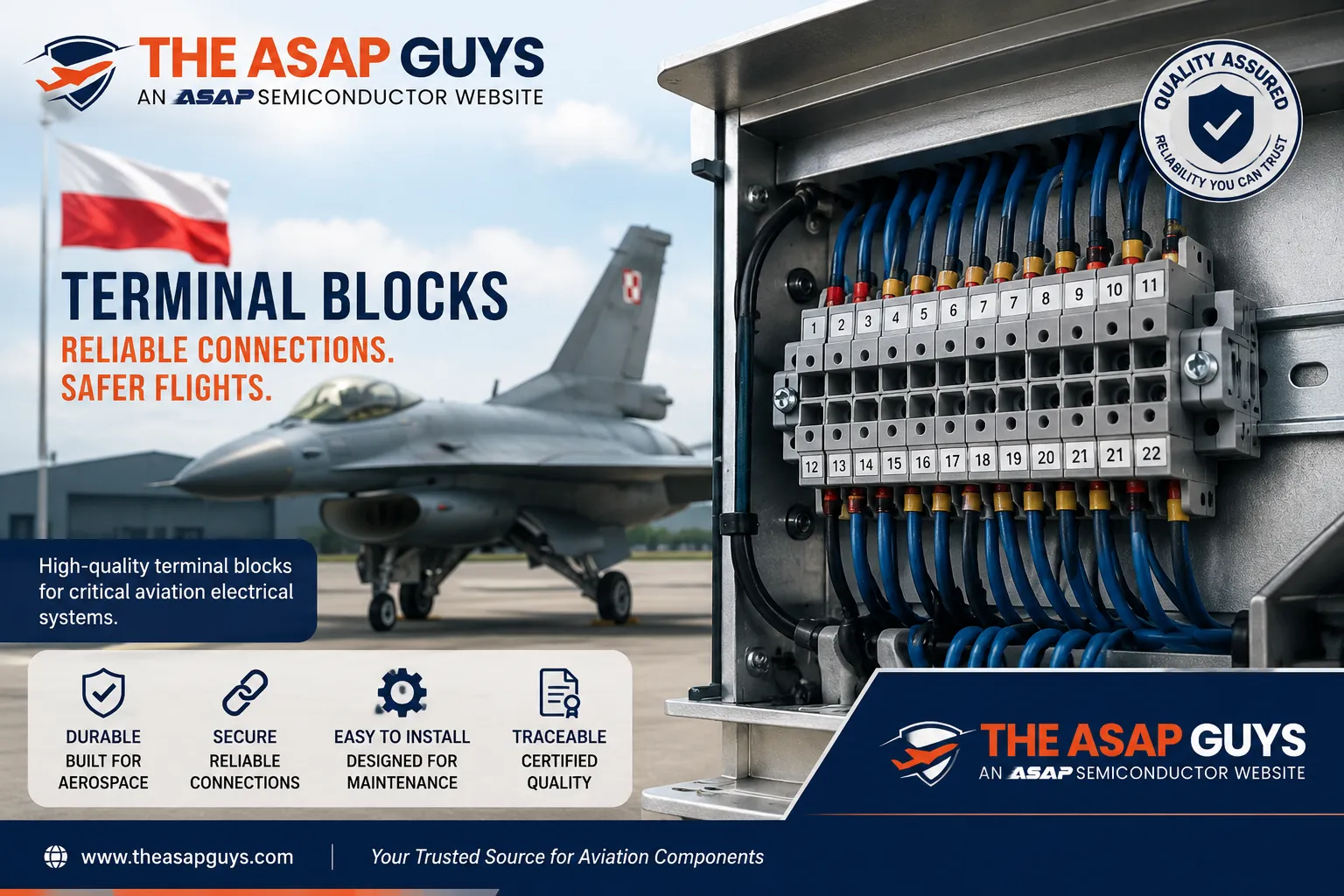

Modern aircraft depend on complex electrical networks to support avionics, communication systems, lighting, navigation equipment, instrumentation, and other essential functions. Within these networks, seemingly simple components can play an important role in maintaining organized and dependable electrical connections. One such component is the terminal block, which provides a structured point for connecting and distributing electrical wiring.
For aviation professionals involved in maintenance, repair, and procurement, understanding the purpose and selection considerations of terminal blocks can help support reliable electrical-system servicing.
What Is a Terminal Block?
A terminal block is an electrical connection device designed to join multiple wires or conductors in an organized manner. It typically consists of conductive terminals housed within an insulating body. Depending on the application, terminal blocks may provide connection points for individual circuits, facilitate wire distribution, or help simplify electrical-system maintenance.
In aircraft applications, terminal blocks can be incorporated into electrical panels, wiring assemblies, equipment racks, and other locations where multiple conductors must be securely connected and properly organized.
Why Terminal Blocks Matter in Aircraft
Aircraft electrical systems require careful attention to reliability, organization, and maintainability. Wiring may extend across numerous systems and aircraft sections, making proper connection management essential.
Terminal blocks can help maintenance personnel identify and access electrical connections without unnecessarily disturbing surrounding wiring. Their organized configuration can also support troubleshooting and reduce the complexity associated with servicing individual circuits.
Because aircraft operate under demanding environmental conditions, electrical components must be selected according to the requirements established for the specific application. Factors such as vibration, temperature, electrical load, installation space, and applicable aircraft documentation can influence component selection.
Key Considerations When Selecting Aviation Terminal Blocks
Selecting an appropriate terminal block should begin with the technical requirements of the aircraft or equipment in which it will be installed. Maintenance personnel and procurement teams should verify the applicable part number, manufacturer information, specifications, and approved maintenance documentation before sourcing a replacement.
Important considerations may include:
- Electrical ratings: Voltage and current requirements should correspond with the intended circuit.
- Physical configuration: Dimensions, mounting arrangement, terminal spacing, and connection style must be compatible with the installation.
- Environmental requirements: Temperature, vibration, moisture, and other operating conditions can affect component suitability.
- Material and construction: Conductive and insulating materials should meet the requirements of the applicable application.
- Documentation and traceability: Procurement teams should seek appropriate documentation and trace information when required by their quality procedures.
These checks help prevent the selection of a component that appears similar but does not satisfy the requirements of the intended installation.
Aviation Terminal Block Procurement
Finding the correct aviation electrical component can sometimes be challenging, particularly when maintenance teams are searching for older, obsolete, or difficult-to-source parts. A specialized aviation parts distributor can simplify the procurement process by providing access to a broad catalog and dedicated sourcing support.
The ASAP Guys maintains an extensive civil aviation parts inventory covering new, used, obsolete, and hard-to-find components. Its website includes electrical products among its aircraft parts categories, allowing buyers to search by component type, manufacturer, or part number.
For organizations currently sourcing this type of component, the Terminal Block category at The ASAP Guys provides a convenient starting point for identifying applicable aviation parts and submitting an RFQ.
Supporting Aircraft Maintenance Through Reliable Sourcing
Aircraft maintenance depends on more than simply finding a component that fits physically. Procurement teams must consider authenticity, specifications, documentation, lead time, and the requirements of their organization's quality system.
The ASAP Guys states that it sources products from manufacturers on its Approved Vendor List and applies quality assurance measures to help verify fit, form, and function. It also indicates that applicable manufacturing trace documentation and certifications may accompany shipped products.
For maintenance organizations, MRO providers, aircraft operators, and procurement professionals, these considerations can make the sourcing process more efficient while helping maintain appropriate standards for aircraft electrical-system components.
Conclusion
Terminal blocks may be relatively small compared with major aircraft systems, but they contribute to the organization and connectivity of electrical wiring throughout an aircraft. Selecting the correct component requires attention to electrical characteristics, physical compatibility, environmental conditions, documentation, and aircraft-specific requirements.
When sourcing aviation terminal blocks, working with an established parts distributor and providing accurate part-number and quantity information can help streamline procurement. With the right sourcing process, maintenance teams can locate required electrical components more efficiently and support the continued reliability of aircraft electrical systems.























Sign in to leave a comment.