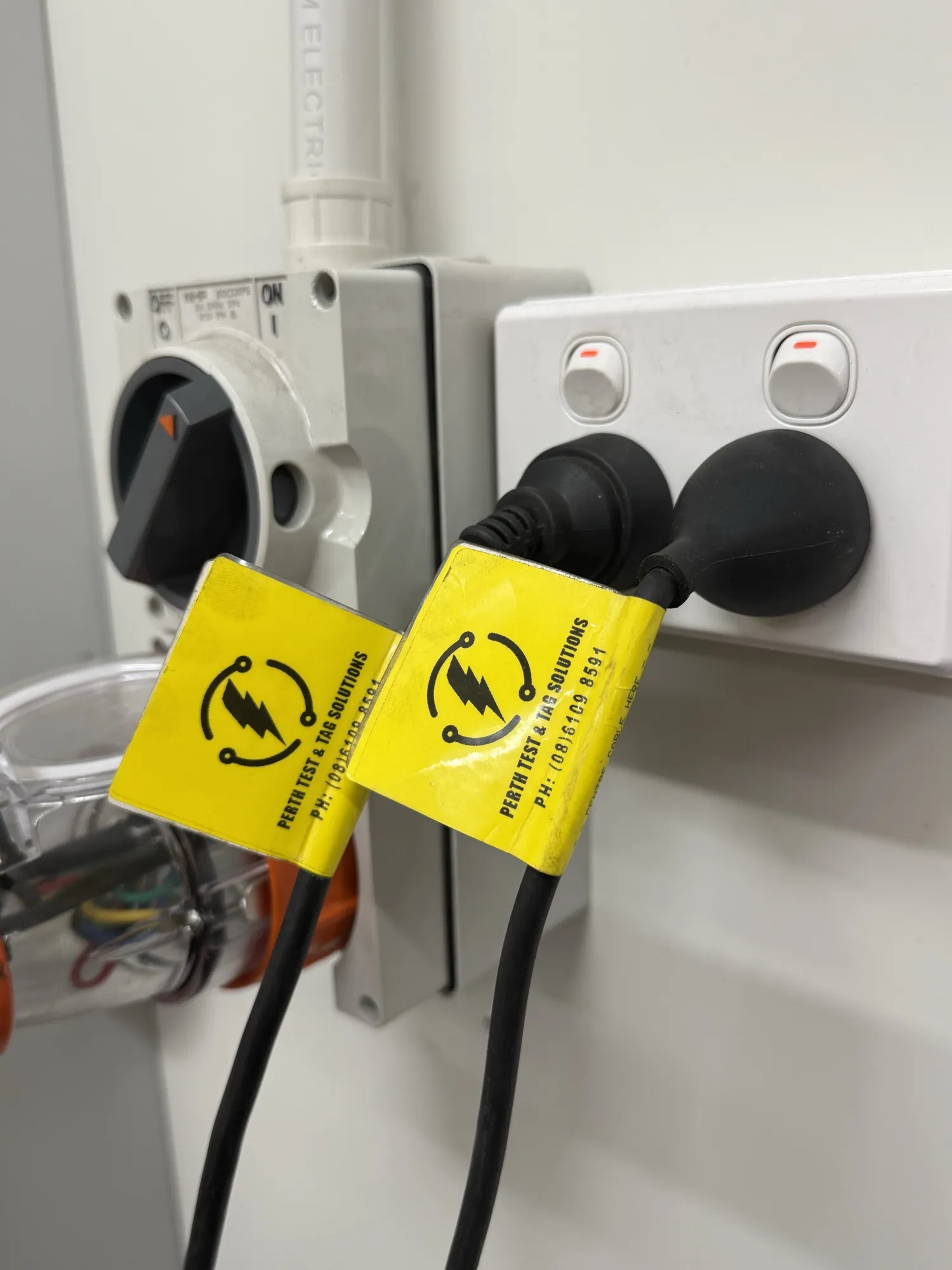

Everything Perth Businesses need to know about test & tag colours in WA. What the quarterly rotation means, which industries must follow it, and the most common misconception that catches businesses out.
WHAT ARE THE TEST AND TAG COLOURS IN WA?
If you’ve ever looked at the tags on your workplace appliances and wondered why they come in different colours, or why the colour seems to change every few months - you’re not alone! Test and tag colours in WA are one of the most commonly misunderstood aspects of electrical compliance.
The short answer; in Western Australia, tag colours are only regulated for businesses operating in the construction, demolition and mining environments under AS/NZS 3012. For all other businesses (offices, retail, hospitality, warehouses) the colour of a tag is cosmetic, used purely for identification purposes.
For those industries where colour does matter, the system follows a quarterly rotation tied to the seasons, using four colours; Red, Green, Blue and Yellow. This is commonly referred to as the RGBY colour schedule.
Red
December - January - February
Equipment tested during the summer quarter is tagged red. The tag remains valid for 3 months from the actual test date.
Green
March - April - May
Equipment tested during the autumn quarter is tagged green. The tag remains valid for 3 months from the actual test date.
Blue
June - July - August
Equipment tested during the winter quarter is tagged blue. The tag remains valid for 3 months from the actual test date.
Yellow
September - October - November
Equipment tested during the spring quarter is tagged yellow. The tag remains valid for 3 months from the actual test date.
IMPORTANT: The colour of a tag identifies when the appliance was tested, no when it expires. A red tag applied on 15 February remains valid until 15 May, regardless of the colour changing to green on 1 March.
WHAT DO THE TEST AND TAG COLOURS MEAN?
The colour of a test and tag in WA serves a single function within the construction and demolition sector: it indicates the quarter in which the appliance was tested. At a glance, a site manager or safety officer can look at the colour of a tag and immediately know which testing period an item belongs to, without needing to read the date on the tag.
This system exists because construction sites have a high volume of equipment, frequent movement of tools between locations, and stringent 3 month testing requirements. The colour coding provides a fast, visual audit tool that makes it easier to spot items that may have been missed or are approaching their due date.
NOTE FOR CONSTRUCTION BUSINESSES: Some builders operate their own risk assessments and site safety policies that may be more extensive than the minimum requirements under AS/NZS 3012. Always check your company’s specific requirements, they may require more frequent testing or additional documentation beyond what the standard mandates.
The colour system does not mean an item automatically needs retesting when the colour changes. This is the most common and most damaging misconception about test and tag colours in WA, and it's addressed in detail in the next section.


























Sign in to leave a comment.