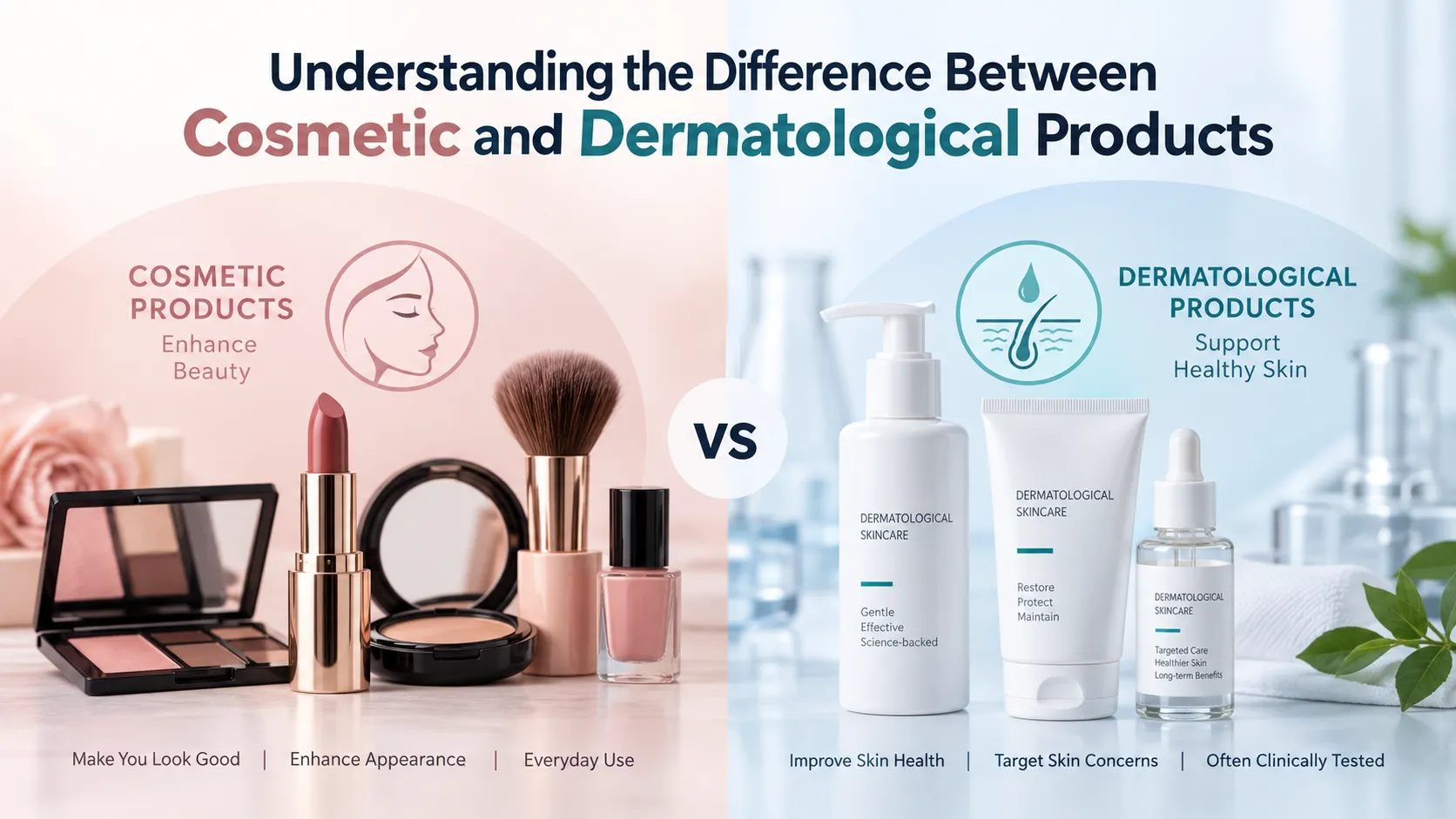

Walk into any beauty store or pharmacy, and you will see two very different worlds sitting side by side. On one side, cosmetic products promise glowing skin and instant results. On the other, there are dermatological products, often looking more clinical, sometimes even a bit boring in their packaging. Most people assume both categories are basically the same thing with different marketing. In reality, the difference between them matters a lot more than most people realise.
What Makes a Product "Cosmetic"?
Cosmetic products are designed mainly to improve appearance. Think of your regular moisturiser, foundation, lipstick, or even a basic face wash. These products are meant to clean, hydrate, or enhance how your skin looks, without necessarily changing anything at a deeper biological level.
Cosmetic products are generally milder in formulation, meant for everyday use across a wide range of skin types. They do not require a prescription, and while they can absolutely improve how your skin feels and looks temporarily, they usually do not treat any underlying skin condition.
What Makes a Product "Dermatological"?
Dermatological products, on the other hand, are formulated to treat specific skin conditions. This includes things like acne, eczema, psoriasis, pigmentation disorders, or persistent skin infections. These products often contain active ingredients in higher, medically tested concentrations, and many require a doctor's recommendation or prescription before use.
Unlike cosmetics, dermatological products are developed with a clear medical purpose. Their formulations go through more rigorous testing, since they are meant to interact with the skin at a deeper level to actually correct or manage a specific issue, rather than just improve surface appearance temporarily.
Why This Difference Often Gets Confused
Part of the confusion comes from clever marketing. Many cosmetic brands use medical-sounding language, like clinically tested or dermatologist-approved, even when their products remain purely cosmetic in nature. This blurring of language makes it harder for regular consumers to understand what they are actually buying and whether it can genuinely address their specific skin concern.
This is exactly why understanding the real difference matters, especially for people dealing with persistent skin issues who might be relying on cosmetic products expecting results that only a proper dermatological treatment could realistically provide.
How Ingredient Concentration Plays a Role
One of the clearest differences lies in ingredient concentration. A cosmetic moisturiser might contain a small amount of salicylic acid for general skin smoothing, while a dermatological treatment for acne might use a much higher, medically calculated concentration specifically designed to treat active breakouts.
This is why simply switching to a slightly stronger-sounding cosmetic product rarely solves a real skin condition. The concentration and formulation approach are simply not built for that level of intervention.
Why Professional Guidance Matters More for Dermatological Products
Since dermatological products often contain stronger active ingredients, using them without proper guidance can sometimes lead to irritation or unwanted side effects. This is why many of these products require a prescription, ensuring that a dermatologist first evaluates the skin condition before recommending a specific treatment plan.
Brands specialising in this space, such as an experienced dermatology and cosmeceuticals company India-based patients often turn to, usually work closely with dermatologists to ensure their formulations are both effective and safe when used under proper medical guidance.
Can These Two Categories Overlap?
Interestingly, there is a middle ground that has grown quite popular in recent years, often called cosmeceuticals. These products combine cosmetic like application with active ingredients that offer more noticeable, longer-lasting benefits than regular cosmetics, though they usually do not require a strict prescription like dermatological treatments.
This overlap is why the lines between cosmetic and dermatological products can sometimes feel blurry, even though their core purposes remain quite different when you look closely at their formulation and intended use.
Why Patients Should Pay Attention to This Difference
For anyone dealing with a specific skin concern, understanding whether they need a cosmetic product or an actual dermatological treatment can save a lot of time, money, and frustration. Relying on cosmetic products for a condition that genuinely needs medical treatment often leads to disappointment, simply because the product was never designed to address that level of concern in the first place.
What This Means for Everyday Skincare Choices
For general skin maintenance, cosmetic products work perfectly well. But for anyone dealing with persistent acne, unusual pigmentation, or ongoing skin irritation, consulting a dermatologist and exploring proper dermatological products is usually a far more effective path than experimenting with cosmetic alternatives alone.
Final Thoughts
Understanding the difference between cosmetic and dermatological products helps patients make smarter, more realistic choices for their skin. While cosmetics focus on everyday care and appearance, dermatological products are built to treat genuine skin conditions with medically backed formulations. Knowing when to reach for each one and when to consult a professional can make a real difference in achieving healthier, more effective skincare results.



























Sign in to leave a comment.