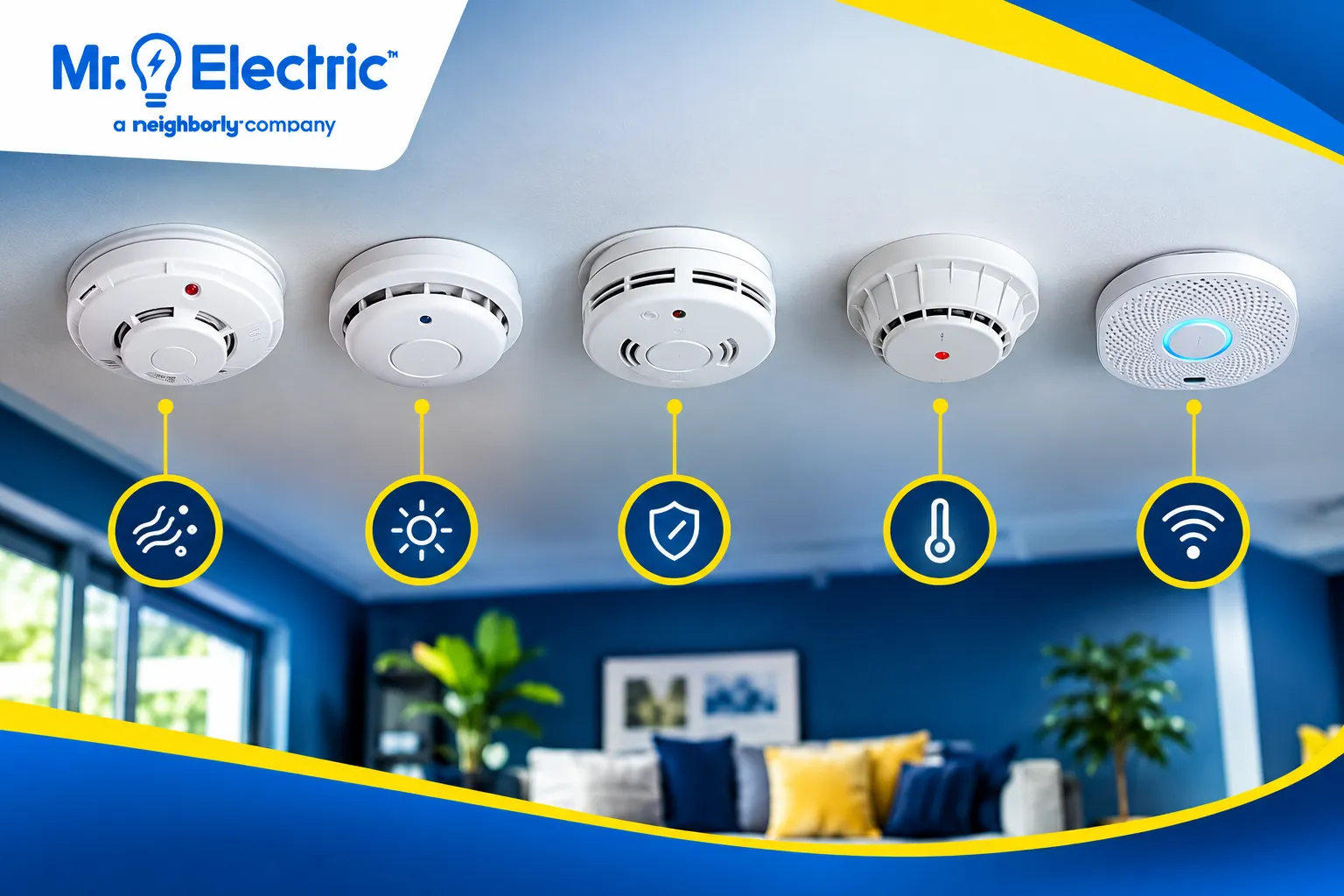

Not all smoke detectors work in exactly the same way. While they all serve the same basic purpose—alerting you when smoke is detected—the technology inside them can differ. Choosing the right type for each area of your home can improve your overall fire-safety setup. If you're unsure which option fits your property, an electrician in Mountain View can help you evaluate your existing system and installation needs.
Understanding the differences between smoke detector types makes it easier to choose equipment that suits your home, lifestyle, and safety requirements.
Why Smoke Detector Type Matters
A smoke detector needs to respond to smoke quickly while minimizing unnecessary alarms. Different technologies are designed to detect smoke under different conditions.
The most common options include:
- Ionization smoke detectors
- Photoelectric smoke detectors
- Dual-sensor smoke detectors
- Heat detectors
- Smart smoke detectors
Let's look at what makes each one different.
1. Ionization Smoke Detectors
Ionization detectors use a small amount of radioactive material to create an electrical current inside the sensing chamber. When smoke enters the chamber, it disrupts that current and triggers the alarm.
These detectors are generally known for responding quickly to fires that produce rapidly developing flames.
However, they can be more prone to nuisance alarms from cooking or other particles. For that reason, placement is important, particularly in kitchens and areas where smoke or steam is common.
2. Photoelectric Smoke Detectors
Photoelectric detectors use a light source and sensor to identify smoke particles. When smoke enters the sensing chamber, it changes how light reaches the sensor, causing the alarm to activate.
These detectors are generally considered effective at detecting slower, smoldering fires, which can produce significant smoke before visible flames develop.
Because of how they operate, they can be a useful option in areas such as bedrooms and living spaces.
3. Dual-Sensor Smoke Detectors
Why choose one sensing technology when you can combine two? Dual-sensor detectors use both ionization and photoelectric technologies in a single device.
This approach is designed to provide detection across different types of fires. Instead of homeowners having to decide between the two technologies, a dual-sensor unit brings both together.
As always, installation location and the manufacturer's instructions matter when deciding whether this type is appropriate for a particular room.
4. Heat Detectors
Heat detectors are different from traditional smoke detectors because they respond to temperature rather than smoke.
They can be useful in locations where normal conditions may cause frequent smoke detector alarms, such as certain garages, workshops, or areas with dust and fumes.
However, heat detectors should not automatically be considered a replacement for smoke detectors throughout the home. They serve a different purpose and should be selected based on the characteristics of the space.
5. Smart Smoke Detectors
Smart smoke detectors add connected features to traditional fire detection. Depending on the model, they may send notifications to your smartphone, provide voice alerts, monitor battery status, or integrate with other smart-home devices.
These features can be particularly useful if you're away from home when an alarm occurs.
Before choosing a smart detector, check its compatibility with your home's Wi-Fi network and other connected devices.
Battery vs. Hardwired Smoke Detectors
Smoke detectors can also be categorized by how they're powered.
Battery-powered models are generally straightforward to install and don't require connection to household wiring. However, their batteries need to be checked and replaced as recommended.
Hardwired models connect to the home's electrical system and commonly include battery backup. In many installations, interconnected hardwired detectors can communicate with one another, allowing multiple alarms to sound when one detects smoke.
If you're upgrading an older system, an electrician in Saratoga can inspect the existing wiring and help determine which type of installation makes sense for your home.
Which Smoke Detector Should You Choose?
There isn't one detector that is perfect for every room. Consider the location, the type of activity that takes place there, the detector's features, and the manufacturer's installation recommendations.
For example, a detector intended for a bedroom may have different considerations than one installed near a kitchen or garage.
If you're replacing older units, it's also worth checking their age and condition rather than waiting for a problem to occur.
Keep Your Smoke Detectors Working
Installing the right detector is only part of the job. Regular maintenance is essential.
Remember to:
- Test detectors according to manufacturer instructions
- Replace batteries when required
- Keep detectors free from dust and debris
- Replace units at the end of their recommended service life
- Never disable an alarm because of frequent nuisance alerts
- Follow local requirements for placement and installation
A detector that has been neglected may not perform as expected when an emergency occurs.
Conclusion
Smoke detectors come in several types, and each uses different technology to identify potential fire conditions. Ionization, photoelectric, dual-sensor, heat, and smart detectors all have different characteristics and applications.
Rather than choosing a detector based only on price, consider where it will be installed and what type of protection is appropriate for that space. Proper installation, regular testing, and timely replacement are equally important for maintaining a dependable home fire-safety system.
FAQs About Smoke Detector Types
What is the most common type of smoke detector?
Ionization and photoelectric detectors are two of the most common types found in residential settings. Dual-sensor models combine both technologies.
Are photoelectric smoke detectors better than ionization detectors?
Neither is universally better. They use different detection methods and can respond differently to various fire conditions. Dual-sensor models combine both technologies.
What is a dual-sensor smoke detector?
A dual-sensor smoke detector combines photoelectric and ionization sensing technologies in one unit.
Are smart smoke detectors worth considering?
Smart models can provide useful features such as smartphone notifications and connectivity with other devices. Their value depends on your home's setup and your preferences.
Can heat detectors replace smoke detectors?
Not generally. Heat detectors respond to temperature rather than smoke and are intended for specific applications. They should be selected according to the space and applicable safety requirements.
How often should smoke detectors be replaced?
Follow the manufacturer's replacement guidance for your specific model. Smoke detectors have a limited service life, so an older unit should not be assumed to provide the same performance indefinitely.

























Sign in to leave a comment.