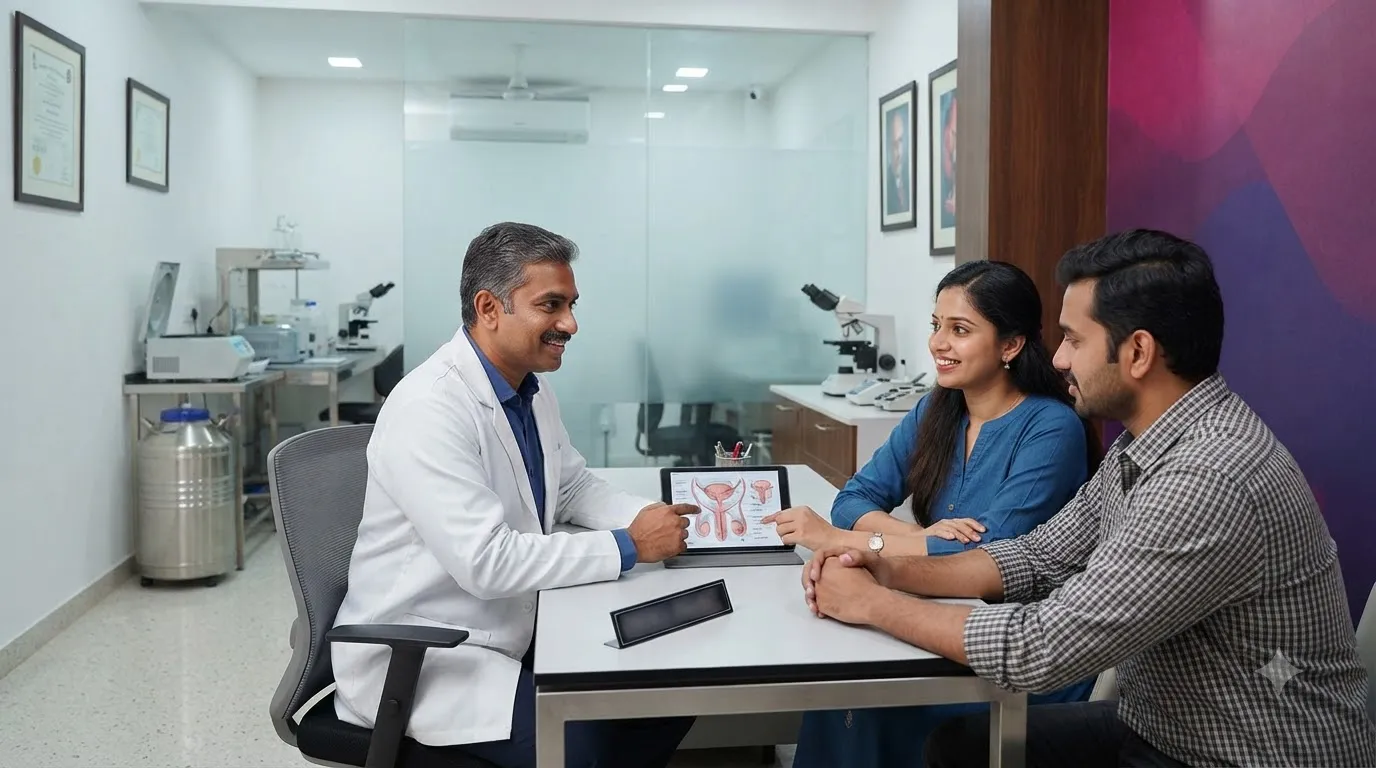

Male fertility concerns can feel difficult to discuss, especially when a couple has already spent months trying to conceive. Yet a diagnosis is not the end of the journey. It is often the point where the right information can turn uncertainty into a clear treatment plan. For couples searching for a Top 10 IVF centre in T.Dasarahalli, understanding how male infertility is assessed and treated can make the next step feel more manageable.
Why Male Fertility Diagnosis Matters
Male infertility can be linked to low sperm count, poor sperm movement, abnormal sperm shape, hormonal concerns, blockages, infections, genetic factors, or reduced sperm production. In some men, sperm may be produced but unable to reach the semen. Others may have very limited or absent sperm production.
A fertility evaluation usually begins with a detailed medical and reproductive history. Semen analysis is an important first investigation, and depending on the findings, a specialist may recommend hormonal tests, physical examination, scrotal imaging, genetic evaluation, or other investigations. The goal is not simply to label the problem, but to understand why it is happening. Current European fertility guidance recommends evaluating both partners and investigating men who seek medical help for fertility concerns.
When Azoospermia Requires Further Evaluation
Azoospermia means that sperm are not detected in the semen sample. It can broadly be associated with an obstruction or with impaired sperm production. These situations can require different approaches, so confirming the finding and identifying the underlying cause are important before selecting treatment.
From Diagnosis to a Personalized Treatment Plan
Treatment depends on the diagnosis, the couple’s reproductive goals, female partner’s fertility factors, and whether usable sperm can be obtained. Some men may benefit from medicines or treatment of an underlying condition. When sperm is available in the ejaculate but fertility remains affected, assisted reproductive techniques such as IUI or IVF with ICSI may be considered.
When sperm is not present in the semen, sperm retrieval may become part of the treatment pathway. TESA, PESA and Micro-TESE are procedures used in selected cases to retrieve sperm from the reproductive tract or testicular tissue. They are not interchangeable, and the appropriate technique depends on the suspected cause and where sperm is most likely to be found.
Understanding TESA, PESA and Micro-TESE
PESA uses needle aspiration to collect sperm from the epididymis and may be considered when an obstruction is suspected. TESA uses a needle to aspirate sperm-containing testicular tissue. Micro-TESE is a microsurgical technique that allows the surgeon to examine testicular tissue more carefully when sperm production may be limited, particularly in selected cases of non-obstructive azoospermia.
If viable sperm is retrieved, it may be used with ICSI, where an individual sperm is injected directly into an egg during an IVF cycle. This can create a treatment pathway even when conventional semen samples do not provide usable sperm.
Choosing the Right Fertility Care in T.Dasarahalli
The most useful fertility consultation is one that explains the diagnosis, available options, expected steps, and realistic considerations without creating unnecessary pressure. At Dr Aravind's IVF Fertility & Pregnancy Centre, we tailor fertility care to each patient, with treatment plans based on clinical assessment and reproductive goals. The centre provides IVF, ICSI, and andrology-related fertility services.
For couples exploring a Top 10 IVF centre in T.Dasarahalli, the important question is not simply which clinic makes the biggest claims. It is whether the team can evaluate male-factor infertility carefully, explain why a particular procedure is recommended, and coordinate sperm retrieval with the wider IVF or ICSI plan.
Take the Next Step With Better Information
A male fertility diagnosis can bring worry, but it can also provide direction. Understanding the cause, asking the right questions, and choosing treatment based on medical evidence can help couples move forward with greater confidence. If TESA, PESA or Micro-TESE has been suggested, discuss the indication, expected benefits, risks, alternatives and how retrieved sperm would fit into the overall fertility plan before proceeding. For a deeper explanation of these procedures, couples can also explore TESA, PESA and Micro-TESE sperm retrieval. A thoughtful consultation can turn a confusing diagnosis into a structured path toward parenthood.

























Sign in to leave a comment.