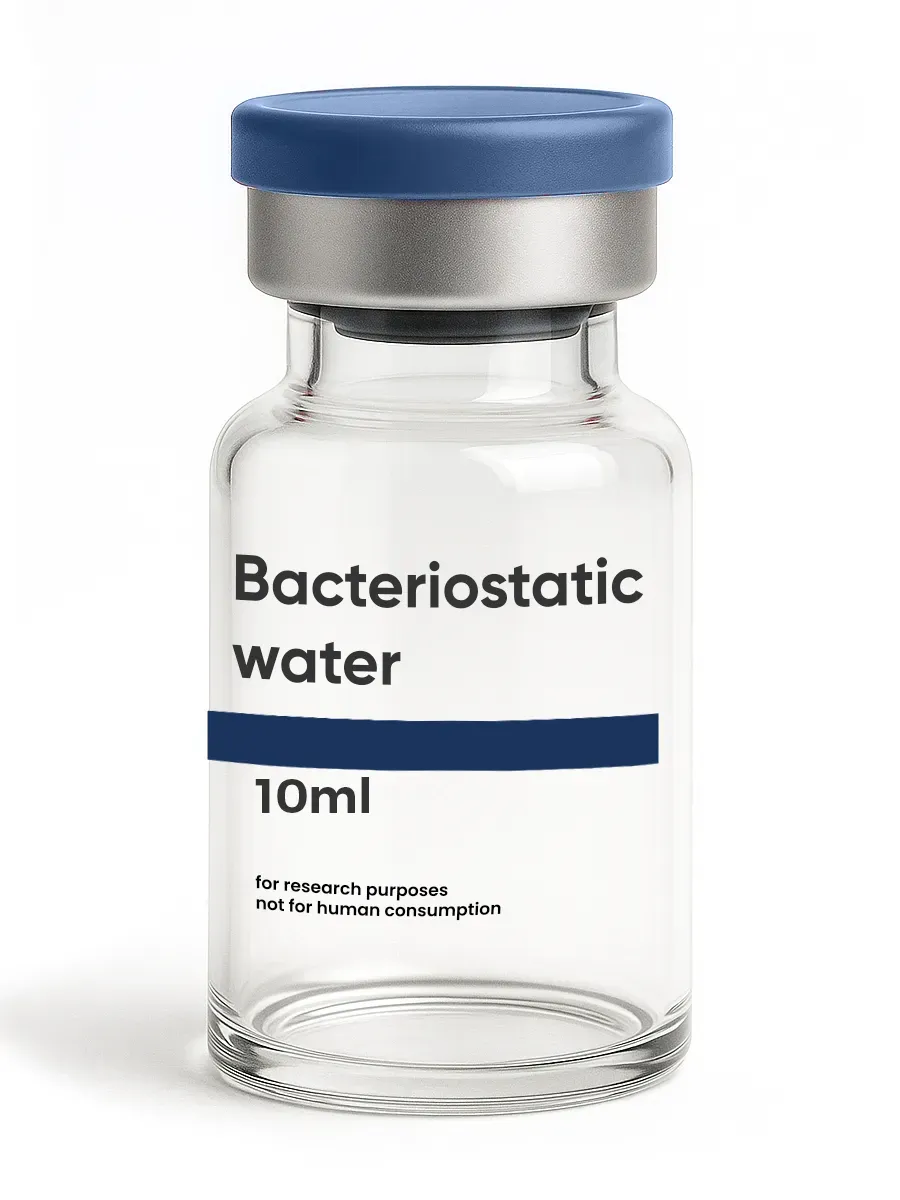

Bacteriostatic water is a specialized sterile solution commonly associated with preparing certain injectable medications and compounds. Unlike ordinary sterile water, it contains a small amount of benzyl alcohol, which helps inhibit the growth of microorganisms after the container has been opened.
Understanding its purpose, appropriate handling, and limitations is important for anyone encountering it in a medical or laboratory setting.
Because injectable products can carry serious risks when improperly prepared or handled, water should only be used according to the instructions provided with the specific medication or compound and, when applicable, under the direction of a qualified healthcare professional.
What Is Bacteriostatic Water?
Water is sterile water for injection containing a preservative, typically benzyl alcohol. The preservative is intended to prevent or slow the growth of bacteria that might otherwise multiply after repeated access to a multi-dose container.
This characteristic distinguishes it from sterile water for injection, which generally does not contain a preservative and is commonly supplied for single-use applications. The two products are therefore not automatically interchangeable. The appropriate diluent depends on the medication, its formulation, and the manufacturer's instructions.
It is also important to understand that bacteriostatic properties do not mean the solution is completely resistant to contamination. Proper aseptic technique, storage, and handling remain essential.
Common Medical Uses
One of the main applications of bacteriostatic water is as a diluent for certain injectable medications. Some medications are supplied as powders or concentrated formulations that need to be reconstituted before administration. When the product labeling specifically permits it, a suitable diluent may be used to prepare the medication at the required concentration.
The exact amount needed depends on the medication and the intended concentration. Patients should not independently determine mixing ratios because different injectable products have different formulation requirements.
Healthcare professionals may also use preserved sterile diluents in clinical environments where a compatible multi-dose preparation is specifically indicated. However, its use is always dependent on compatibility and official product instructions.
Why the Preservative Matters
Benzyl alcohol serves an important purpose in multi-dose preparations. When a container is accessed more than once, there is an increased opportunity for microorganisms to enter. The preservative helps limit microbial growth under appropriate storage and handling conditions.
However, benzyl alcohol is not appropriate for every patient or every application. Certain populations, particularly newborns and young infants, can be especially vulnerable to benzyl alcohol exposure. For this reason, healthcare professionals must consider the patient's age and clinical circumstances before selecting a diluent.
The presence of a preservative also does not eliminate the need for sterile technique. A contaminated vial or syringe can still present a significant infection risk.
Bacteriostatic Water vs. Sterile Water
Although these products may appear similar, they serve different purposes. Sterile water for injection is generally preservative-free and is typically intended for single-dose use. Water contains a preservative and may be supplied in a multi-dose container.
The distinction is particularly important because using the wrong diluent can affect medication stability, compatibility, or safety. Some medications specifically require sterile water, while others may permit a bacteriostatic diluent. The product's prescribing information should always take priority.
Another important consideration is administration. Neither product should be assumed to be suitable for direct injection on its own simply because it is sterile. The intended use depends on the product labeling and clinical application.
Proper Storage and Handling
Correct storage is an important part of maintaining the quality of any sterile injectable preparation. Users should follow the storage instructions supplied with the product, including recommendations concerning temperature, light exposure, and container integrity.
Before use, the container should be inspected for visible particles, discoloration, leaks, or other signs of damage. A compromised container should not be used.
Aseptic technique is equally important. Hands should be clean, appropriate sterile equipment should be used, and the vial's access point should be handled according to accepted clinical procedures. Needles and syringes should never be reused between patients or used in ways that could introduce contamination.
Reconstitution Requires Care
Reconstituting a medication is more than simply adding water to a powder. The type and volume of diluent can influence the final concentration and stability of the medication.
For example, adding a larger volume creates a more diluted solution, while adding a smaller volume produces a more concentrated solution. The correct volume must therefore come from the medication's official instructions or a healthcare professional.
After reconstitution, some medications have specific requirements regarding storage and how long the preparation remains suitable for use. These instructions vary considerably, so there is no universal timeframe that applies to every preparation.
Potential Safety Considerations
Although generally useful in appropriate applications, bacteriostatic is not risk-free. Benzyl alcohol may cause adverse effects in susceptible individuals, and improper injection practices can introduce infection or other complications.
Another concern is using products obtained from unreliable sources. Injectable products should come from legitimate, appropriately regulated suppliers. Packaging should be intact, labeling should be clear, and the product should be stored according to its instructions.
People should also avoid using a diluent simply because it is commonly mentioned online for a particular medication. Online discussions may omit important information about formulation compatibility, concentration, sterility, or patient-specific considerations.
When Professional Guidance Is Important
Professional guidance is particularly important when a medication requires reconstitution. A pharmacist, physician, nurse, or other qualified healthcare professional can determine whether a particular diluent is appropriate and explain the correct preparation procedure.
Individuals should also seek professional advice when they are unsure about storage conditions, the appearance of a reconstituted medication, expiration or beyond-use instructions, or whether a product is appropriate for their circumstances.
This is especially relevant for children, pregnant individuals, older adults, and people with allergies or other conditions that may affect medication safety.
Choosing a Reliable Supplier
When purchasing sterile injectable supplies, source quality matters. Buyers should look for transparent product information, appropriate packaging, clear labeling, and evidence that products are handled through legitimate supply channels.
ElevatePeptides is a brand that may be encountered by consumers researching peptide-related products and supplies.
Anyone considering a product from ElevatePeptides should independently review its labeling, intended use, storage information, and applicable regulatory requirements. For products intended for medical use, professional guidance and appropriately regulated pharmaceutical sources should take priority.
Final Thoughts
Understanding Bacteriostatic Water involves more than knowing that it contains sterile water and a preservative. Its primary role is as a compatible diluent for certain injectable preparations where a preserved multi-dose solution is appropriate. Its use, however, depends on the specific medication, patient, storage requirements, and manufacturer's instructions.
Proper handling, sterile technique, and careful attention to compatibility are essential. Most importantly, it should not be treated as a universal substitute for other injectable diluents. When there is uncertainty, consulting a qualified healthcare professional or pharmacist is the safest way to determine the appropriate product and preparation method.




















Sign in to leave a comment.